China and the World Program 20th Annual Conference | Panel 4: What Chinese Leaders Are Learning from Recent Wars
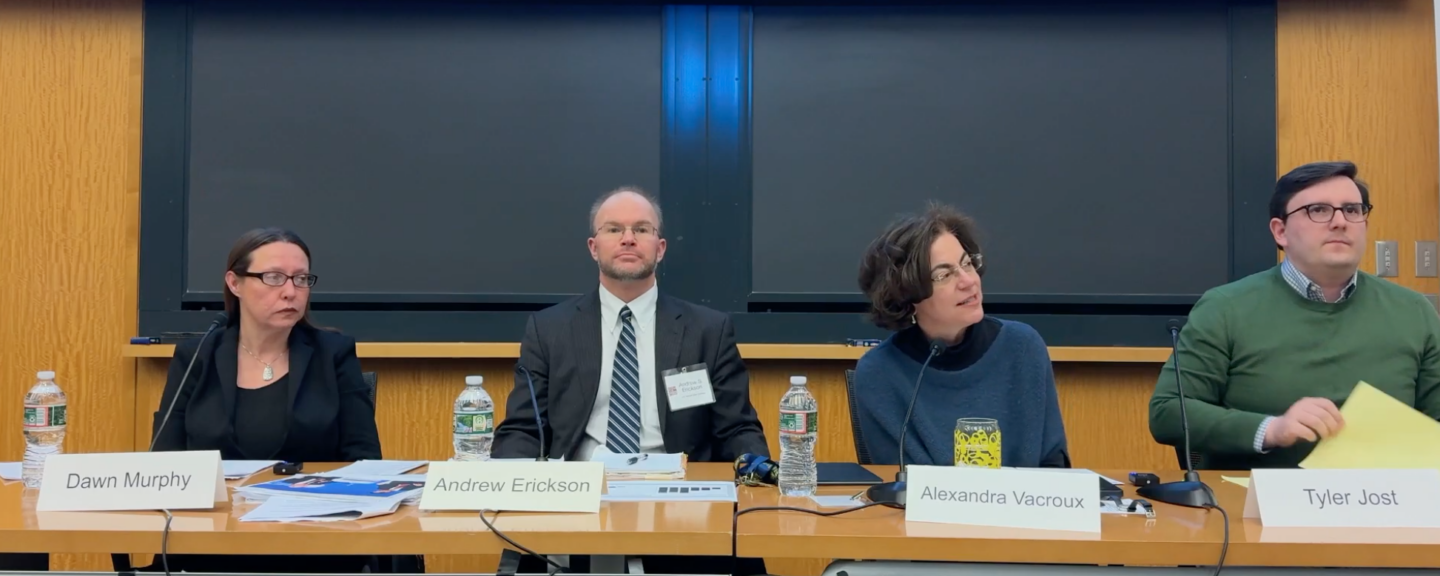
What might China’s leaders and military be drawing from the wars in Ukraine and Gaza? Tyler Jost (Brown University), Dawn Murphy (National War College), and Andrew S. Erickson (U.S. Naval War College) urge caution in answering these questions given how little is known about Xi Jinping’s thinking. Jost argues that Chinese leaders are not necessarily “learning” from the war in Ukraine in the traditional sense of updating beliefs based on new information, but instead using the conflict to reinforce pre-existing beliefs about U.S. hegemony. Murphy discusses the conflict between Israel and Hamas, arguing that China has largely doubled down on its long-held diplomatic stances in the Middle East. Lastly, Erickson turns attention to the lessons drawn from the war in Ukraine by the People’s Liberation Army (PLA), noting how the PLA is conducting internal analyses of its own weaknesses to avoid the pitfalls experienced by the Russian military.
Discussion moderated by Alexandra Vacroux (Harvard University).
第四場:中國領導人從近期戰爭中汲取的教訓
中國領導層與軍方究竟從烏克蘭戰爭與加沙衝突中汲取了哪些切實教訓,抑或這些所謂「教訓」不過是外界的過度詮釋?布朗大學的江泰樂(Tyler Jost)、美國國家戰爭學院的瑞黎明(Dawn Murphy),以及美國海軍戰爭學院的艾立信(Andrew S. Erickson),提醒各界在探討此一問題時務須審慎,蓋因外界對習近平內心所思所想,所知實屬有限。江泰樂認為,中國領導層對烏克蘭戰爭的態度,未必是傳統意義上依新知而更新舊見的「學習」,而更多是藉此強化其對美國霸權早已根深蒂固的既有判斷。瑞黎明則就以哈衝突加以審視,認為中國在中東問題上大體上仍因循其一貫的外交立場,鮮有轉圜。最後,艾立信將目光轉向解放軍從烏克蘭戰爭中所得的啟示,指出解放軍正就自身弱點進行深入的內部檢討,以期引以為鑒、避免重蹈俄軍的覆轍。
本場次由哈佛大學俄羅斯與歐亞研究中心執行主任 Alexandra Vacroux 主持。