Events of Interest
Events
-
-
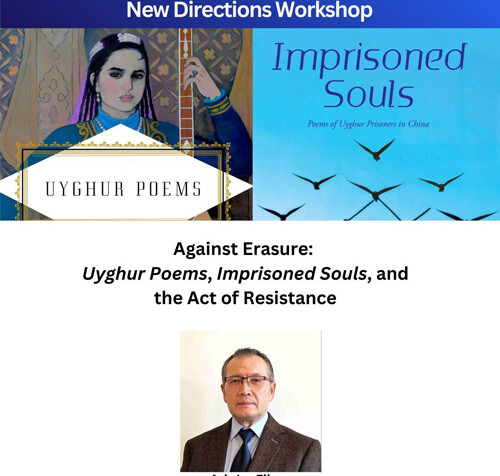
Against Erasure: Uyghur Poems, Imprisoned Souls, and the Act of Resistance
CGIS South, Room S050 1730 Cambridge St, Cambridge, Massachusetts, United StatesSpeaker: Aziz Isa Elkun, University of London In the face of the Chinese government1s systemic efforts to silence the Uyghur people, the written word becomes a profound act of resistance. Against this backdrop of cultural erasure, two recently pubIished English-language poetry anthologies - Uyghur Poems and Imprisoned Souls, stand as vital testaments to love, survival,
-
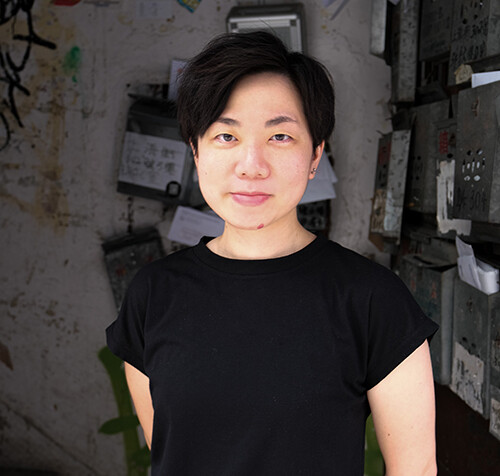
Butchered Rooms: Precarity, Resilience, and the Politics of Informal Housing in Post-Handover Hong Kong
Common Room, 2 Divinity Ave. 2 Divinity Ave., Cambridge, Massachusetts, United StatesSpeaker: Ruby YS LAI, Assistant Professor, Department of Sociology and Social Policy, Lingnan University; HYI Visiting Scholar, 2025-26Chair/Discussant: Ya-Wen Lei, Professor of Sociology, Harvard University In the past decades, the growing housing crisis has destabilized individual housing tenure and exacerbated an everyday sense of insecurity, especially among low-income renters in megacities, where housing costs continuously soar under increased
-
-
Harvard Asia Law Conference II
WCC, Wasserstein Hall 1585 Massachusetts Ave., Cambridge, MassachusettsPlease join us for HALS 2026 Conference, which will take place at the WCC on Harvard Law School Campus April 1st & 2nd. This year, panels will feature topics like AI regulations across Asia, the future of US-China trade relations, practicing in-house at multinational companies, and more. Please click here for details on the full agenda, panel
-
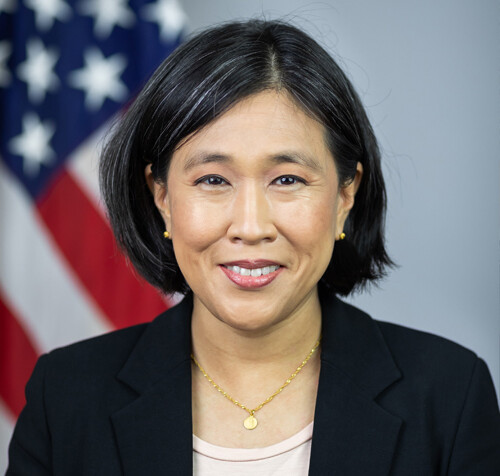
What Would a Rational and Effective U.S.-China Trade Policy Look Like? Is One Still Possible?
WCC B015, Wasserstein Hall 1585 Massachusetts Ave., Cambridge, MassachusettsSpeaker: Katherine Tai, U.S. Trade Representative (2021-2025) Ambassador Katherine C. Tai served as the 19th United States Trade Representative. As a member of President Biden’s Cabinet, Ambassador Tai was the principal trade advisor, negotiator, and spokesperson on U.S. trade policy from March 2021 to January 2025. Prior to her unanimous Senate confirmation, Ambassador Tai spent
-
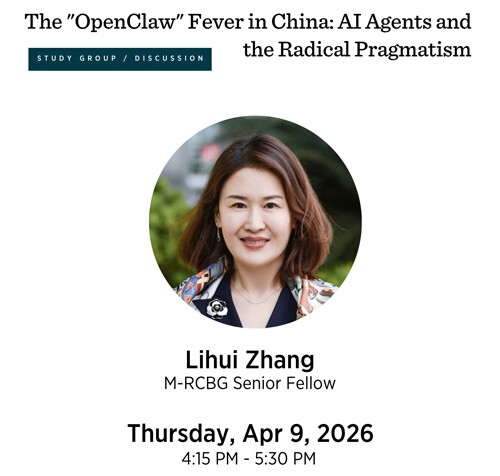
The OpenClaw Paradox: AI Agents, Labor Anxiety, and Radical Pragmatism in China
M-RCBG Conference Room B-102 79 JFK St., Cambridge, Massachusetts, United StatesSpeaker: Lihui Zhang, Mossavar-Rahmani Center for Business and Government Senior Fellow, Harvard Kennedy School In this study group, led by M-RCBG Senior Fellow Lihui Zhang, we will explore how Chinese society demonstrates a distinctive duality in its approach to emerging technologies like AI, combining both enthusiastic adoption and underlying anxiety. While American and European companies
-
Lively (linghuo) Accumulation: China’s 1980s Coastal Development Strategy and Histories of Capitalist and Socialist Crises
Room 125, Robinson Hall 35 Quincy St., Cambridge, Massachusetts, United StatesSpeaker: Andrew Liu, Associate Professor of History, Villanova University Commentators:Ya-Wen Lei, Professor, Department of Sociology, Harvard UniversityKashish Bastola, PhD Candidate in History, Harvard University Venue
-
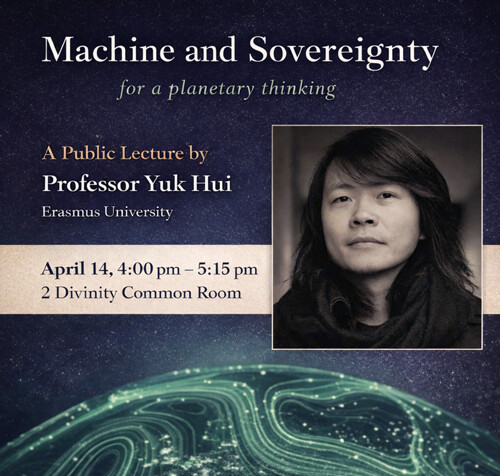
Machine and Sovereignty: For a Planetary Thinking
Common Room, 2 Divinity Ave. 2 Divinity Ave., Cambridge, Massachusetts, United StatesSpeaker: Yuk Hui, Erasmus UniversityModerator: David Der-wei Wang, Harvard University Venue
-
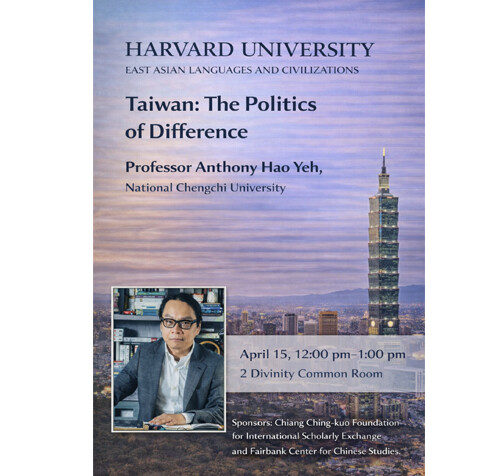
Taiwan: The Politics of Difference
Common Room, 2 Divinity Ave. 2 Divinity Ave., Cambridge, Massachusetts, United StatesSpeaker: Anthony Hao Yeh, National Chengchi UniversityModerator: David Der-wei Wang, Harvard University Venue
-
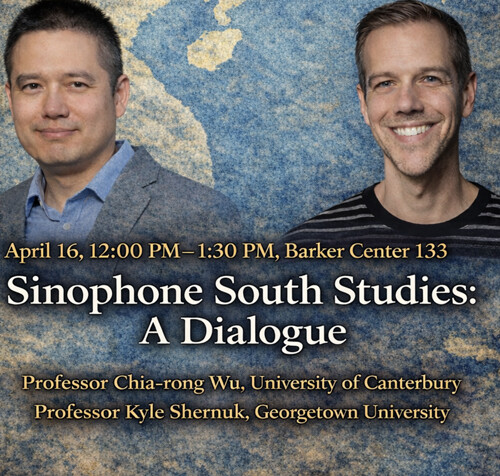
Sinophone South Studies: A Dialogue
Plimpton Room (133), Barker Center 12 Quincy St., Cambridge, MA, United StatesSpeakers: Chia-rong Wu, University of CanterburyKyle Shernuk, Georgetown UniversityModerator: David Der-wei Wang, Harvard University Venue
-
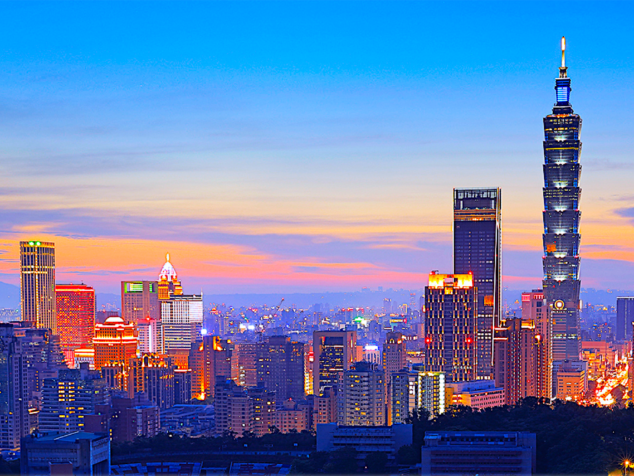
Taiwan Studies+ 2.0 Symposium
Yenching Auditorium 2 Divinity Ave., Cambridge, Massachusetts, United StatesAs Taiwan finds itself reentering into the global conversation today, where does the field of Taiwan Studies find itself in this historical moment? From the origins of capitalism to the threat of nuclear pollution, from soundscapes in the authoritarian era to contemporary video games, from indigenous identities to Cold War activism, and from geopolitical competition
-
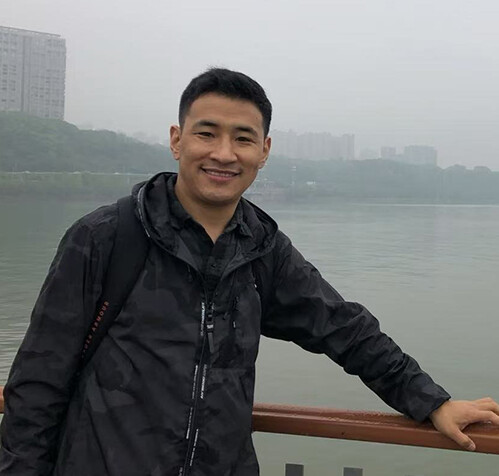
What Does It Mean to “Write Oneself” in Tibetan Autobiographical Tradition: The Amazing Life of Guru Chowang
Common Room, 2 Divinity Ave. 2 Divinity Ave., Cambridge, Massachusetts, United StatesSpeaker: Geri Jiebu, Associate Professor, School of Chinese Ethnic Minority Language and Literature, Minzu University of China; HYI Visiting Scholar, 2025-26Chair/Discussant: Janet Gyatso, Hershey Professor of Buddhist Studies, Harvard Divinity School Venue
-
-
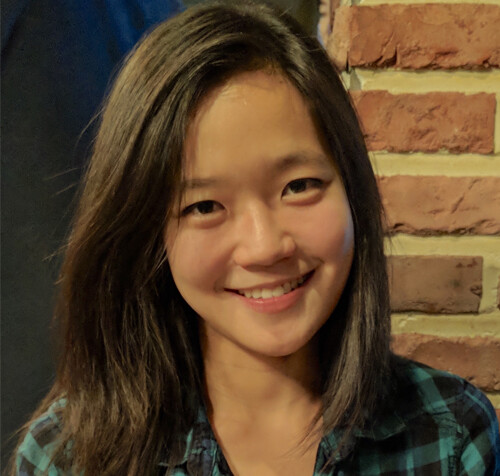
Subversion and Seduction: China’s Economic Statecraft
Fainsod Room (324), Littauer Building 79 JFK St., Cambridge, MA, United StatesSpeaker: Audrye Wong, Senior Fellow, American Enterprise InstituteChair: Rana Mitter, S.T. Lee Professor of U.S.-Asia Relations, Harvard Kennedy School Even as the Chinese government intensifies supply-chain coercion, it continues to deepen the trade and investment linkages that sustain its global economic centrality. Audrye Wong’s new book, Subversion and Seduction: China’s Economic Statecraft, explores an underemphasized aspect