China and the World Program 20th Annual Conference | Panel 3: Prospects for the Belt and Road Initiative
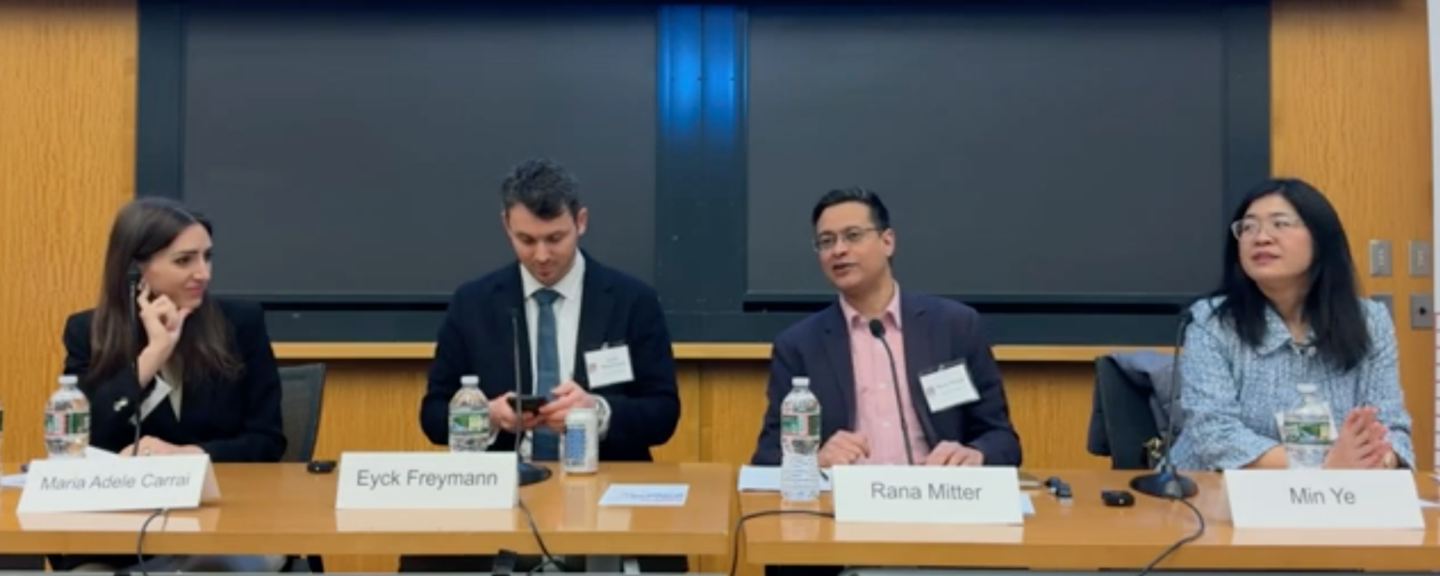
Is the Belt and Road Initiative in retreat or simply remaking itself? Maria Adele Carrai (NYU Shanghai), Eyck Freymann (Hoover Institution), and Min Ye (Boston University) discuss how the BRI has not collapsed but reconfigured over time. Carrai emphasizes how the BRI has oriented away from large-scale, high-risk infrastructure projects to “small and beautiful” projects with a greater focus on ESG (Environmental, Social, and Governance) standards and financial services. Freymann analyzes the financial risks associated with the BRI, arguing that China leverages its relationship with debtor countries to incentivize the internationalization of the RMB. Lastly, Min Ye focuses on the rise of the “Green BRI,” noting how geopolitical restrictions in advanced economies have redirected China’s green technology exports and investments towards BRI countries.
Discussion moderated by Rana Mitter (Harvard Kennedy School).
第三場:「一帶一路」倡議的前景展望
「一帶一路」究竟是日薄西山,還是正在蛻變重生?紐約大學上海校區的馬曉冉(Maria Adele Carrai)、胡佛研究所的 Eyck Freymann,以及波士頓大學的葉敏(Min Ye),共同探討「一帶一路」雖未就此凋零,卻已歷經時代淘洗、持續蛻變重組的演進歷程。馬曉冉指出,「一帶一路」已從昔日大規模、高風險的基礎建設項目,轉向更加注重 ESG(環境、社會與公司治理)標準及金融服務的「小而美」項目。Eyck Freymann 則剖析「一帶一路」潛藏的金融風險,認為中國善用與債務國之間的紐帶關係,藉此為人民幣國際化推波助瀾。最後,葉敏聚焦於「綠色一帶一路」的方興未艾,揭示先進經濟體的地緣政治壁壘,如何將中國的綠色科技出口與投資引導至「一帶一路」沿線各國。
本場次由哈佛肯尼迪學院李成智美國—亞洲關係研究講席教授芮納·米德(Rana Mitter)主持。