Every summer, the Fairbank Center for Chinese Studies supports graduate students as they set off to pursue research interests across the world. The Fairbank Center’s Summer Research Grants are open to students across Harvard’s many graduate schools, helping to broaden the reach of China studies on the Harvard Campus.
When students return from their travel, we invite them to reflect on what they learned, the challenges they encountered, and how their own research was further shaped by the experience. These reports are always exciting reads for us—not only because they tell us more about our students’ research topics, but because they reveal much about the researchers themselves.
This year, we’re excited to spotlight a few of the responses from three graduate students representing three graduate schools at Harvard.
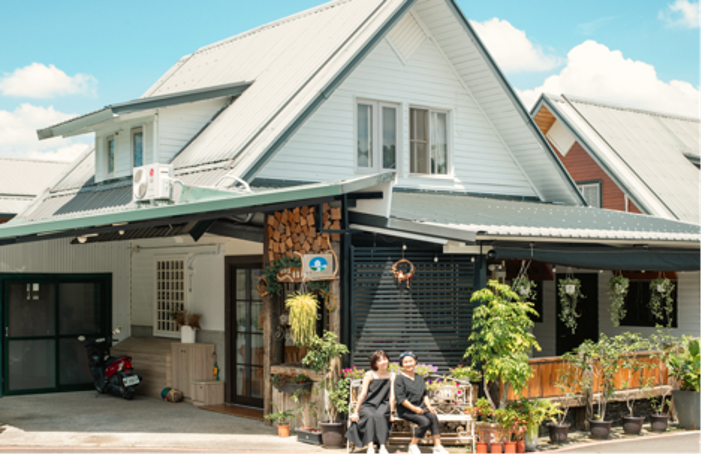
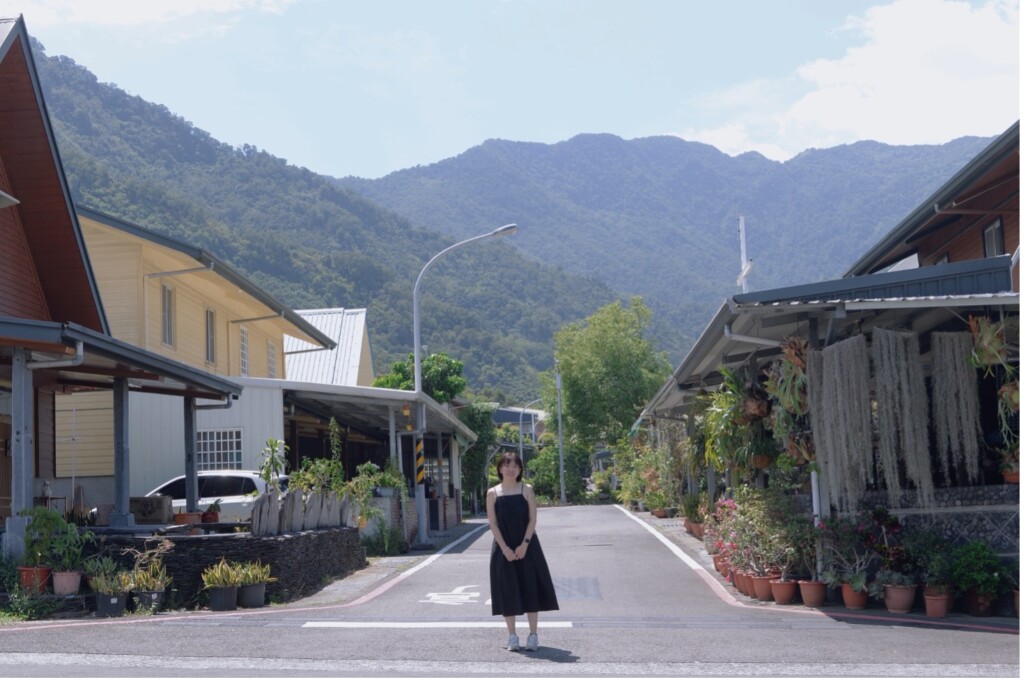
Hanzhang and her host in front of the house they shared, which was named “the most beautiful street corner” by the host.
Hanzhang Lai, the Graduate School of Design – Indigenous Resilience and Adapting to Environmental Disaster
With a grant from the Fairbank Center Hanzhang Lai was able to spend ample time in Rinari Taiwan, where Paiwan, Dashe, and Rukai tribes people have resettled with government assistance after being displaced by Typhoon Morakot (2009). She is enrolled in the Master of Design Studies program, with a concentration Ecologies Domain, and is writing a thesis on post-disaster housing.
“I immersed myself in Rinari: staying in a local B&B run by the widow of the former village chief, spending days walking through the settlements, and conducting ethnography and informal interviews with villagers in their front yards, shops, and churches. I also engaged with scholars who have been documenting and studying traditional tribal housing for decades.”
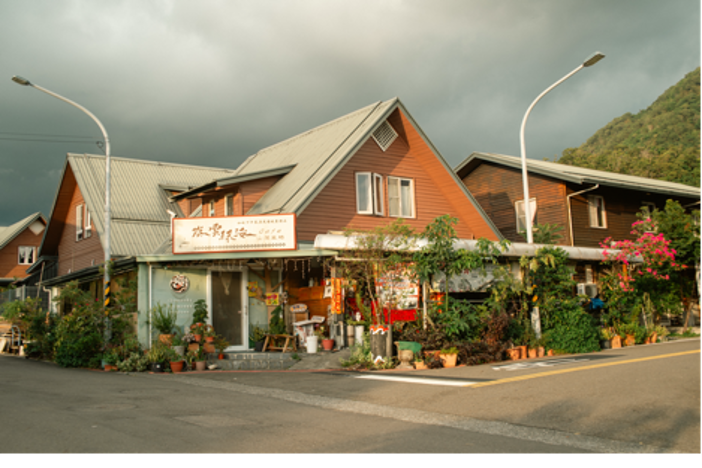
The Paiwan Coffee Shop where Hanzhang took many interviews.
The interviews illustrate that relocating after the typhoon has created strain for the tribal people, but they have been able to retain and even regain essential cultural connections.
“Relocation closer to urban areas has created new pressures: many work in cities, marry outside the community, and use Mandarin as their daily language. However, there is a growing effort to reclaim indigenous traditions that have been stripped away since Japanese colonial rule in the early 1900s. The beauty of Rinari today comes from the resilience of its residents. [After relocating,] villagers had little choice but to accept standardized housing, and it is through their own ingenuity that these spaces became meaningful.”
Hanzhang in Rinari. “The people have moved down from the mountain, but the view of the mountain is still always present.”
Hanzhang noted that immersion was a crucial and transformative aspect of her experience in Rinari.
“As a designer trained in quantitative methods, this experience challenged me to embrace qualitative, human-centered approaches. The narratives and adaptations I encountered will form the foundation of my thesis on post-disaster housing, with a sharper focus on how design and policy can empower communities rather than constrain them. The grant made it possible for me to be in the community, to see, hear, and experience what no report or archive could convey, and established great connections with several tribal members.”
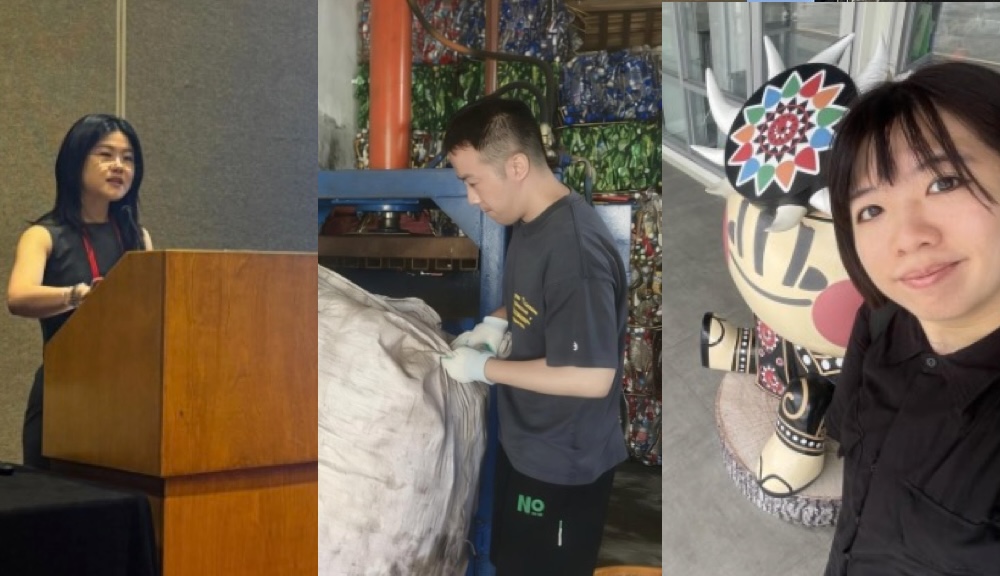
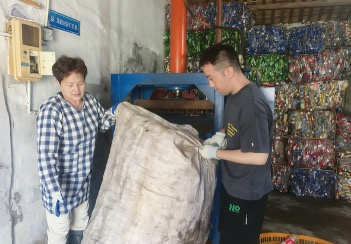
Kejian working alongside the locals at a processing center.
Kejian Yan, Harvard Graduate School of Arts and Sciences – Ocean Clean-Up Efforts on Changtu Island
In summer 2025, Kejian Yan Went to Changtu Island, one 2000+ islands in Zhejiang’s Zhoushan Archipelago, to investigate strategies for cleaning up pollution in the oceans. Kejian Yan is enrolled in the Regional Studies East Asia program where he uses anthropological theory and methods to study the environment and health in China.
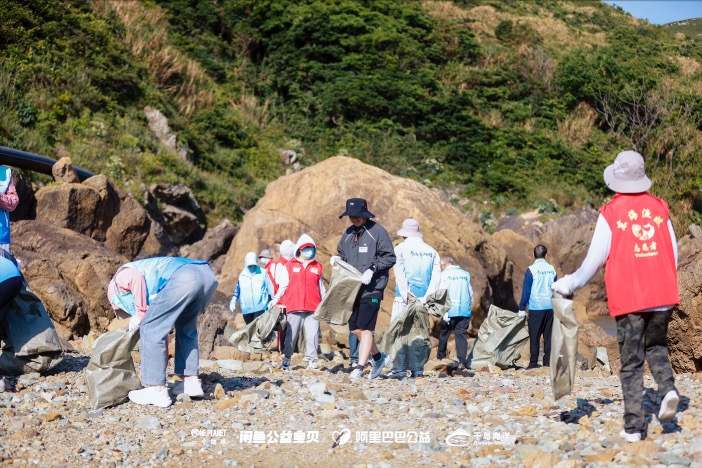
Beach clean-up efforts on Changtu Island.
“My goal was to understand how ‘ocean pollution’ is transformed from a diffuse environmental condition into measurable, valuable, and governable materials through everyday practices—what local fishers and fisherwomen often call simply ‘projects.’ I worked alongside the Golden and Silver Fisherwoman Association 金银渔嫂协会, the Blue Port Patrol 蓝港巡逻队 , the NGO Thousand Islands Marine Environmental Protection Organization 千岛海洋环保, and VisionBlue 浙江蓝景科技有限公司, a tech firm that purchases, tracks, and processes ‘ocean-bound plastics’… at a facility called the “Little Blue Family” 小蓝之家, and onward into regional and global recycling circuits.”
During June and July, Kejian participated in a number of community activities, while also engaging in daily work:
“Immersed in daily cleanup and sorting, I accompanied fisherwomen receiving marine debris at the port, weighing materials, photographing receipts, and sorting plastics in the Little Blue Family. I learned the classification standards used by VisionBlue and assisted in cutting, draining, and compressing bottles into 40-kg cubes—labor that is repetitive, intimate, and physically demanding.”
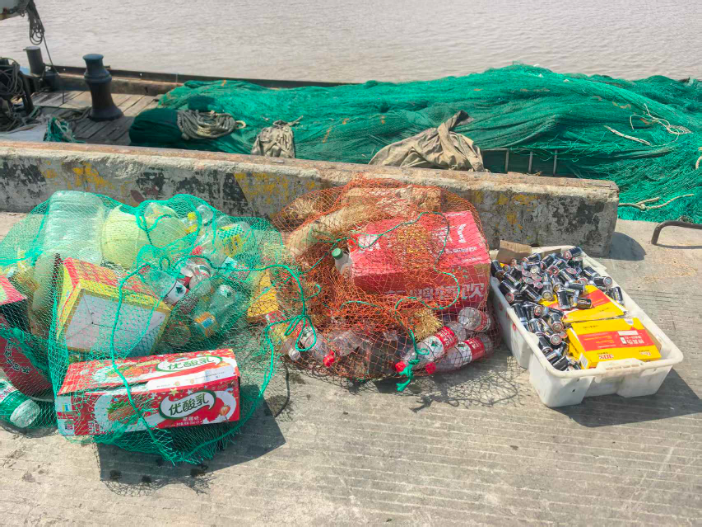
Examples of local cleanup featuring cardboard, plastic, and batteries.
Reflecting on the work and how it pertains to his research, Kejian notes:
“The experience confirmed that ‘cleaning the ocean’ is as much about making the work legible as it is about removing material. Photos, scales, ledgers, vests, and ceremonies create a public narrative of action that travels well across apps and audits. My research will continue to ask who benefits, who bears the exhaustion, and how governance might center the embodied knowledge that keeps coastal communities afloat.”
Yixuan Cui, Graduate School of Education – Adolescent Development and Parenting Practices in China’s High Schools
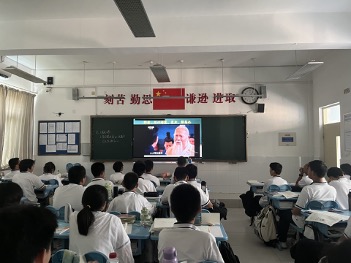
Students watching an education film in a high school participating in Yixuan’s research.
Yixuan Cui’s summer project aimed to examine the relationships among parenting practices and adolescent development in contemporary urban China, particularly in the context of post-pandemic social and economic changes. She is a first year PhD student at HGSE studying adolescent development and parenting, focusing on how social and cultural contexts shape parenting beliefs and practices.
“I built collaborative research-practice partnerships with three local high schools in Jinan. With the cooperation and support of school staff, I distributed Qualtrics surveys to students and parents, collecting responses from 1,500 students and 1,200 parents. These surveys included psychological scales that were previously developed in the literature and covered topics on parenting styles, expectations, and student mental health, sense of purpose, and school engagement.”
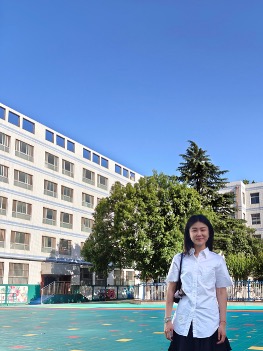
Yixuan Cui in front of a Jinan City school.
Being on the ground was essential to networking and cultivating partnerships with schools in Shandong Province.
“Building these school relationships allowed me to launch the qualitative component of my research. I successfully recruited 25 student-parent dyads for in-depth interviews. These interviews are currently ongoing. I was unable to complete all interviews in person. As a result, I have transitioned the interviews to an online format. These interviews are designed to complement the quantitative data by providing rich contextual insights into family and school experiences.”
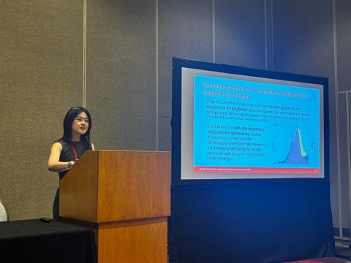
Yixuan is already building on her summer research. She was invited to give a poster presentation at the Society for Research on Adolescence Biennial Meeting in 2026.
“This was my first experience conducting independent fieldwork directly with schools, students, and parents, as a first year Ph.D. student supported by a research grant. It was especially meaningful to me, both personally and professionally. The foundation I built this summer will shape my future research and deepen my engagement with genuine questions about what family and youth are experiencing in contemporary urban China. The relationships I established with local schools will also provide opportunities for future collaboration and follow-up studies.”
A photo of Yixuan Cui presenting my research at a conference in summer 2025.