
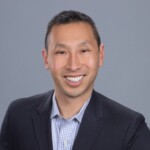
The Division of Arts and Humanities in the Faculty of Arts and Sciences awarded the 2026 Taliesin Prize for Distinction in the Art of Learning to Max A. Palys ̕ 26, a member of the Fairbank Center Student Network. The Taliesin Prize is awarded to the top three graduating Harvard College students “who best exhibit a spirit of intellectual adventure in their curricular paths” as undergraduates. Palys, a double concentrator in Mathematics and East Asian Studies, served as an Editorial Chair of the Harvard Crimson and was elected to Phi Beta Kappa. This fall, he will be studying as a Schwarzman Scholar at Tsinghua University.
We spoke with Max, as he reflected back on his experiences at Harvard:
Growing up in Texas, how did you become interested in China?
Both my parents are well traveled and have lived in several countries, and I became interested in the world because of them. Our home was littered with souvenirs from all manner of backpacking trips and study abroad experiences, and my parents’ stories sparked within me a curiosity to see the world. My parents also both speak multiple languages quite fluently, so studying foreign languages felt like the natural place to start to work toward satiating that curiosity. I have found that studying foreign languages naturally leads to an interest in place, history, and culture broadly defined, and I likewise first became interested in China because of its language.
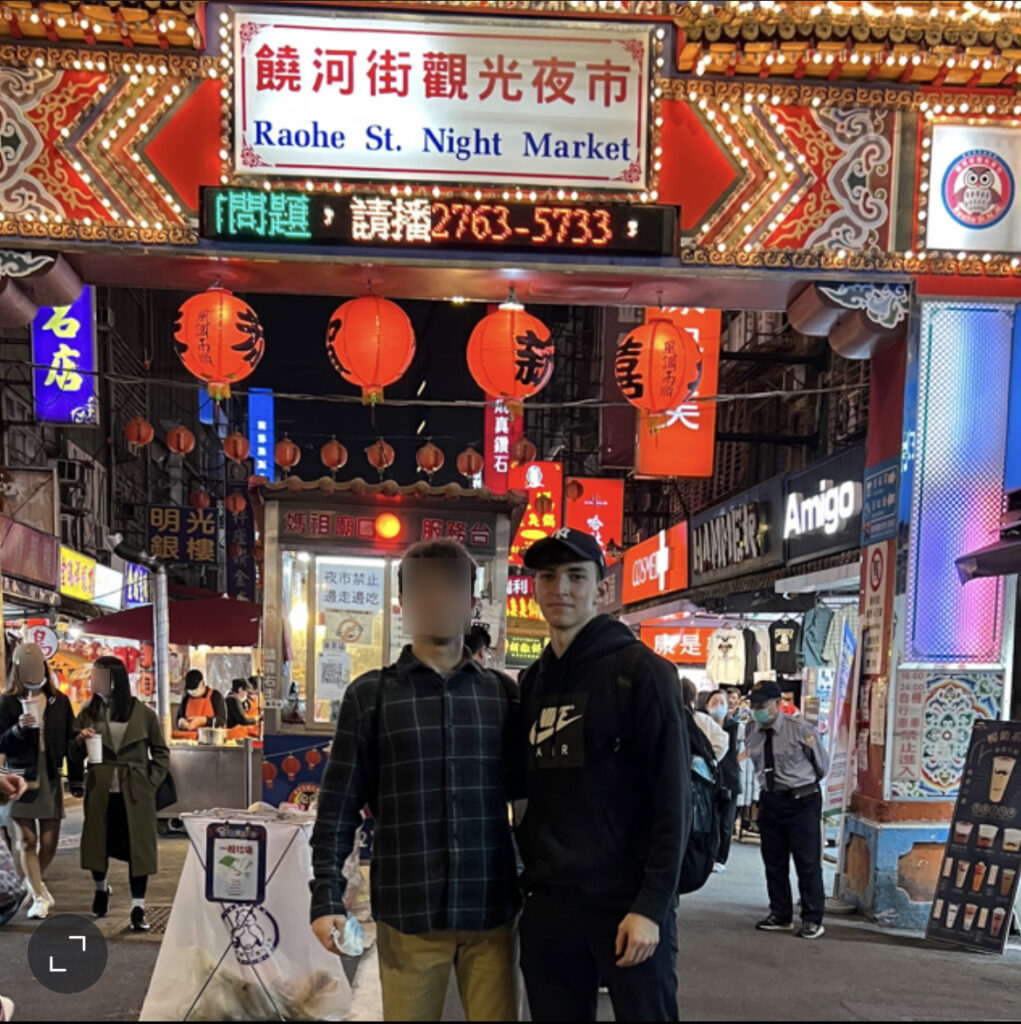
Before coming to Harvard, you took a gap year to study Mandarin Chinese in Taiwan. What impression did that leave on you? How did it affect your views about how you wanted to pursue your studies at Harvard?
I took away the notion that a beginner’s mind was that best-suited for learning – my classmates who achieved the greatest linguistic gains during our immersion program were always speaking and listening, unafraid to make mistakes but instead eager to learn from them. Any time I undertook the study of a new subject I encountered at the College and beyond – mathematics, physics, Russian – I tried to keep that spirit in mind. Overall, the experience was incredibly rewarding, and I felt confident in leaning on my own curiosity as a compass in the future as a result.
At Harvard, you chose to concentrate in Mathematics and East Asian Studies. Those are not necessarily two disciplines that one would think about joining together. What led you to pursue both? What did you seek to get out of each?
I would say that I didn’t directly try to get anything out of each so much as simply to slake the curiosity that drove me toward them in the first place. I suppose they are connected by a desire for universality: Math is a universal language that allows us to speak with our world, and Chinese and other languages allow us to speak and understand one another. That’s a nice abstract principle, but it doesn’t lend itself well to a joint thesis. So I pursued them in curricular isolation, striving for depth in each field separately. I have also always felt that there is a nice well-roundedness that comes with being able to deal with both the quantitative and qualitative, which was part of my decision as well.
At Harvard, you took the most advanced Mandarin Chinese classes. You also spent a summer at the Harvard Taipei Academy and took Classical Chinese. What led you to do all that? How did your language classes inform the way you think about modern China?
Achieving depth in a language is a wonderful feeling. I really like crossword puzzles, and finally comprehending unconquerable Mandarin texts scratched the same itch as solving puzzles. That said, it’s easy for me to get carried away in a sea of intellectual curiosity without achieving depth unless I am intentional. Continuing to take modern Mandarin courses was a way to live up to that desire for depth. Moreover, when in conversation with Chinese speakers, I carry the perhaps naïve view that speaking an interlocutor’s language increases trust and thereby the likelihood that you will learn something new. I certainly felt that the more Mandarin I knew, the more I learned from speakers, with the trust element compounding the gains achieved simply from enhanced comprehensibility.
My interest in Classical Chinese was a confluence of a couple of different factors. I have always been interested in very old texts of all kinds, from Homer’s poems to the Upanishads. But achieving the level of Sanskrit or ancient Greek needed to read primary material seemed arduous compared to capitalizing on my modern Mandarin experience to learn Classical Chinese instead. I have also long been interested in practical, applied philosophies of virtue and meaning, and my exposure in Taiwan to some Buddhist and Daoist texts also played a role in my pursuit of Classical Chinese while at university.
Generally, as I’ve engaged more with China, I’ve tried to approach my studies through the lens of a language learner: inside-out rather than outside-in.
Besides courses related to Chinese studies, however, you studied other languages and took a number of seemingly unrelated courses. In the end, the Taliesin Prize committee recognized you for deliberating charting a path through the curriculum that “reflects courage, creativity, and exploration.” What set of guiding principles did you have for charting your undergraduate course of study?
I try to understand a domain’s language before investigating it. The cleanliness and complexity of the world are both scrutable to humans through math, which then led to an interest in physics and courses in dynamics and statistical mechanics. Likewise, it is difficult to understand people without sharing some vocabulary, though this vocabulary often extends far beyond the words and phrases we use.
The beautiful thing about a liberal arts curriculum is that we are permitted to take courses based not only on their relevance to one another, but also on their relevance to ourselves. I took poetry courses because I loved poetry in high school and missed it dearly, Russian because of my birth country of Lithuania’s past, and China-related coursework on account of my past experiences. Also, I took courses because they seemed fun.
How did your various experiences at Harvard, including at The Harvard Crimson, the Fairbank Center, and elsewhere, shape your thoughts about what impact you’d like to have in the future?
Harvard’s greatest asset is its environment — in which we are all exposed to and inspired by its people. At The Crimson, I was inspired daily by the tireless work of students working full-time hours to produce a suite of content for the community. Working as Editorial Chair during a fraught period for the university made me realize the extent to which I valued working for a greater good. Intellectual work can be very stimulating, but I do believe that finding a higher sense of purpose, similar to that which flooded The Crimson during Harvard’s many newsworthy moments, is important in my vision for my own future.
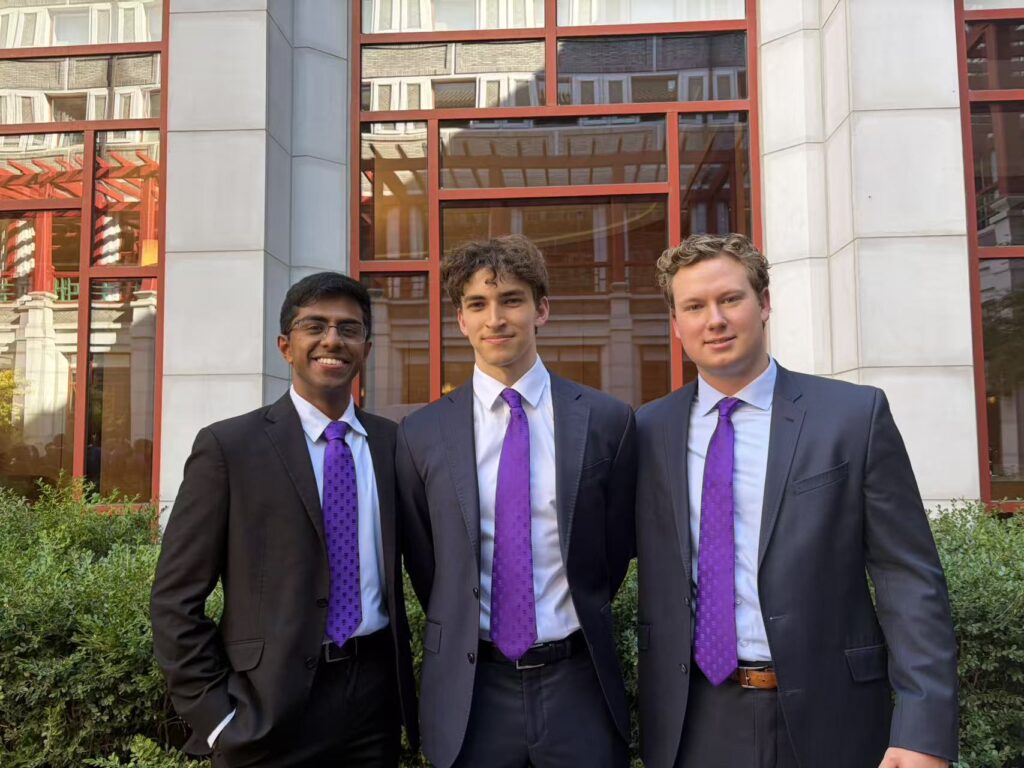
Regarding the Fairbank Center and the East Asian Studies department, I was always shocked at the level of access and candor afforded to me as an undergraduate by senior professors and guests. Member of both institutions have answered my (many) questions on everything from technical China-related matters to career and personal advice. I hope to do right by all my mentors and those that have shown me kindness by paying it forward.
What are you most excited about for the year ahead as a Schwarzman Scholar in Beijing?
If I had to identify one area, I would say travel within China. There is much to be gained by going to the place, interacting with the people, and seeing the state of affairs firsthand when compared to reading about everything from the outside. That experience could be anything from a tour of a local electric vehicle manufacturer to a trip to a remote region of Inner Mongolia. China is a diverse country, and I’m excited to discover all that I don’t even know that I don’t know. Hopefully, I’ll be able to meet the people behind the headlines and return home with a deeper understanding of the past few years’ developments.

I’m also excited to interact with those, both within and without the cohort, who hold different perspectives than my own. I spent much of my time on The Crimson’s Editorial Board being vociferously debated against, and I’m looking forward to having my views challenged.
For students interested in studying China at Harvard, what advice about their academic studies or just general advice do you wish to impart?
Everyone is different, so I feel like the best advice I can give is to repeat what I and many others have been told: Be intentional and dive in. On being intentional: It can be easy to get swept away in doing what everyone else is doing or what you think is “right,” and it’s useful to pressure test your hypotheses against common knowledge, but it’s equally important to check in with yourself and understand your own motivations. On diving in: Sylvia Plath penned a nice analogy about a fig tree and optionality in The Bell Jar. If you wait too long to select fruit from a delectable fig tree, the figs will whither and drop until none remain. The lesson is to make a choice and bite the fig. If you don’t like it, you can always do something else later. But you will never live with the regret of letting your opportunities shrivel at your feet.