
- This event has passed.
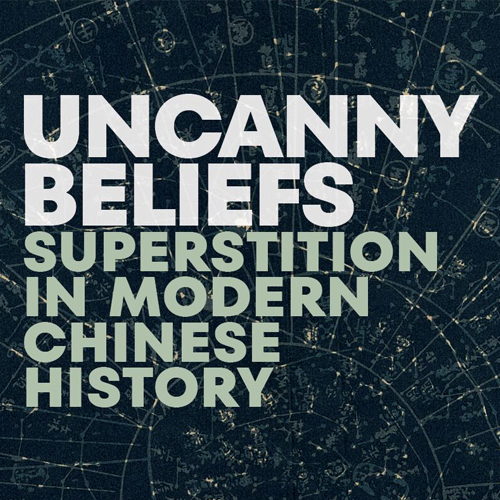
Uncanny Beliefs: Superstition in Modern Chinese History
October 7 @ 6:30 pm – 8:00 pm
Speakers:
Emily Baum, Professor of History, University of California, Irvine
Albert Wu, Associate Research Fellow, Institute of History and Philology, Academia Sinica, Taipei, Taiwan
Chair: Michael Puett, Victor and William Fung Foundation Director, Harvard University Asia Center; Walter C. Klein Professor of Chinese History and Anthropology; Harvard College Professor
In the early twentieth century, scholars around the world believed that “superstition” belonged to a bygone era. Yet despite their confident predictions, superstitious beliefs have endured. Perhaps nowhere has the history of superstition been more prolonged and tumultuous than in China. From the late nineteenth century to the present day, intellectuals and politicians have denigrated practices like divination, ancestor worship, and geomancy as unbefitting of a modern nation, and governing regimes have launched a succession of campaigns to replace superstitious thinking with science and rationality. Efforts to eliminate such practices from public life, however, have regularly encountered resistance from people who continue to find meaning in them.
Uncanny Beliefs seeks to understand what “superstition” has meant in modern China—and questions why superstitious thinking has remained such an urgent target of state intervention. Through a range of temporal and thematic perspectives, the chapters in this volume link the study of superstition to the histories of science, religion, gender, state building, and popular culture. In doing so, they collectively broaden our understanding of modern Chinese history by revealing the complex entanglements of superstition with religion, modernity, authority, and everyday life.
Register at: https://harvard.zoom.us/webinar/register/WN_ocqHDzihSR6jUAd6vpXK-w#/registration