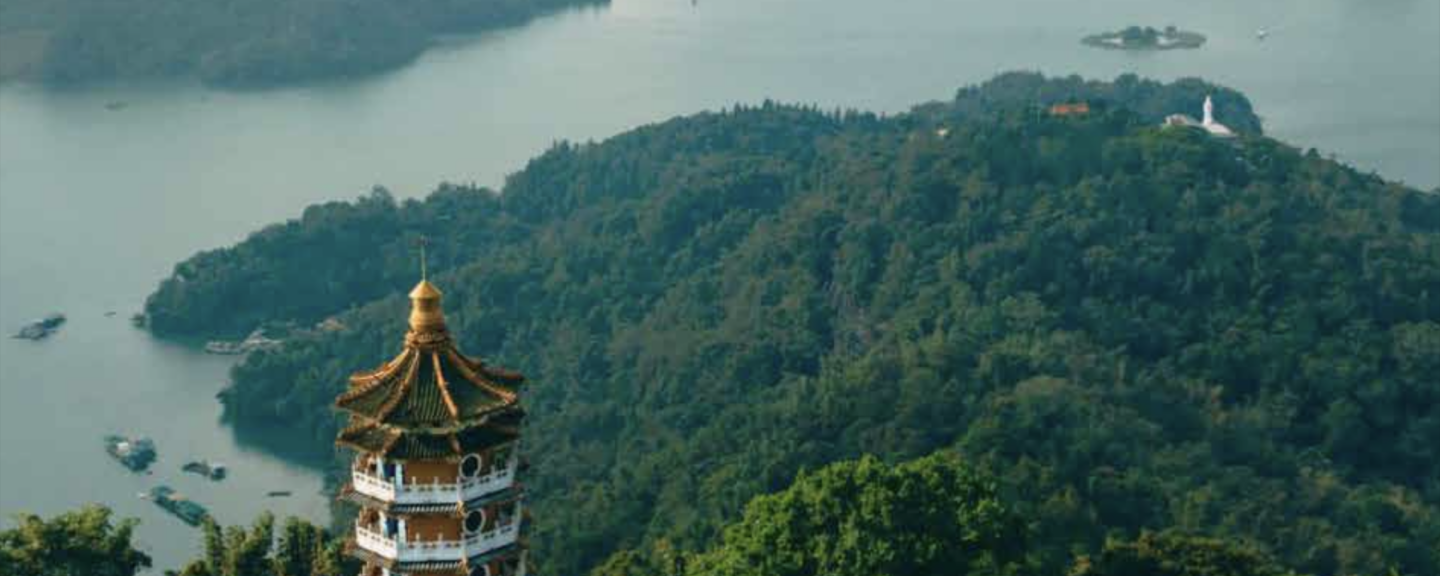
The Fairbank Center for Chinese Studies at Harvard University is proud to support innovative scholarship in Taiwan studies through the Hou Family Fellowships.
With the Hou Family’s generous support, this fellowship advances rigorous interdisciplinary research and deepens global understanding of Taiwan, including its history, society, culture, and relationships with the world. Now, we highlight the achievements of our fellows, showcasing their scholarly contributions, intellectual journeys, and the impact of their work on the field of Taiwan studies. Their research extends from the political economy of human rights to post-colonial literature, noise in urban Taiwan, the study of Austronesian languages, Cold War propaganda, political resilience, and beyond.
In the past decade, this fellowship has been awarded to 19 candidates from a variety of disciplines, from political economy to anthropology, media studies, global history, and beyond. The program has supported award-winning books, new research agendas and methodologies, and has contributed to public discourse, policy debates, and global understanding of Taiwan studies.
Through their ongoing work, the Hou Family Fellows have established an international network, helping to shape the direction of Taiwan studies through collaboration across institutions and disciplines and mentorship of future researchers. Their work reflects individual excellence and a shared commitment to advancing knowledge and fostering dialogue.
As the Fairbank Center expands its commitment to Taiwan studies, the Hou Family Fellowships will remain central to the mission by supporting scholars whose work illuminates our understanding of Taiwan.
We take this opportunity to extend our sincere appreciation to the Hou Family for their visionary support. Through this fellowship, we reaffirm our commitment to rigorous scholarship and the importance of Taiwan studies in global academics.
JAW-NIAN HUANG
Hou Family Postdoctrol Fellow, 2016-2017
黃兆年
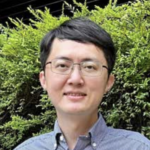
Jaw-Nian Huang is an Associate Professor and Chair of the Graduate Institute of Development Studies at National Chengchi University (NCCU) in Taiwan. His research explores human rights and democratic development from a political economy perspective, focusing on how China’s economic rise impacts media and internet freedom in Taiwan and beyond. Funded by Taiwan’s National Science and Technology Council, his current work examines Chinese authoritarian influence operations, media infiltration, information manipulation, and internet governance across Taiwan, Hong Kong, and Southeast Asia.
He authored The Political Economy of Press Freedom: The Paradox of Taiwan versus China (Routledge, 2019) and co-authored China’s Influence and the Centre-periphery Tug of War in Hong Kong, Taiwan and Indo-Pacific (Routledge, 2020) and “Beijing’s Global Media Influence: Taiwan Country Report” (Freedom House, 2022). His scholarship also has appeared in China Perspectives and China: An International Journal, among others.
Professor Huang was a Hou Family Predoctoral Fellow in Taiwan Studies at the Fairbank Center for Chinese Studies in AY2016-2017. Before joining NCCU, he was an Assistant Professor at Tamkang University’s Graduate Institute of China Studies. He holds a Ph.D. in Political Science from the University of California, Riverside and a B.A. and an M.A. in Political Science from National Taiwan University.
I am deeply grateful to the Hou Family Fellowship for enriching my study abroad experience, supporting my book project on Taiwan’s press freedom, and fostering an international platform for Taiwan studies.
—Jaw-Nian Huang
CHIH-WEI CHUNG
Hou Family Postdoctrol Fellow, 2016-2017
鍾秩維
Chih-wei Chung is an Assistant Professor at National Tsinghua University, where he teaches Taiwan literature and contemporary literary theory. His research mostly focuses on global modernism and the modernist trend in Taiwan.
Professor Chung’s recent publications include The Lyrical and the Local: Selfhood, Community, and the World Picture in Post-war Taiwan Literature (2020) and The Lyrical in the Post-Baodiao Time: Kuo Sung-fen, Lee Yu and the Literary Politics of Taiwan Modernism (2026). Currently Chung is working on a new project, a Sinophone investigation into Pai Hsien-yung’s literary achievements.
Professor Chung was a pre-doctoral Hou Fellow in Taiwan Studies at the Fairbank Center in AY2016-2017. After completing his dissertation, he worked at Fu-jen University; he later moved to National Tsinghua University. He earned his Ph.D. from National Taiwan University in 2020.
Generous, generative, and ground-breaking! I benefited enormously from the Fairbank Center’s academic atmosphere!
—Chih-Wei Chung
SUYON LEE
Hou Family Postdoctrol Fellow, 2017-2018
李時雍
Suyon Lee is Assistant Professor in the Department of Chinese Literature at Tunghai University, Taiwan. His research interests focus on Taiwanese literature, Indigenous writing, modernism, and interdisciplinary approaches to the arts.
He is the author of the essay collections Für Elise (給愛麗絲), Eternal Walking (永久散步), and Nightsea Crossing (夜海穿越). He conceived and edited Stories of Taiwanese Literature, 1900–2000 (百年降生:1900–2000臺灣文學故事), and is also the author of the scholarly monograph Re-enchantment: The Discourse of the Barbarism and the Civilization in the Postcolonial Writing of Taiwan (復魅:臺灣後殖民書寫的野蠻與文明).
Dr. Lee was a Hou Family Predoctoral Fellow in Taiwan Studies at the Fairbank Center for Chinese Studies in AY2017-2018. He has served for many years as editor-in-chief of newspaper literary supplements, literary magazines, and publishing houses. He received his Ph.D. from the Graduate Institute of Taiwan Literature at National Taiwan University.
It has been a great honor to be part of the Hou Family Fellows. The year I spent here—through research, conversations, writing, and walks—continues to echo within my memories and thoughts.
—Suyon Lee
JENNIFER C. HSIEH
Hou Family Postdoctrol Fellow, 2018-2019
謝若鈴
Jennifer C. Hsieh is an Assistant Professor in the Department of Anthropology at the University of Michigan in Ann Arbor. She investigates sensory practices in institutional and technological contexts, with an emphasis on noise in urban Taiwan. She is currently completing her book manuscript, The Noise of Others: Sonic Socialities in Post-authoritarian Taiwan, and is producing a five-song EP, Taipei Processed, based on field recordings from her research.
Professor Hsieh was a Hou Family Postdoctoral Fellow in Taiwan Studies at the Fairbank Center for Chinese Studies in AY2018-2019. She also had a research fellowship at the Vossius Center at the University of Amsterdam and the Max Planck Institute for the History of Science in Berlin. She has published articles in American Ethnologist and Sound Studies Journal. She received her Ph.D. in Anthropology from Stanford University in 2017.
The highlight of my time during the Hou Family Fellowship was when two Taiwanese politicians visited the Fairbank Center: Han Kuo-Yu (KMT Presidential Candidate and former mayor of Kaohsiung) and Ko Wen-Je (former mayor of Taipei). Watching the two public figures describe their ideas for the future of Taiwan, and making their case to the Fairbank community, felt like history-in-the-making. These experiences made me realize that committing to research on Taiwan studies was a form of political engagement in and of itself.
—Jennifer Hsieh
CHENG-HENG LU
Hou Family Postdoctrol Fellow, 2019-2020
盧正恒
Cheng-Heng Lu is an Associate Professor and Chair of the Department of Humanities and Social Sciences at National Yang Ming Chiao Tung University. His research interests include maritime history, Qing history, global history, and Taiwan history.
He is currently working on a project titled New Qing Maritime History, which seeks to reinterpret maritime history from the perspectives of Inner Asian, global, and imperial history by incorporating non-Chinese sources, such as Manchu language. In addition to this project, he devotes much of his research to Taiwan history. His work emphasizes local history through a focus on social history and the use of historical anthropology approaches. He primarily studies fishing villages along Taiwan’s western coast, employing the concept of littoral society to reframe our understanding of social structures, livelihoods, religion, and related aspects of coastal communities.
Following his Hou Family Predoctoral Fellowship at the Fairbank Center for Chinese Studies from 2019 to 2020, Professor Lu received his Ph.D. from Emory University in 2020.
Thanks to the Hou Family Fellowship, I had the privilege of spending time at Harvard to write my Ph.D. dissertation. Studying with Prof. Michael Szonyi and Prof. Mark Elliott and discovering pivotal sources at the Yenching Library were highlights of my academic life, as were the dear friends I met, who continue to support one another in our scholarly pursuits.
Yet, the most enduring memory remains the onset of the pandemic. Seeing the usually vibrant Cambridge and campus fall silent was surreal—it was a strange, hauntingly beautiful, and deeply memorable chapter of my life.
—Cheng-Heng Lu
LAWRENCE ZI-QIAO YANG
Hou Family Postdoctrol Fellow, 2019-2020
楊子樵
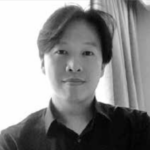
Lawrence Zi-Qiao Yang is Assistant Professor at the Institute of Social Research and Cultural Studies, National Yang Ming Chiao Tung University (NYCU). His research spans Cold War Taiwan media and literature, infrastructure studies, Chinese Nationalist propaganda culture, and environmental humanities. He is currently completing a book manuscript on the propaganda media of the Chinese Nationalists in Cold War Taiwan. At NYCU he teaches graduate seminars on war and media, inter-Asian cities, and theories of materialism.
His research articles have appeared in Modern Chinese Literature and Culture, Symploke, Verge: Studies in Global Asias, Chung-Wai Literary Quarterly, Taiwan Literature Research Journal, and an edited volume with SUNY Press.
Dr. Yang was a Hou Family Postdoctoral Fellow in Taiwan Studies at the Fairbank Center for Chinese Studies in AY2019-2020. He received his Ph.D. in East Asian Languages and Cultures from the University of California, Berkeley. He has held visiting positions at the University of California, Irvine, Academia Sinica, and the National Taiwan Library. He also served on the board of the North American Taiwan Studies Association.
My time as a Hou Fellow (2019–20) was a year of profound crossroads. As the pandemic began to reshape the world, the Fairbank Center provided me with an indispensable sanctuary. Beyond the unparalleled libraries, museums, galleries, and theaters at Harvard, it was the Hou Family’s generosity that protected and nourished my work during a period of critical career transition.
Looking back, that unusual year was the foundation upon which I built my subsequent path back to Taiwan. I am deeply honored to return and celebrate a decade of a fellowship that truly shelters and sustains the next generation of Taiwan Studies scholars.
—Lawrence Zi-Qiao Yang
YI-YANG CHENG
Hou Family Postdoctrol Fellow, 2020-2021
鄭奕揚
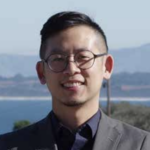
Yi-Yang Cheng is an independent researcher. He is currently examining the relationship between Formosan/Austronesian grammar and natural speech; he is also conducting microtypologies of grammatical structures across Formosan languages. His research centers on the documentation and analysis of the Austronesian languages of Taiwan (Formosan languages), particularly Matu’uwal Atayal (汶水泰雅語) and Kanakanavu (卡那卡那富語). Dr. Cheng has taught a wide range of university-level courses in linguistics, as well as intensive courses of Mandarin Chinese as a foreign language at beginner, intermediate, and advanced levels.
His recent publications are found in international open access journals including Open Linguistics, Italian Journal of Linguistics, and Taiwan Journal of Linguistics. In recent years, he has worked to provide linguistics training to Taiwanese Indigenous language activists and offer consultations on Taiwan’s Indigenous Language Proficiency Tests.
Dr. Cheng was a Hou Family Predoctoral Fellow in Taiwan Studies at the Fairbank Center for Chinese Studies in AY2020-2021. He holds an M.A. in Linguistics from National Taiwan University and a Ph.D. in Linguistics from the University of California, Santa Barbara. Outside of academia, he is passionate about music, film, and photography.
The Hou Family Fellowship opened up possibilities for me to reposition my expertise in theoretical linguistics in relation to a larger, more vibrant scholarly community, including that of Taiwan Studies.
—Yi-Yang Cheng
KEVIN WEI LUO
Hou Family Postdoctrol Fellow, 2021-2022
羅巍
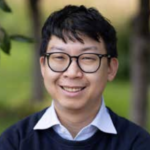
Kevin Wei Luo is an Assistant Professor of Political Science at the University of Minnesota, Twin Cities. His primary research agenda focuses on the study of state building and state power in China, Taiwan, and Asia, drawing insights from both historical and contemporary perspectives. He is also broadly interested in authoritarianism and democratization, development and security in Asia, and contemporary politics in China and Taiwan. He is currently working on a book that focuses on the transformative land redistribution campaigns implemented in China and Taiwan during the 1950s.
Professor Luo was a Hou Family Postdoctoral Fellow in Taiwan Studies at the Fairbank Center for Chinese Studies in AY2020-2021. He also held fellowships at UCLA’s Asia-Pacific Center and Schwarzman College at Tsinghua University. Prior to Minnesota, Kevin received his Ph.D. in political science at the University of Toronto. He earned an M.A. in Regional Studies: East Asia (RSEA) at Harvard University with honors and received a B.A. from the University of Chicago. He is a native of Tainan, Taiwan, and a proud graduate of Tainan First Senior High School.
I am grateful to be part of the Hou Family community at Harvard, especially for the connections that the fellowship program has fostered for the study of Taiwan. I look forward to giving back to the program for the next few decades to come!
—Kevin Wei Luo
HSUAN-YU (SHANE) LIN
Hou Family Postdoctrol Fellow, 2021-2022
林宣佑
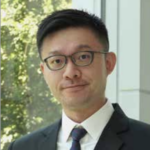
Hsuan-Yu (Shane) Lin is an Assistant Research Fellow at the Institute of Political Science, Academia Sinica (Taiwan). Recent projects explore how Taiwan’s public responds to external threats, how media and partisanship shape support for self-defense, and elite-public perception gaps in foreign policy.
His research sits at the intersection of international relations and political behavior, with a focus on elite–public interactions in foreign policy, U.S.–China–Taiwan relations, and Taiwan’s security and democratic resilience. His work has appeared in journals including The Review of International Organizations (RIO), British Journal of Politics and International Relations (BJPIR), Foreign Policy Analysis (FPA), and Conflict Management and Peace Science (CMPS), among others.
Dr. Lin was a Hou Family Predoctoral Fellow in Taiwan Studies at the Fairbank Center for Chinese Studies in AY2021-2022. He received his Ph.D. in Politics (International Relations) from the University of Virginia.
My favorite thing about the Hou Fellowship has been engaging directly with leading scholars at the Fairbank Center and beyond. These cross-disciplinary interactions have genuinely enriched my imagination of what Taiwan studies can be, opening doors I hadn’t known to look for. More than anything, the Fellowship has taught me to think beyond the box, and I haven’t stopped since.
—Hsuan-Yu (Shane) Lin
LEV NACHMAN
Hou Family Postdoctrol Fellow, 2021-2022
南樂
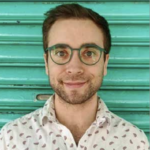
Lev Nachman is a political scientist and an Assistant Professor at National Taiwan University. He teaches in the Graduate Institute of National Development (國發所). He is also a Nonresident Fellow at the Atlantic Council Global China Hub and the National Bureau of Asian Research.
His second book, Contested Taiwan: Sovereignty, Social Movements, and Party Formation, was published in 2025 by the University of Washington Press. He has also published widely, including in The China Quarterly and Political Research Quarterly. Dr. Nachman is regularly quoted and cited by The New York Times, CNN, The Wall Street Journal, and other major media outlets for his analysis of Taiwan politics.
Dr. Nachman was a Hou Family Predoctoral Fellow in Taiwan Studies at the Fairbank Center for Chinese Studies in AY2021-2022. Before that, he was a 2019-2020 Fulbright Research Fellow in Taiwan and served as a Visiting Fellow at National Taiwan University from 2020-2021. He earned a Ph.D. in political science from the University of California, Irvine, in May 2021.
My highlights of my Hou Fellowship experience were Steve Goldstein and Michael Szonyi taking time to walk through my job talk with me, both were incredibly kind and supportive during my time at Harvard.
—Lev Nachman
JAEWOONG JEON
Hou Family Postdoctrol Fellow, 2021-2022
全在雄
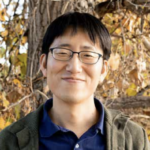
Jaewoong Jeon is an Assistant Professor in the Department of East Asian Studies at New York University. He is currently working on his first book, a comparative macro-history of capitalism that compares and contrasts the different logics of social life in Taiwan and Korea before their eventual subsumption under capital in the late 19th century.
Professor Jeon has long been interested in interdisciplinary approaches and trained in various fields, including anthropology, economics, and early modern studies. He practices comparative macro-history as a method of elucidating the history of capitalism in East Asia. In his work, capitalism is not reduced to an economic system but manifests as a new civilization with peculiar social relations, political forms, and cultural features. His research focuses mostly on Korea and Taiwan, situating them within world history.
When he was a Hou Family Postdoctoral Fellow in Taiwan Studies at the Fairbank Center for Chinese Studies in AY2021-2022, he was also a fellow at the Harvard Weatherhead Initiative on Global History. He earned his Ph.D. in History from the University of Chicago.
The fellowship gave me a sense of renewed possibility in the immediate post-pandemic period when everything was in doubt. I also gave an online talk during my fellowship, and I still hear back from scholars who got to know my work through this occasion. In this way, the fellowship has connected me with a broad range of scholars in the field and continues to foster a strong network of Taiwan studies scholars, of which I am a part.
—Jaewoong Jeon
RUOCHEN BO
Hou Family Postdoctrol Fellow, 2022-2023
伯若辰
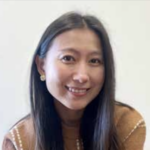
Ruochen Bo is an Assistant Professor in the Department of Communication and Design at Bilkent University. Her work, situated at the intersection between film and philosophy, has appeared in Film-Philosophy, Film Quarterly, Asian Ethnicities, Conversations: Journal of Cavellian Studies, and elsewhere.
Professor Bo was a Hou Family Predoctoral Fellow in Taiwan Studies at the Fairbank Center for Chinese Studies in AY2022-2023. She received her Ph.D. in Cinema Studies from the University of Toronto in 2024; her dissertation examines the aesthetic and ethical entanglements in Edward Yang’s cinema. She previously served as an Assistant Professor in the Department of Film Studies at UNC Wilmington (2024-25).
It was wonderful during the fellowship year to have sustained conversations with faculty, fellow researchers, and students across disciplines at Harvard, and access to the Harvard Film Archive’s 16mm Taiwan film collection was especially valuable. The vibrant scholarly community and excellent resources strengthened my thinking about Taiwan New Cinema.
—Rochen Bo
NAN-HSU CHEN
Hou Family Postdoctrol Fellow, 2022-2023
陳南旭
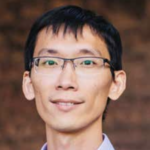
Nan-Hsu Chen is Assistant Professor of History at National Taiwan Normal University. A social historian of Taiwan and late imperial China, he utilizes local archives to reconstruct the lives of ordinary people and the social dynamics of island society, situating Taiwan within broader imperial and global processes. His current project examines the relationship between food supply and island warfare during cross-strait military campaigns centered on Taiwan from the seventeenth to the nineteenth century.
His research has appeared in journals including Late Imperial China, War in History, Itinerario, and The International Journal of Asian Studies. His research career has been supported by the Fulbright Program, the Chiang Ching-kuo Foundation, and Taiwan’s National Science and Technology Council.
Following a Hou Family Postdoctoral Fellowship at the Fairbank Center for Chinese Studies in AY2022–2023, Professor Chen has focused on the intersection of military logistics and local society. At NTNU, he offers English-language courses on Taiwan and East Asian history to a diverse body of local and international students. He earned his Ph.D. from Washington University in St. Louis, with a dissertation on the politics of statelessness in the borderlands of nineteenth-century Taiwan.
Our historical writing on Taiwan must incorporate a blend of the island’s local and global dimensions. The Hou Family Fellowship allowed me to undertake this challenge effectively at Harvard, where a truly global intellectual community and extensive research materials exist.
—Nan-Hsu Chen
ANATOL KLASS
Hou Family Postdoctrol Fellow, 2023-2024
柯岸濤
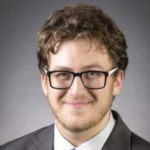
Anatol Klass is an Assistant Professor of Strategy and Policy at the United States Naval War College. He studies Taiwanese and Chinese history and is writing a book about the shared origins and comparative development of foreign policy institutions in the two governments.
His research has been published in the International History Review and Cold War History, and his writing has appeared in the Washington Post and Foreign Policy.
Professor Klass was a Hou Family Predoctoral Fellow in Taiwan Studies at the Fairbank Center for Chinese Studies in AY2018-2019. He also held a fellowship at the Harvard Kennedy School’s Belfer Center and the Columbia-Harvard China & the World Program. He has a Ph.D. in history from the University of California, Berkeley.
The Hou Fellowship was an essential component of my graduate school experience. It gave me the opportunity to research in Taiwanese archives, work with Harvard’s amazing faculty, and focus on writing for a full year. I am deeply grateful to the Hou family.
—Anatol Klass
SHINYI HSIEH
Hou Family Postdoctrol Fellow, 2023-2024
謝新誼
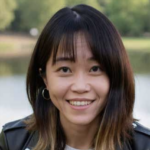
Shinyi Hsieh is currently completing her first book manuscript, Reckoning Transpacific Narratives of Global Health Success: Children, Women, and Animals in Postwar Taiwan. Dr. Hsieh’s research examines postwar Taiwan within the global history of medicine and public health, with a focus on transpacific scientific networks, imperial legacies, and the marginalized historical subjects in international health campaigns on the island.
She currently works at the University of California, San Francisco, in the Division of Graduate Education and Postdoctoral Affairs as a project and policy analyst and interdisciplinary educator. Her work bridges research and practice, focusing on educational equity, curriculum reform, and graduate student experiences in academic environments.
Dr. Hsieh was a Hou Family Postdoctoral Fellow in Taiwan Studies at the Fairbank Center for Chinese Studies in AY2023-2024. Previously, she also held a postdoctoral fellowship appointment at National Taiwan University. Dr. Hsieh received her Ph.D. in the History of Health Sciences from the University of California, San Francisco, in 2023.
The Hou Fellowship is such a meaningful opportunity for junior scholars in Taiwan studies! There really aren’t many spaces in the U.S. that center on Taiwan in this way. As the field continues to grow, especially in engaging critical issues across Taiwan, the U.S., China, and beyond, the Hou Fellowship feels especially pioneering and forward-looking. My favorite memory was definitely the professional development sessions and community-building events. I got to connect with and learn from so many wonderful scholars, which made the experience especially meaningful!
—Shinyi Hsieh
HARDY STEWART
Hou Family Postdoctrol Fellow, 2024-2025
洪乙己
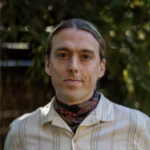
Hardy Stewart is a Ph.D. candidate in Chinese Language at the University of California, Berkeley. His dissertation, “Man Beyond the Sea: Hong Qisheng (1866–1928) and Peripheral Poetics of Provincial Taiwan,” asks how the intellectual and literary cultures of continental China traveled to Taiwan and changed or were changed by the island context. Its central case study is Hong Qisheng (1866–1928), a third-generation settler of Taiwan and self-proclaimed “man beyond the sea” who crossed the Taiwan Strait ten times in his navigation of a profound—yet profoundly interrupted—relationship with the continental metropole.
Focusing on a period of high colonialism in Taiwan, when the Qing Empire expanded with unprecedented force before ceding the island to Japan in the wake of the First Sino-Japanese War (1894–95), Hardy traces the tenacious yet tenuous spread of empires across oceans. He argues that Hong’s corpus reveals not a cultural essence but a human drama—a fraught pursuit of beauty and belonging, and a conflicted sense of personality and provenance—that was engendered by the paradox of his position on the periphery, where “civilization” expressed its furthest latitude yet faced its clearest limits.
Hardy was a Hou Family Predoctoral Fellow in Taiwan Studies at the Fairbank Center for Chinese Studies in AY2024-2025.
It is difficult to encapsulate my time as a Hou Family Fellow, and that is a testament to its impact. Supported at the Fairbank Center to explore the archives and challenge the Sinological status quo, I began to read the lyrical sociology of W. E. B. Du Bois, study the labyrinthine fugues of J. S. Bach, and approach the complexities of contemporary Taiwan with a multidisciplinary perspective. In research and in life, everything changed for me.
—Hardy Stewart
SARAH PLOVNICK
Hou Family Postdoctrol Fellow, 2024-2025
卜少南
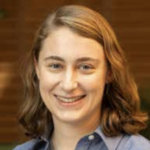
Sarah Plovnick is the founder and host of Taiwan Salad, an independently produced YouTube video series dedicated to deepening public understanding of Taiwan’s culture, politics, and international relations. The channel explores topics such as Taiwanese identity, cross-strait relations, democratic development, international media coverage, and everyday cultural life. Blending academic insight with accessible storytelling, Taiwan Salad features interviews with scholars, journalists, activists, and creatives, as well as on-the-ground reporting and narrative explainers aimed at broad audiences.
Her work focuses on how media infrastructures, listening practices, and sonic environments shape political experience and historical memory. She is committed to bridging academic research and public discourse through digital media and public-facing scholarships.
Dr. Plovnick was a Hou Family Postdoctoral Fellow in Taiwan Studies at the Fairbank Center for Chinese Studies in AY2024-2025. She completed her Ph.D. at the University of California, Berkeley, where her research examined the recent history of the Taiwan Strait (1949–present) through the lens of sound and audio technologies.
The Hou Family Fellowship opened up possibilities for me to reposition my expertise in theoretical linguistics in relation to a larger, more vibrant scholarly community, including that of Taiwan Studies.
—Sarah Plovnick
WAN-TING (WENDY) WANG
Hou Family Postdoctrol Fellow, 2025-2026
王琬葶
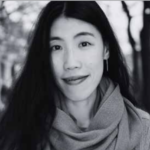
Wan-ting (Wendy) Wang is working on a book that establishes an Indigenous-centered media history of Taiwan, demonstrating how Indigenous peoples transformed tools of colonial control into vehicles for futurity. Parallel to this book project, she is developing a second project on how networks of care in queer and more-than-human kinships engender multiple sites of agency in Chinese-language literature and media cultures. She is interested in how media and technology entangle with human bodies and environmental relations across Chinese-language and imperial Japanese cultures.
Dr. Wang is a Hou Family Postdoctoral Fellow in Taiwan Studies at the Fairbank Center for Chinese Studies in AY2025-2026. Dr. Wang holds a Ph.D. in East Asian Languages and Cultures from the University of California, Berkeley.
The Hou Fellowship is a true intellectual home for young scholars. It sustained my research into Taiwan’s cultural vibrancy, and helped me see, more fully, how Taiwan’s voice reaches beyond its shores.
—Wan-ting (Wendy) Wang