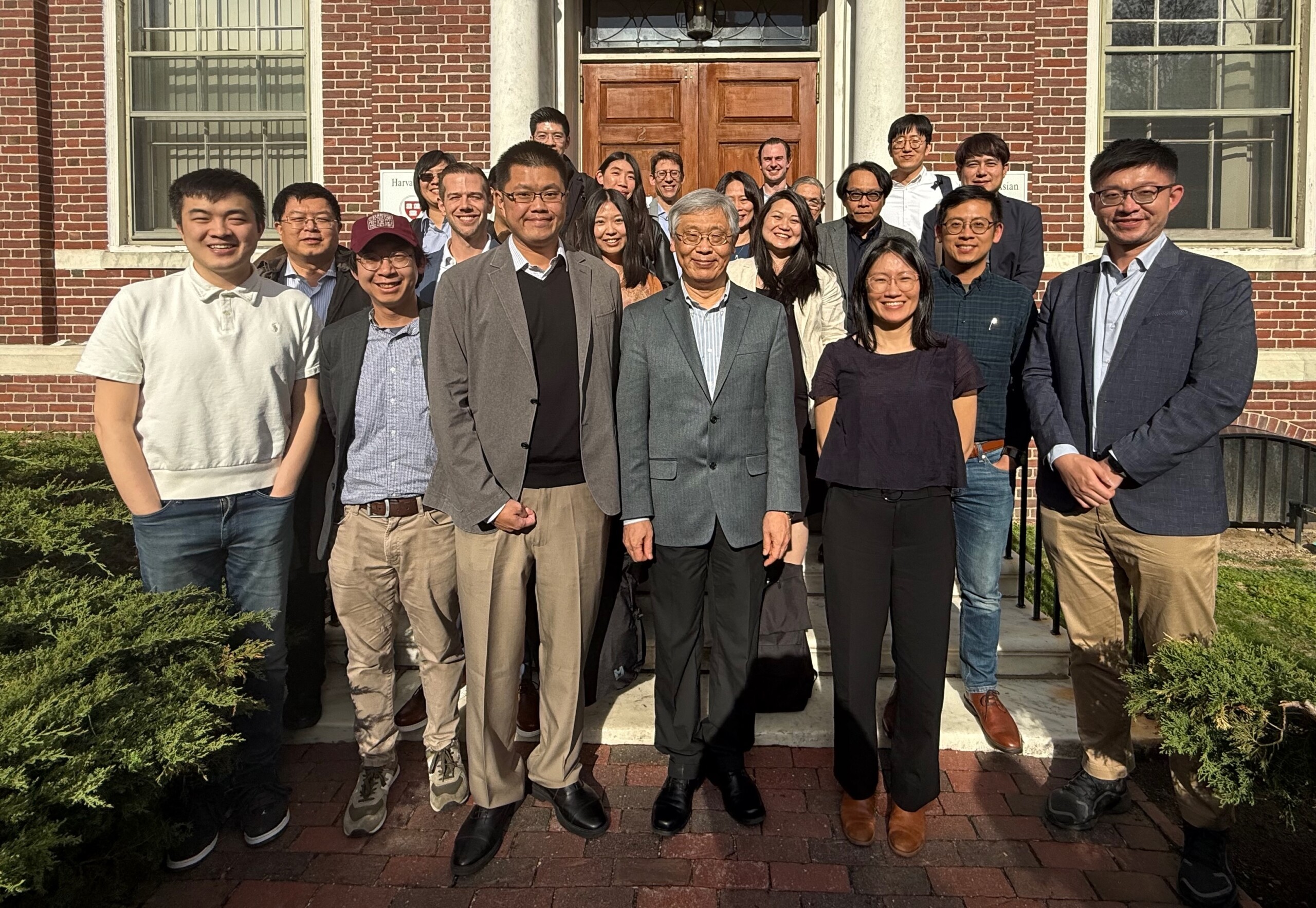
The second annual Taiwan Studies+ Symposium—which was generously supported by both the Fairbank Center for Chinese Studies and the Department of East Asian Languages and Civilizations at Harvard University and the Chiang Ching-kuo Foundation for International Scholarly Exchange—was held on April 17, 2026, and brought together scholars from the U.S. Taiwan, and other parts of the world for a timely interdisciplinary conversation on new directions in Taiwan Studies. The full day event was convened by David Der-wei Wang, the Edward C. Henderson Professor of Modern Chinese Literature, Harvard University, and organized by Kevin Luo, Assistant Professor of Political Science, University of Minnesota; Kyle Shernuk, Assistant Professor of Modern Chinese Literature & Culture, Georgetown University; and Yedong Sh-Chen, Ph.D. in East Asian Languages and Civilizations, Harvard University, and a 2025-26 Graduate Student Associate this year at the Fairbank Center for Chinese Studies.
The symposia’s goal is to foster new linkages and networks within the broader, bourgeoning Taiwan Studies field. As Taiwan finds itself reentering into the global conversation, where does the field of Taiwan Studies find itself in this historical moment? This is but one of the important questions that the symposium panels sought to address.
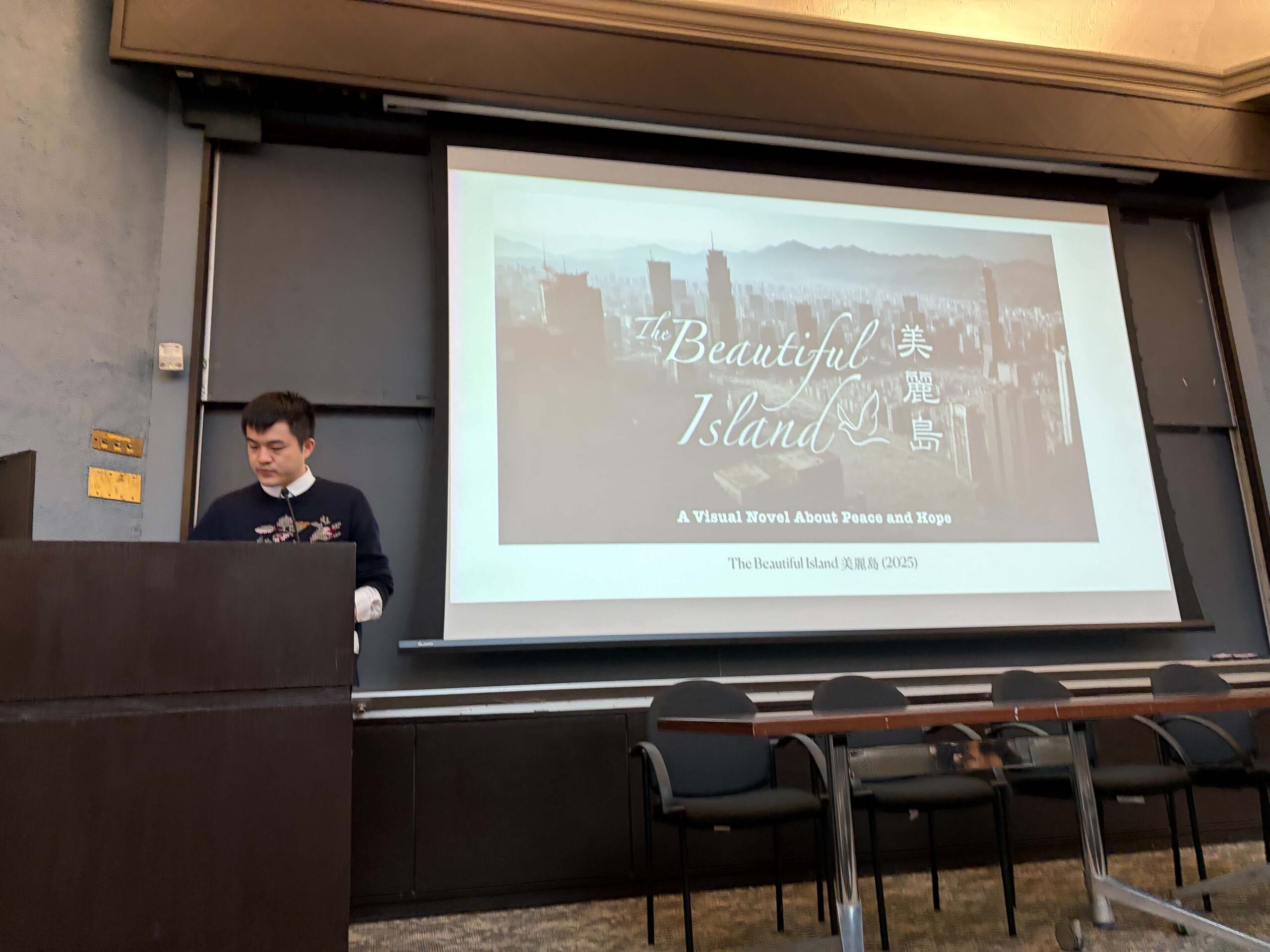
The first half of the day focused on how media representations and literary imaginations shape Taiwanese culture. The first panel, “Media, Games, and Sounds,” addressed multimedia developments in video game narratives and ethics that help us to reimagine the meaning of Taiwan, as well as how the management of noise contributed to the consolidation of the state during the democratization era. The second panel, “Indigeneity and Eco-Literature,” addressed the relationship between Taiwan’s Indigenous peoples and the environment from the Japanese colonial period to today. Collectively, the presenters focused on recovering Indigenous agency from colonial narratives and rejected instrumentalized representations of Indigeneity.
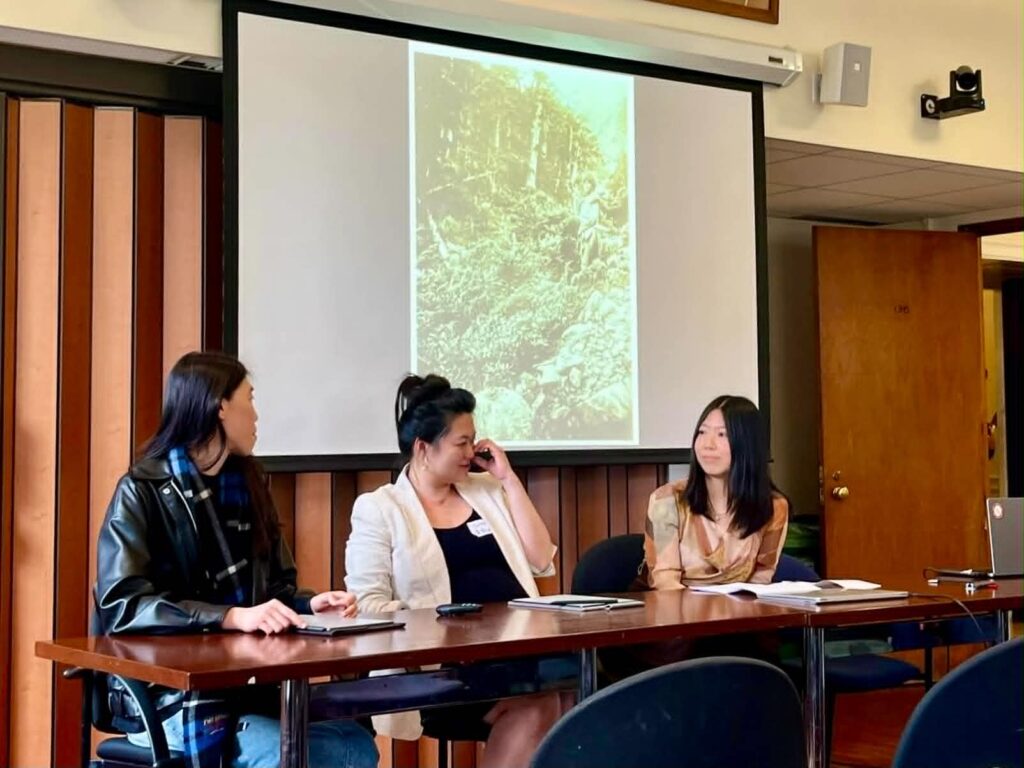
The symposium’s afternoon session centered on economic infrastructures and political connections throughout Taiwan’s premodern and modern history. The third panel, “Capitalism, Infrastructure, and Economic Ties,” highlighted global perceptions of Taiwan’s semiconductor industry today, the role various media have played in formalizing Taiwanese infrastructure during the Cold War, and early histories of capitalism in Dutch colonial-era Taiwan. The final panel, “Global Taiwan and Historicizing Politics,” examined Taiwan’s political connections throughout the region, from Vietnam to Malaysia and Japan, as well as Taiwan’s history of transitional justice in global perspective.
The symposium concluded with a forward-looking discussion on the state of Taiwan Studies as a field, the global conversations that have enriched the field as a whole, and a critical debate about the role of geopolitics in recent scholarship.