
An Oxbow in the River of Time? “River Elegy” and China’s Quest for Modern Greatness

by Andrew S. Erickson, Visiting Scholar at the Fairbank Center for Chinese Studies; Professor of Strategy, China Maritime Studies Institute, U.S. Naval War College
Please Note: The views expressed here are the author’s alone and do not represent those of any organization with which he is affiliated. He thanks anonymous reviewers for thoughtful inputs.
What is China, where should it go, and what can it be in the future? Open-minded investigation of these critical issues has been strictly foreclosed during the dozen-plus years of Xi Jinping’s unreconstructed rule. This makes it all the more valuable to revisit River Elegy, the CCTV documentary television series that sparked a national debate back in the late 1980s—and the last major state-endorsed public examination of such vital questions.[i]
What are the enduring strengths and weaknesses of the People’s Republic of China (PRC), as compared to the West? This is a topic of intense discussion today. In some respects, the Chinese Communist Party (CCP) has proven remarkably flexible and adaptable, but it has not institutionalized its exercise of power in the way some thought might finally be happening under Deng Xiaoping.[ii] In recent years, China has become an innovation powerhouse. Manifold advantages in commercial and military manufacturing make it the leader in global shipbuilding and other major areas. Parts of its economy and intellectual space are thriving.

And yet other aspects of Chinese society suffocate under the CCP’s iron grip. Can China fully escape the “middle-income trap” when the free flow of knowledge, transparency, and rule of law are the greatest catalysts for human potential? Can China find a positive, sustainable place in the world while closing itself off from outside influence? The country has developed its economy tremendously and achieved global influence—no small feat. But the authoritarian traditions described in River Elegy almost 40 years ago remain as powerful as ever. Political autarky, inability to speak truth to power or the past, demographic decline, economic stagnation, and other societal problems may ultimately hold China back from realizing its greatest dreams.

There was a time when challenging intellectual debate and criticism was embraced, even celebrated. Back in 1988, as China was emerging from Maoist repression through Deng’s reforms, a group of brilliant writers and documentary filmmakers produced River Elegy, which underscored many of the problems that continue to plague China today. They criticized the country’s inward-looking, feudal cultural and historical traditions and argued for a “new civilization” based on an open, internationally-facing society emphasizing science, democracy, and law. The TV series became an instant sensation, a social critique the likes of which had never before been seen, and stirred a population aspiring to abandon historical failures and build a freer, wealthier country. For CCP leaders, however, the criticism hit too close to home. The series was accused of lighting the fuse that ignited nationwide pro-democracy protests in 1989 and banned completely.
Nearly four decades later, despite astonishing economic progress, the points raised in River Elegy stand unmitigated as warning signals that lack of political reform and openness may limit China’s ability to flourish in the information age. Xi has doubled down on both sides of his predecessors’ reactions to the TV series. As the documentary’s supporters advocated, he has promoted technological advancement and strong seaward expansion across all elements of national power. But as the film’s Old Guard critics would have directed, he has prevented any kind of meaningful political reform. Even mentioning the contradictions and risks inherent in this highly-leveraged bifurcation is banned from public discourse.

River Elegy is thus a telling touchstone evoking intense introspection, from a time when China could examine itself with a candor and hope unimaginable today. Revisiting this now-banned self-reflection can help us better understand the course China has taken in recent decades, and where it may be headed. The Yellow River and its seaward journey offer a compelling thematic and symbolic narrative thread; riverine and maritime elements are central to China’s failures and successes in its fitful quest for modernization.[iii]
Key themes in the history-making River Elegy hold lessons for today and bear close examination. “In Search of a Dream,” the first of the TV series’ six episodes, describes Chinese civilization as the last gasp of premodernity. Europe under the Enlightenment, with its classical roots in the Aegean and broader Mediterranean, disrupted all previous societies and polities, which failed to rise to the challenge. But in China, a crisis of confidence in the collectively-remembered past triggered deep searching for roots and national quintessence, stirring a complex cocktail of national pride and prickly emotional defensiveness. What follows in the documentary is an exploration of this ingrained societal dynamic, a search that today seems shockingly remote. The Yellow River, anthropomorphized as a dragon, is portrayed as tyrannical, symbolizing imperial rule and societal submission. Only by creating “a new civilization,” River Elegy intones, can China overcome cyclical authoritarian stagnation.

The second episode of River Elegy, “Destiny,” underscores the unavoidable imperative of opening to the world. China’s “yellow earth” civilization is deemed seasonal, cyclical, fatalistic. China built the Great Wall against marauding nomads, without anticipating Western invasion by sea. Worshipping this terrestrial barrier as a false idol of “closure, conservatism, incompetent defense, and timid non-attack” proved a catastrophic strategic failure.
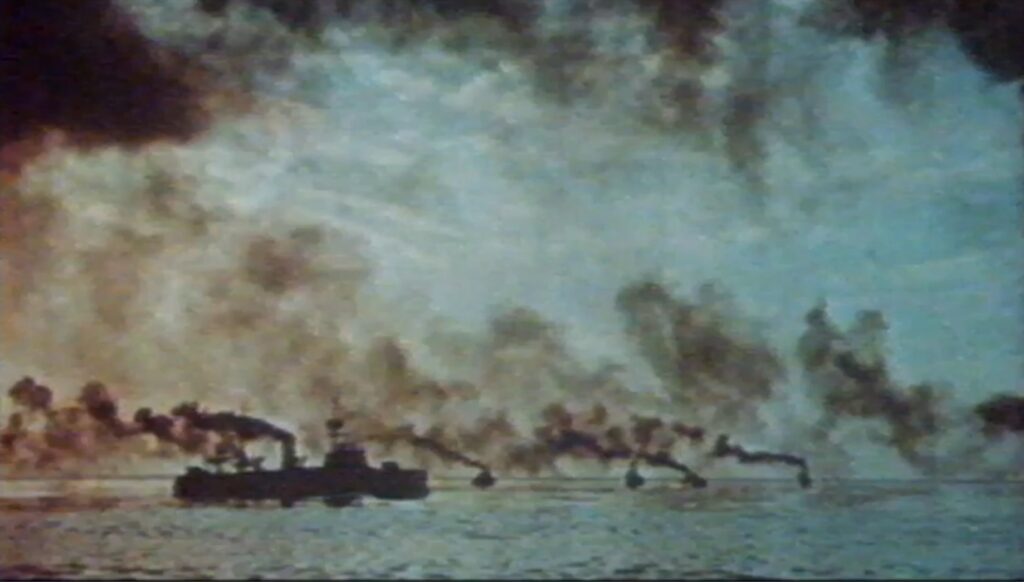
From Admiral Zheng He’s treasure fleets in the Ming Dynasty to invasion by Western powers in the Qing to naval officer Deng Shichang’s martyrdom in the Sino-Japanese War’s Yellow Sea battle,[iv] an imperative of salvation and modernization emerges. “We can no longer afford to lose any chance given to us by fate,” the episode concludes. “We must no longer refuse the invitation of the sea.” Twenty-seven years later, this language would be echoed in Beijing’s 2019 Defense White Paper, but in a very different context. “The seas and oceans bear on the enduring peace, lasting stability and sustainable development of China,” the first PRC white paper on military strategy emphasized. “The traditional mentality that land outweighs sea must be abandoned, and great importance has to be attached to managing the seas and oceans and protecting maritime rights and interests.”[v]
The third episode, “Aura,” laments that China pioneered theoretical thinking regarding astronomy, spaceflight, and even jet propulsion; yet lost out in parlaying it into practical results, at which Westerners excelled. “…[I]t was the Western powers who relied on the guidance of the compass needle to force their way to our doorstep.”
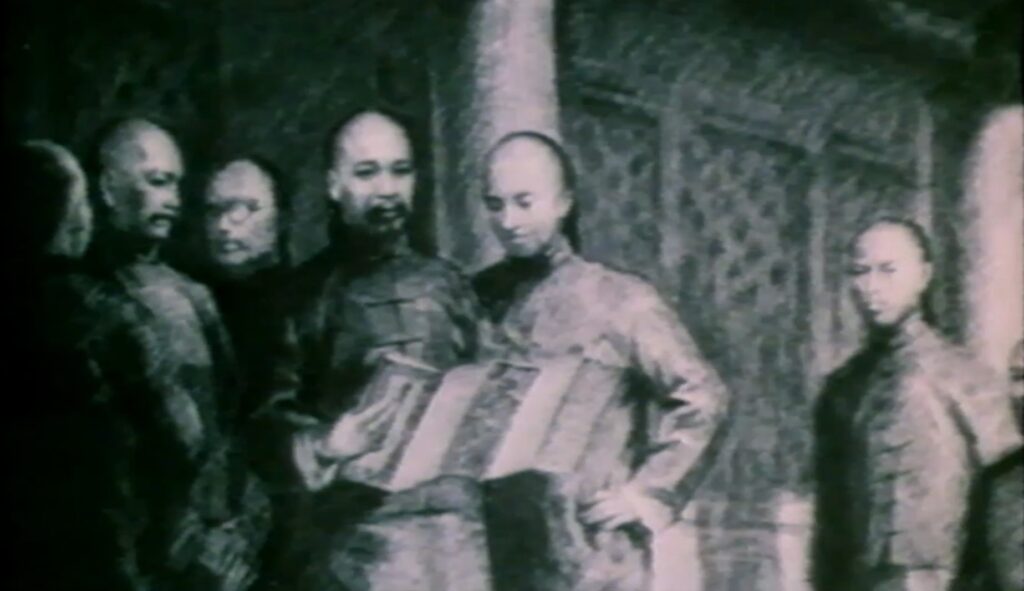
The fourth episode, “A New Era,” opens with an obvious change from Maoist policies, when the CCP held the Third Plenum of the Eleventh Central Committee: “This irresistible tide of history finally pushed China into the current of socialist reform on December 18, 1978.” Next comes an introspective revisiting of the Industrial Revolution, and the leading advantages that Western powers seized by embracing it as China failed to do. “Fate is giving us another once-in-a-millennium opportunity,” the episode concludes. “If we want China to enter the world, we must also let the world enter China.”
River Elegy’s penultimate episode, “Worries,” shows how China was shaped fundamentally by the constant threat of flooding from the roiling Yellow River. It traces the political vicissitudes of the periodically-flooded riparian port city Kaifeng—historically China’s capital no fewer than eight times. There CCP Chairman Liu Shaoqi was secretly imprisoned for the last 28 days of his life in 1969. The fact that not even a potential successor to Mao was safe from extremist persecution is invoked to stress that Party reforms must persist in order to break China’s historical vicious cycle.

The final episode, “Azure,” compares the “Confucianism” of China’s historically “inland” civilization with the dynamically superior “blue civilization” originating from Ancient Greece in the Mediterranean, whose increasingly sophisticated sailing ships catalyzed commerce, science, and democracy. It highlights related innovations that powered the Western Renaissance and global preeminence.
The episode then traces China’s ineffectual efforts to address the challenges presented by Western power. The Self-Strengthening Movement to adopt Western technology and methods in order to preserve the Qing state and Confucian order yielded some advanced armaments factories, and at the outbreak of the 1894–95 Sino-Japanese War, China boasted more warships than Japan. But the Qing lost decisive battles to France and Japan successively—the latter with a corrupt contractor filling many shells with sand. The heroism of Deng Shichang and others in the Yellow Sea could not overcome utter disarray in command, the product of a system too backward and incompetent to be remedied by the last-ditch infusion of foreign advisors and technology. Given this painful history, the events of 1894–95 were resonant in 1988 and resonate now: the “humiliation” still haunts today’s state and society.[vi]

Qing structural stagnation proved beyond the capability of even farsighted talents to overcome. Yan Fu, the first Chinese student sent to England to study naval affairs, did not become a battleship commander but rather a reformist intellectual. He championed for China what he regarded as the essence of European strength: harvesting individual potential within a social contract that facilitated competition.
But Qing reforms failed just as Japan’s Meiji Restoration succeeded, both to dramatic effect. Even China’s best and brightest could not escape the national fate of Confucian reversionism. Whereas Yan faded from influence just when China needed his thinking most, his classmate Itō Hirobumi became Japan’s Prime Minister and helped take his nation on a powerful, destructive self-strengthening course that culminated in the invasion of China and the Pacific War.
Circling back symbolically, River Elegy emphasizes that the Yellow River, and by extension China’s development approach through the 1980s, was insufficient to provide the necessities of modern advanced competitive society: science, democracy, law, and resources to sustain a large population.
The episode celebrates businesses from coastal provinces that were flourishing in the remote Yellow River redoubt of Yan’an, the CCP’s refuge at the Long March’s terminus in 1937. The opening of coastal cities and new, economically freewheeling administrative districts—most dramatically the establishment in 1988 of the island province of Hainan upon its cleaving from Guangdong—is hailed in dramatic terms: “This historical feat will refresh the colors of Chinese culture.”
Those colors no longer burst forth with such freshness and freedom. In the era of Hu Jintao, it was no longer possible to publicly question the very path and purpose of PRC society, as River Elegy had done. But the road Beijing should best take for ascendance on the world stage was still very much subject to discussion. Accordingly, The Rise of Great Powers—another CCTV-produced program, as well as a book series—debuted in 2006, exploring which factors enabled major nations to grow fastest and most successfully. Hu himself reportedly had directed the CCP Central Committee to study the “Historical Development of Major Countries in the World since the 15th Century” in 2003, inspiring the TV documentary.[vii] Like River Elegy, The Rise of Great Powers suggested that China still had much to learn from the West.

Today, under Xi, the PRC is reenvisioned as a uniquely powerful model in its own right. What both its internal and external course should be has been removed from open discussion. Fundamental foreign lessons are deemed unnecessary, public debate dangerous, and national rejuvenation assured—provided Xi and his Party remain firmly in control. Unlike in the 1980s, leading intellectuals cannot openly question or challenge state policy. Reflecting this narrowing of permissible discussion, eminent Tsinghua University scholar Yan Xuetong limited his scope of inquiry in a recent major article to “which Chinese political values will guide China’s policies in shaping the future international normative order.”[viii] No mention of any possible contributions from outside of China. Intriguingly, Yan’s book on Leadership and the Rise of Great Powers warns against overemphasizing material and coercive power at the expense of moral and institutional legitimacy. But it does not criticize Xi or the Party by name[ix]—actions that would trigger the banning of a book and the suppression of its author today.
The oxbow in the river of time during Xi’s “new era”—the doubling back dramatically in retrogression—was as unknown to and unanticipated by River Elegy’s creators as it was to all too many of us back then. And, while reclosing politically, China has achieved remarkable economic and military ascension as one of just two global superpowers.

However, China’s growth of national power is already slowing. Among other challenges, the country faces increasing headwinds from the threat of a shrinking population, the lasting result of the ruinous “One Child Policy” of 1980–2015, exacerbated today by many young people’s decision to not have children at all.
What River Elegy rightly emphasized throughout, and accurately foresaw, was the importance of riverine and maritime metaphors and actions in fundamentally shaping China’s condition and place in the world. “The Yellow River will eventually merge into the azure sea,” the film concludes redemptively. “The pain of the Yellow River, and the hope of the Yellow River, has created its greatness.” River Elegy closes on an optimistic note: “After 1,000 years of solitude, the Yellow River finally sees the azure sea!”
That reality has become undeniable in so many ways today, but in far from the manner that River Elegy’s creators and supporters advocated. China is the undisputed global leader in many civilian and military elements of maritime power.[x] Xi is China’s first great navalist statesman, the world’s greatest navalist leader today, and among the world’s greatest navalist statesmen in modern history.[xi] His seaward focus, prioritization, and preliminary results are beyond doubt. He has selectively embraced some of the lessons River Elegy sought to impart: “Threats to China’s national security are primarily at sea, the focus of military struggle is mainly at sea, and the center of gravity of China’s expanding national interests is at sea.”[xii]
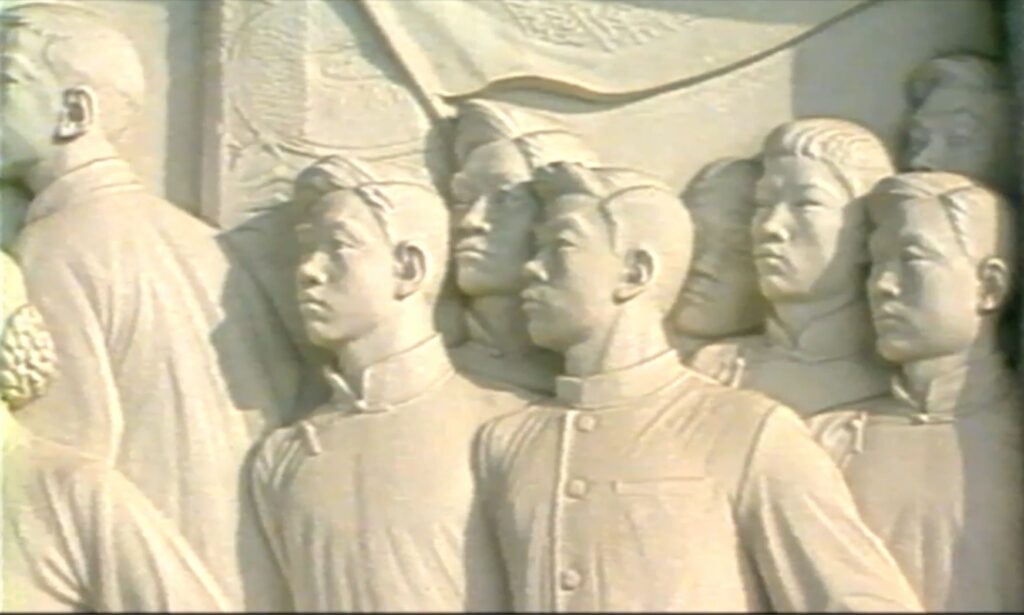
But what this all means, and what course will China take on the world’s oceans, remains uncertain. With Xi at the helm, adamant in his “back to the future” approach, the ship of state is of a very different construction and on a very different course from what River Elegy’s creators envisioned. China has achieved the maritime economy and power, the aerospace advances, and much other material progress that they called for. But these are all anchored to a civilizational model inherently opposed to the one they so fervently promoted. The ultimate canary in the coalmine may be the young generation’s outlook. River Elegy is a product of the 1980s, a high-water mark of idealistic optimism. All too many of today’s Chinese youth are cynical, nihilistic, or despairing—something no amount of Xi Jinping Thought can remedy.[xiii] This betrays a paradoxical pattern of a nation that is “outwardly strong, inwardly brittle” (外强中干).[xiv] Like unreinforced concrete, the massive CCP structure has tremendous compressive strength, but lacks tensile strength from the “rebar” of resilience.
Somewhat akin to Meiji Japan, China under Xi seeks to master Western, and other advanced foreign, technologies and tactics—while simultaneously going further in rejecting the freethinking systems that produced them. This drive is in service of the quest to “Enrich the Country, Strengthen the Armed Forces” (富国強兵); it was pursued unrestrainedly and unapologetically by Tokyo then, and by Beijing now. China is active around the world in ways that might have astonished River Elegy’s producers. But the country is increasingly not letting the world in—precisely what they admonished against. Xi seeks to master the open sea while channeling the confined authoritarian culture of the Yellow River. A powerful blue presence in the world, but one that remains to its core repressively riverine: might this contradictory mix produce the worst of both? In finally overcoming Qing weakness, does Beijing now risk the equivalent of post-Meiji overreach? How far can this torrid combination take China, and to where?

Whatever introspection may occur in China is not for public participation or view. There are Chinese intellectuals who worry deeply about these issues, but they cannot publish such questions and thoughts. Understanding what China is and what its future will be is arguably more important than ever, but citizens may not pursue these questions freely in Xi’s PRC, whose dominant techno-surveillance state renders dissent largely impossible. Yet even the paramount leader himself cannot know where it will all lead, and how the great river’s flow will shift over time. Could there yet be another oxbow turning back in the direction of reforming and opening up—such a strong, if turbulent, current right through the end of the film’s development and release?
What seems clear for now is that China remains shaped by the geophysical, societal, and ideational dynamics of the Yellow River, even as it has dramatically entered the azure sea. Whether it is well prepared for the wind and waves to come remains a dangerously repressed question. Sailing full steam ahead while rejecting the wisdom of 1988 risks stalling in stagnant waters; or, worse yet, approaching rocky shoals.
[i] River Elegy should not be mythologized. It could not definitively answer “What is China?”—a fraught question with which Chinese and foreigners alike have grappled inconclusively for centuries. It made sweeping generalizations and some non-factual statements. With elite roots, it embraced some CCP misconceptions of its time, such as misdiagnosing China’s demographic problem as overpopulation, when in fact draconian CCP policy “remedies” have ensured the opposite. Despite these undeniable shortcomings, however, the film remains a marked alternative to the sharply restricted public discourse that has followed, and merits reflection accordingly.
[ii] Joseph Fewsmith and Andrew J. Nathan, “Authoritarian Resilience Revisited: Joseph Fewsmith with Response from Andrew J. Nathan,” Journal of Contemporary China 28.116 (2019), 167–179; especially 176, 179.
[iii] Andrew Rhodes, “The 1988 Blues—Admirals, Activists, and the Development of the Chinese Maritime Identity,” Naval War College Review74.2 (Spring 2021): 61–79, https://digital-commons.usnwc.edu/nwc-review/vol74/iss2/6/.
[iv] 段锦川 [Duan Jinchuan],《沉船——1997年的故事》[Shipwreck: The Story of 1997], (Beijing: 段锦川纪录片工作室 [Duan Jinchuan Documentary Studio], 1999).
[v] China’s Military Strategy (Beijing: State Council Information Office, May 2015), https://english.www.gov.cn/archive/white_paper/2015/05/27/content_281475115610833.htm.
[vi] Andrew Rhodes, “Same Water, Different Dreams: Salient Lessons of the Sino-Japanese War for Future Naval Warfare,” Journal of Advanced Military Studies 11.2 (Fall 2020): 35–50, https://www.usmcu.edu/Portals/218/2_Rhodes_JAMS.pdf.
[vii] Andrew S. Erickson and Lyle J. Goldstein, “China Studies the Rise of the Great Powers,” in Erickson, Goldstein, and Carnes Lord, eds., China Goes to Sea: Maritime Transformation in Comparative Historical Perspective (Annapolis, MD: Naval Institute Press, 2009), 401–25; Erickson and Goldstein, “Studying History to Guide China’s Rise as a Maritime Great Power,” Harvard Asia Quarterly 12.3-4 (Winter 2010): 31–38.
[viii] Yan Xuetong, “Chinese Values vs. Liberalism: What Ideology Will Shape the International Normative Order?” Chinese Journal of International Politics 11.1 (Spring 2018): 1–22, https://doi.org/10.1093/cjip/poy001.
[ix] Yan Xuetong, Leadership and the Rise of Great Powers (Princeton, NJ: Princeton University Press, 2019).
[x] For summary of PRC maritime superlatives, see Andrew S. Erickson, “Foreword,” in Manfred Meyer (edited by Larry Bond and Chris Carlson), Modern Chinese Maritime Forces, Second Edition (Admiralty Trilogy Group, 1 October 2025), 3, https://www.andrewerickson.com/2025/10/most-comprehensive-unclassified-order-of-battle-for-chinas-sea-services-modern-chinese-maritime-forces-1-october-2025-ed-includes-new-shuiqiao-class-lpu-br/.
[xi] Andrew S. Erickson, The People of China’s Navy and Other Maritime Forces: Extended Summary of Conference Findings, China Maritime Report 47 (Newport, RI: Naval War College China Maritime Studies Institute, 28 May 2025), https://digital-commons.usnwc.edu/cmsi-maritime-reports/47/; China Maritime Studies Institute, “The People of China’s Navy and Other Maritime Forces,” Quick Look Summary of Conference Findings (Newport, RI: Naval War College, 22 May 2025), https://digital-commons.usnwc.edu/cmsi-findings/1/.
[xii] Ryan D. Martinson, “China’s Oceanic Aspirations: New Insights from the Experts,” Orbis 66.2 (2022): 258.
[xiii] See, e.g., Xu Jilin, “Those Born in the 1990s and 2000s No Longer Believe in Great Narratives,”https://www.readingthechinadream.com/xu-jilin-on-youth-and-grand-narratives.html.
[xiv] Helen Gao, “The China That the World Sees Is Not the One I Live In,” New York Times, 13 November 2025, https://www.nytimes.com/2025/11/13/opinion/china-politics-social-public-mood.html.