
For many years, the Fairbank Center has supported undergraduate students who need to travel to China, Taiwan, or other locations to complete research for their theses with our Research Grants, and this year we opened up grants for graduate students to pursue research as well.
When students return from their travel, they share reports reflecting on what they learned, the challenges they encountered, and how their own research was further shaped by the experience. These reports are always exciting reads for us—not only because they tell us more about our students’ topics, but because they reveal much about the researchers themselves. All of the students profiled recently graduated, and we want to congratulate them alongside the many other students who wrote theses about China, Taiwan, and other sinophone spheres.
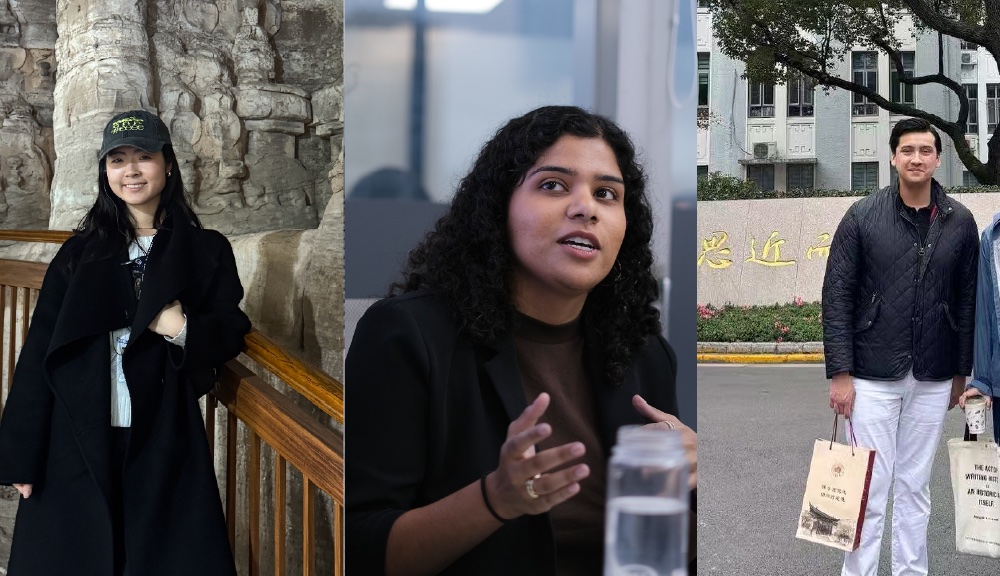
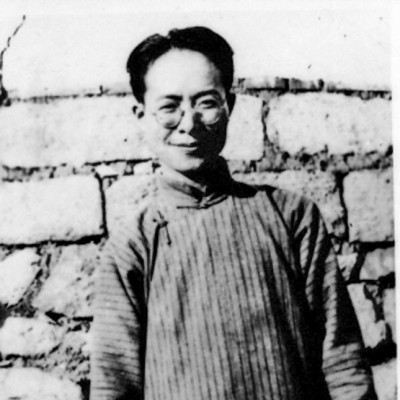
Jeff Conners (‘26) – Harvard College – Literature Comes to Life
Jeff Conners just graduated in May—and completed his thesis, “Shen Congwen: A Personal and Literary Revolution through 20th Century China.” Shen Congwen is one of the most famous authors from the May 4th period, but after the after the Communist takeover of 1949, Shen Congwen was assigned to the National History Museum in Beijing, where he remained for the rest of his life. Conner’s thesis addresses and embraces both of these eras. The research trip to Beijing in January allowed him to further delve into Shen Congwen’s life and legacy.
“I visited libraries and academic institutions, met with scholars working on modern Chinese literature, and spent time thinking about how Shen’s writing moves between local experience and national history. … Through my conversations I was able to learn more about documents and letters that I overlooked and connect movements that I previously thought as disjointed. Through this I was able to add more primary sources to my thesis that my readers came to praise.”
— Jeff Connors (’26, Harvard College)
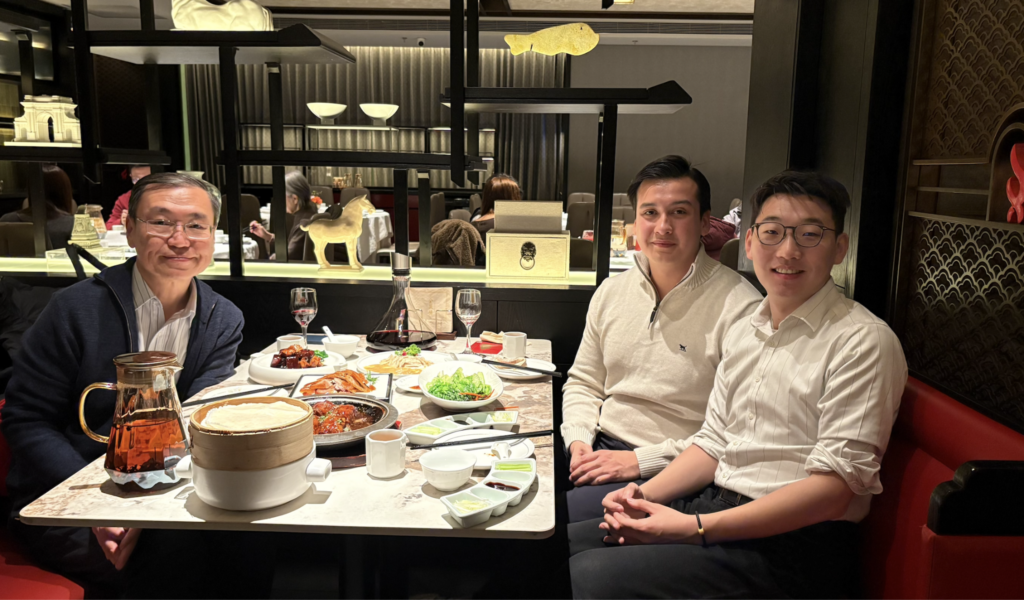
Meeting with scholars from Peking University and Fudan University allowed Jeff to engage in how Shen Congwen’s works about his hometown in rural Hunan still resonate with modern readers:
“One surprising part of the trip was how alive these questions still felt outside the archive. Conversations with scholars often moved quickly from Shen Congwen to broader questions about modernity, rural memory, political pressure, and what kinds of voices are allowed to endure in literary history.”
— Jeff Connors (’26, Harvard College)
A short month in Beijing added nuance to Jeff’s work that he ultimately brought back to Harvard, and his thesis:
“It was striking to experience how much physical place changes the way one reads Shen. Walking through cities, campuses, museums, and historical sites made the project feel less like a purely textual study and more like an investigation into how writers preserve worlds that are vulnerable to being overwritten.”
— Jeff Connors (’26, Harvard College)
Joey Liu (‘26) – Harvard College – Interviewees & EVs
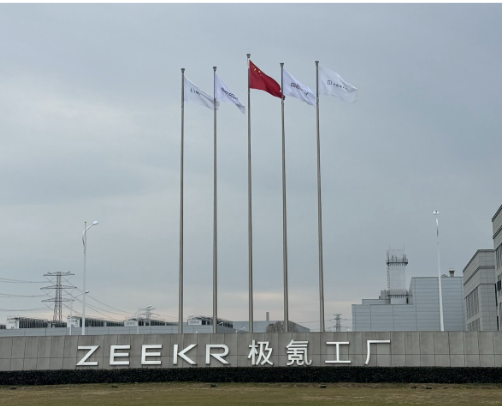
Joey Liu, another Class of ’26 Harvard College graduate, completed her senior thesis, “The Student Becomes the ‘Master’: Chinese EV Development Through The Lens of East Asia.” The central question was: how did China surpass Japan, Korea, and even the rest of the world in EV production when they arrived late on the scene of automobile manufacturing? While her thesis drew upon primary policy documents and firm-level subsidy data, it was her time in Shanghai, Ningbo, Shenzhen, and Guangzhou that allowed her to travel to factories and companies to conduct interviews about the EV industry in China.
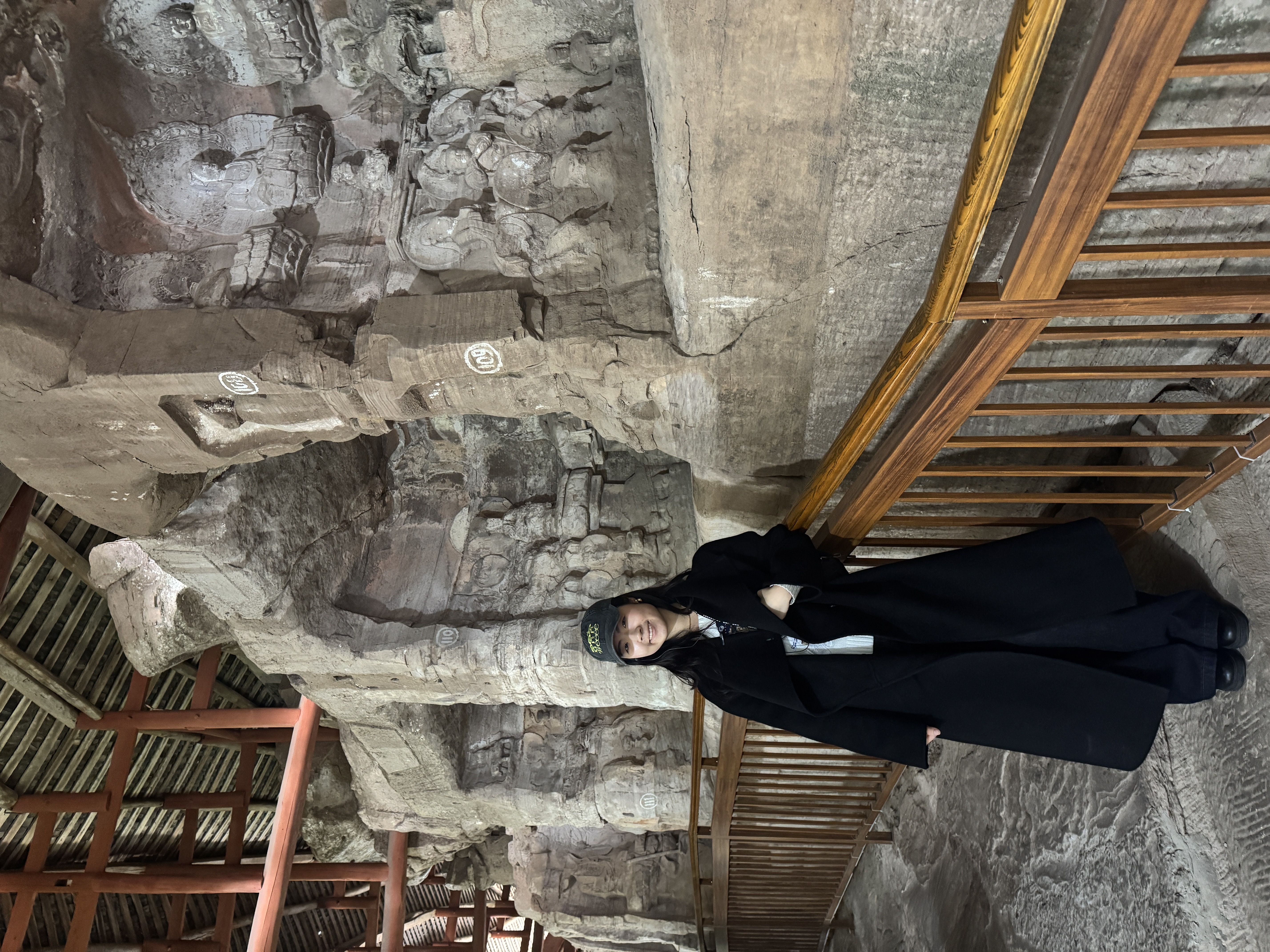
“Going to China allowed me the opportunity to connect with and conduct interviews in person. Each day was very different, from traveling to factories or companies to conduct interviews. I spent some time walking around the cities and neighborhoods as well. A lot of time was spent figuring out the logistics of travel.”
— Joey Liu (’26, Harvard College)
Joey’s research eventually revealed that:
“China’s EV leadership reflects a regional trend: sequential market protection, large-scale subsidies, and export-led growth. Japan and Korea used these same tools in earlier decades to build globally leading internal combustion engine (ICE) capabilities. China used these tools at a time when the industry was transitioning towards EVs, allowing it to leapfrog established players to become the leader of the newly emerging field.“
— Joey Liu (’26, Harvard College)
There were some struggles in the process, including late ride-share drivers and almost not being allowed into a plant because of an issue with documentation, but ultimately the trip (and thesis) proved to be a success:
“Going to China and writing a thesis on China has extended and deepened my understanding of global events and of the history of a rising superpower. My worldview has broadened and I feel like a mini-expert in Chinese EVs and its industrial policy background! It has been incredibly challenging but also incredibly rewarding. I will always remember and look back at this time when thinking about my college experience.“
— Joey Liu (’26, Harvard College)
Pooja Joshi – Harvard Kennedy School | Harvard Business School – Regional Expertise & Cooperation
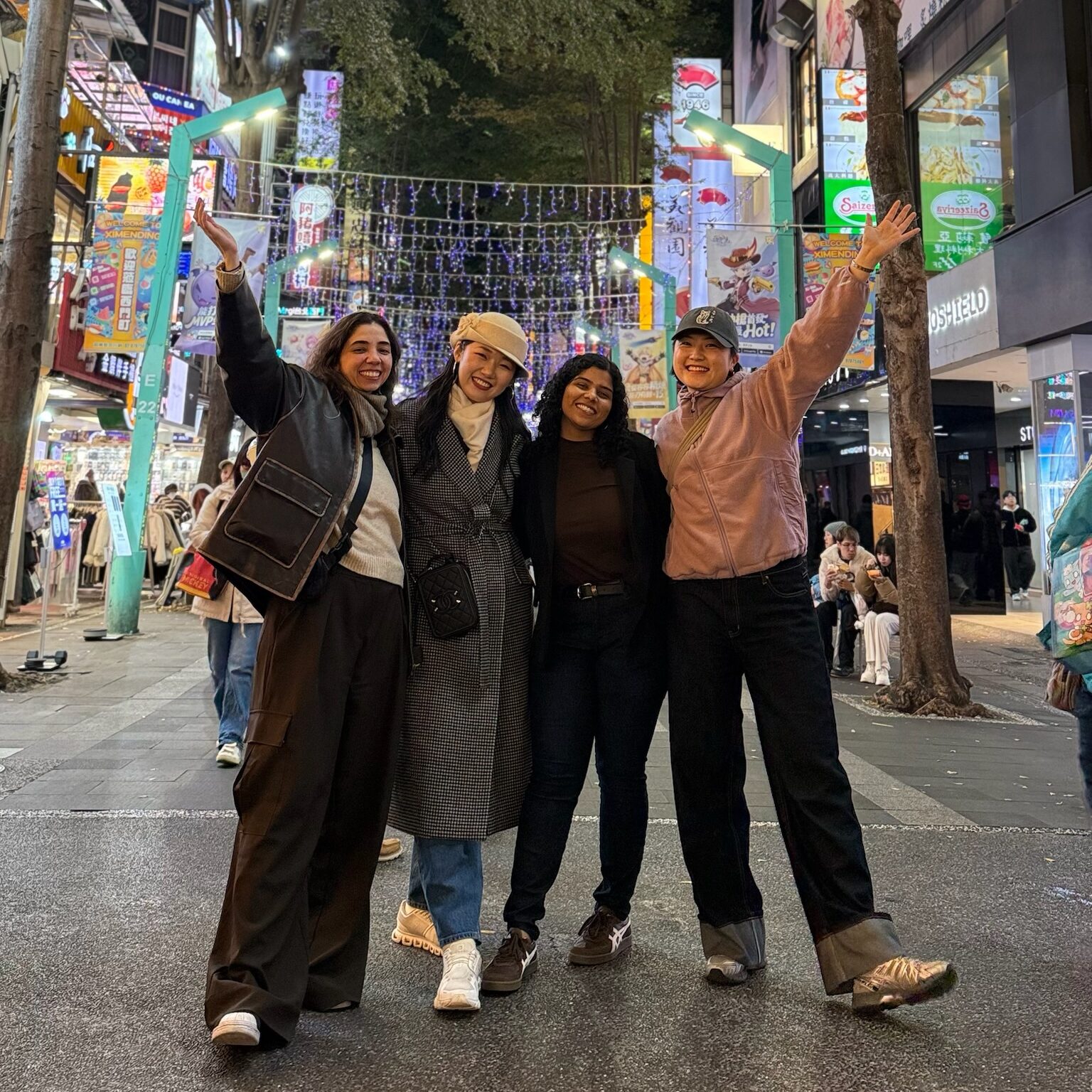
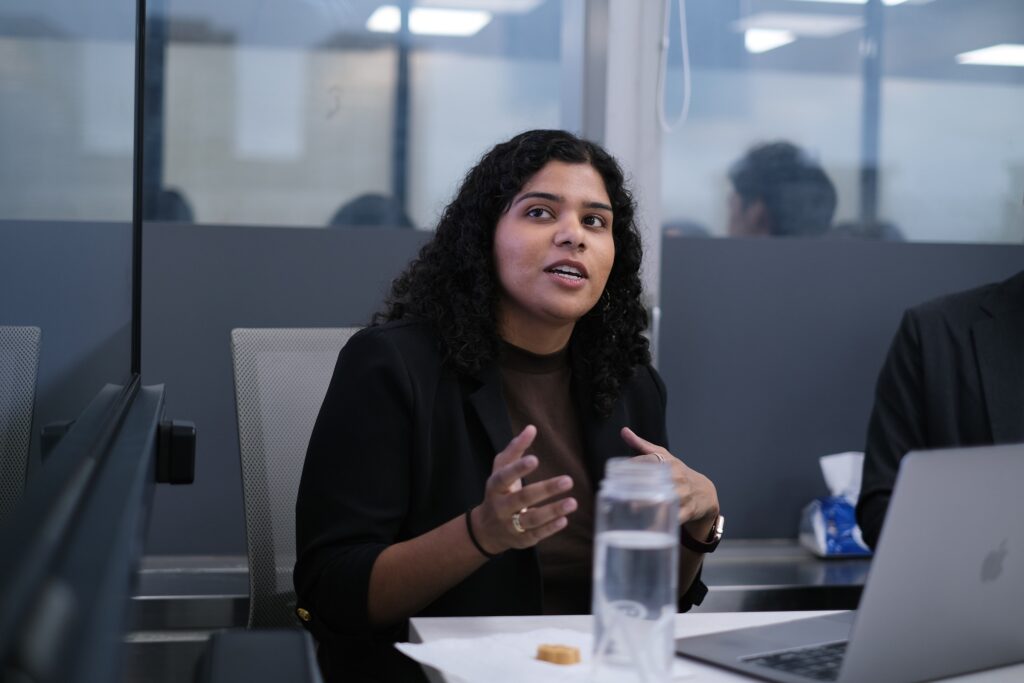
Pooja Joshi travelled to Taipei, Taiwan to conduct field research for her Policy Analysis Exercise, the equivalent of a thesis for Kennedy School students in the Masters in Public Policy Program. Her central question was: in the wake of COVID-19, how can interdependent Asia-Pacific economies strengthen pharmaceutical supply chain resilience through regional cooperation? Working with a local thinktank, Joshi learned from a wide variety of experts in the field.
“In Taipei, I interviewed policymakers at the Ministry of Health and Welfare and Taiwan Food & Drug Administration, executives at domestic and multinational pharmaceutical firms, industry associations, and academics studying the pharmaceutical ecosystem. I also visited manufacturing facilities and research universities to better understand the mechanics of production on the ground.”
— Pooja Joshi (’26, Harvard Kennedy School & Harvard Business School)
While Taiwan acted as a case study, she found that the issue of imported medical supplies have a lot of implications for other countries in the region:
“Approximately 80% of active pharmaceutical ingredients are still imported, and public trust in locally manufactured medicines continues to lag that in foreign branded medicines. This is not just a Taiwan problem – in my research across the broader Asia-Pacific, I identified that many of the interdependent economies in the region have been unable to resolve these structural vulnerabilities in pharmaceutical resilience with domestic-focused policies.”
— Pooja Joshi (’26, Harvard Kennedy School & Harvard Business School)
Pooja ultimately found that there are motivations for countries to work together to strengthen the Asia-Pacific region:
“There are many opportunities for regional cooperation and collaboration that can mutually address these vulnerabilities for economies across the region. My research focuses on identifying and proposing these opportunities to further the conversation on building true resilience, which necessitates engagement beyond borders. When the next pandemic strikes, my hope is that this work will enable better preparedness across the Asia-Pacific region.“
— Pooja Joshi (’26, Harvard Kennedy School & Harvard Business School)