
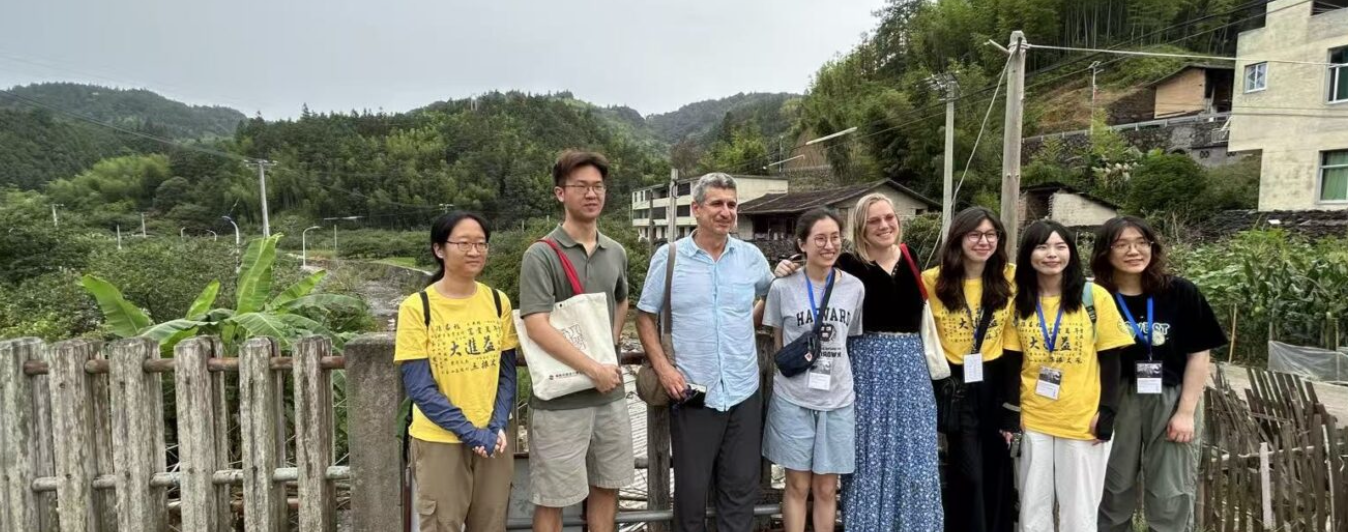

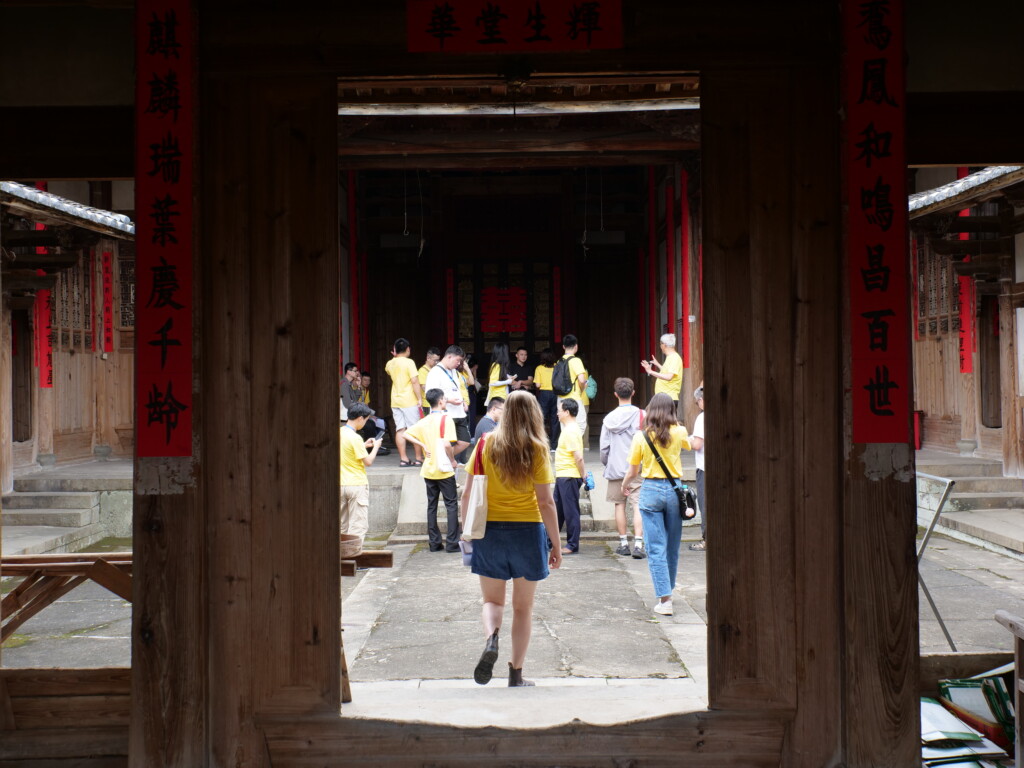
A group of Harvard graduate students cluster around Jin Huaxia, the 33-year old Communist Party Secretary of Yuhu (Jade Pond), a village in the Fujian countryside, as he proudly shares his history. Standing in the Jin family’s ancestral hall, where villagers have gathered for rituals—from New Year’s celebrations to funerals—over hundreds of years, Jin explains that he is the 11th generation descendent of the original Jin patriarch.
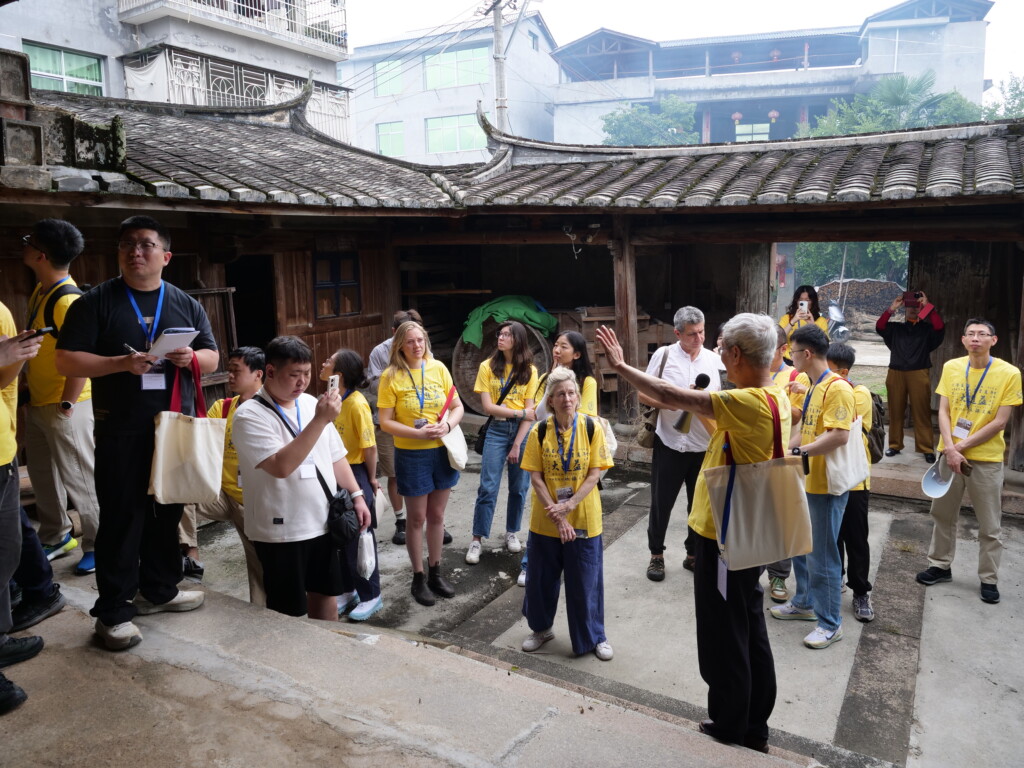
Jin is a living reminder of China’s past, spanning emperors and their tax collectors, the fall of the Qing Dynasty, bandits and warlords, Chiang Kai-shek’s Kuomintang, the ravages of civil war, and the political campaigns of the Communist Party. The Harvard students—who have been studying ancient documents about village life for the past semester—are in Yuhu with Harvard Professor Michael Szonyi to get a sense of just where the various documents that they have been reading at Harvard originally come from—and how they relate to life today.
History is very much alive in the village of Yuhu, largely because of a groundbreaking research project launched a decade ago by a collaboration between Xiamen University and Professor Szonyi, who is the Frank Wen-Hsiung Wu Memorial Professor of Chinese History. The onsite student research and workshop are generously funded by the Harvard China Fund, which supports Harvard’s academic activities in China. Professor Szonyi has been working in the villages of Fujian’s Yongtai County most summers since 2016, when a graduate student from Xiamen University first came upon a bundle of dusty documents handed over to him by officials researching plans to revive the countryside.
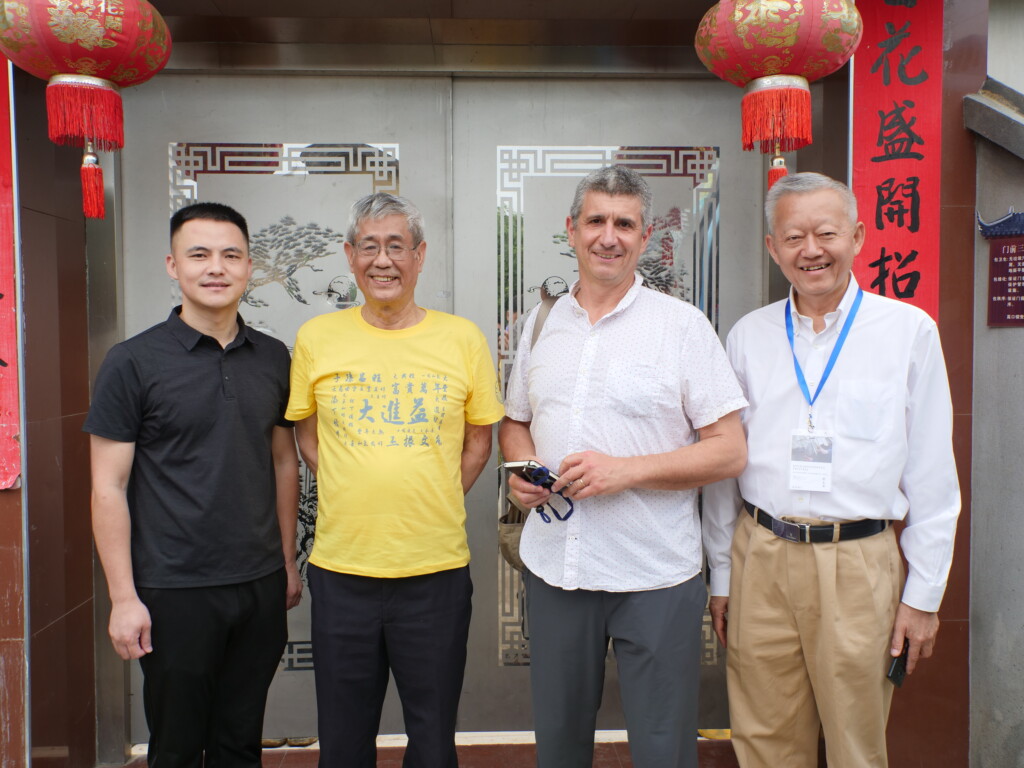
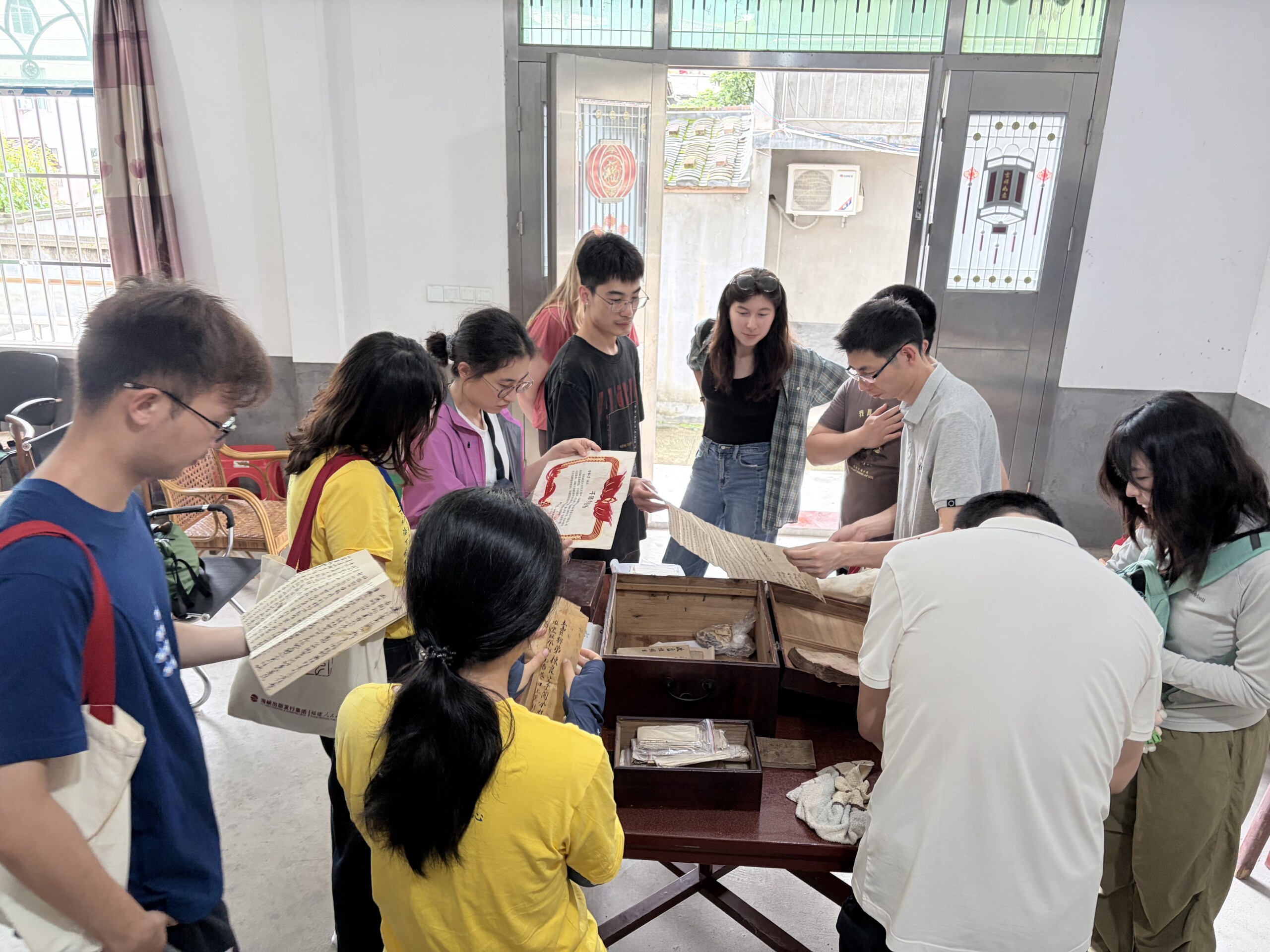
It was a monumental discovery: In the past, Chinese historians had largely dismissed China’s countryside as illiterate, unworthy of scholarly attention. Earlier scholars had focused only on the rulers and China’s elite. But that bundle of documents, tied up in tattered fabric—and tens of thousands of others that have since been unwrapped and decoded by Professor Szonyi and his colleagues—proved that the rural peasants of Fujian kept meticulous records detailing everything from land sales to marriages and complex multigenerational divisions of inheritance. The deeds and contracts brought the history of rural China to life. “It turns out, villagers organized their entire lives around documents. They used written documents to solve many of the problems in their lives,” says Professor Szonyi. “This completely changes our understanding of the history of everyday life in China.”
Through the documents, Professor Szonyi has been able to track the human, sometimes tragic dimension of rural life. In one village, he found a family that was doing so poorly that they eventually died off. The documents showed how, little by little, the family sold off their property “until there was nothing left,” he says. One of the documents is for the sale of a manure shed, a sure sign of desperation. The final contract is for the sale of the last remaining plot of land, to pay for the coffin of the last surviving family member. “This is the story of the decline of a family,” notes Professor Szonyi. “This is history as written by the losers.”
Each summer, Professor Szonyi brings a group of students from his documents class, Reading Local Documents for Ming-Qing History, for a week of visiting the villages and reading the documents that reveal their stories. After the Yuhu village visit, some 25 graduate students from Harvard and Xiamen University join a class in which Professor Szonyi and his Xiamen University colleague and mentor Professor Zheng Zhenman, are leading a discussion of a document about dividing inheritance. At the time, back in the late Qing Dynasty, the family patriarch was wrestling with numerous challenges: How to set aside money to take care of his mother after he dies? How to divide up the property when the youngest son is not yet married, but the oldest grandson already has a family of his own?
After class, Kaia Johnson, a Ph.D. candidate in East Asian Languages and Cultures, explains how in Professor Szonyi’s course, she decoded an Anhui province marriage ledger from 1881. She discovered that the groom’s elite family paid for part of the bride’s dowry—shocking in China’s patriarchal society. So then she had to figure out why: The answer she found showed how reality sometimes clashed with cultural ideals. “The class blew my mind,” says Johnson. “We were using sources that I had never used before. Professor Szonyi showed us how we can use documents to tell a story.” Rachel Hsu, a Masters student in the Regional Studies East Asia Program, is excited to come to China after a semester of reading through documents. “Approaching history with an eye to the present—to be in the village talking to people, getting a sense of place—is just incredible,” she says.
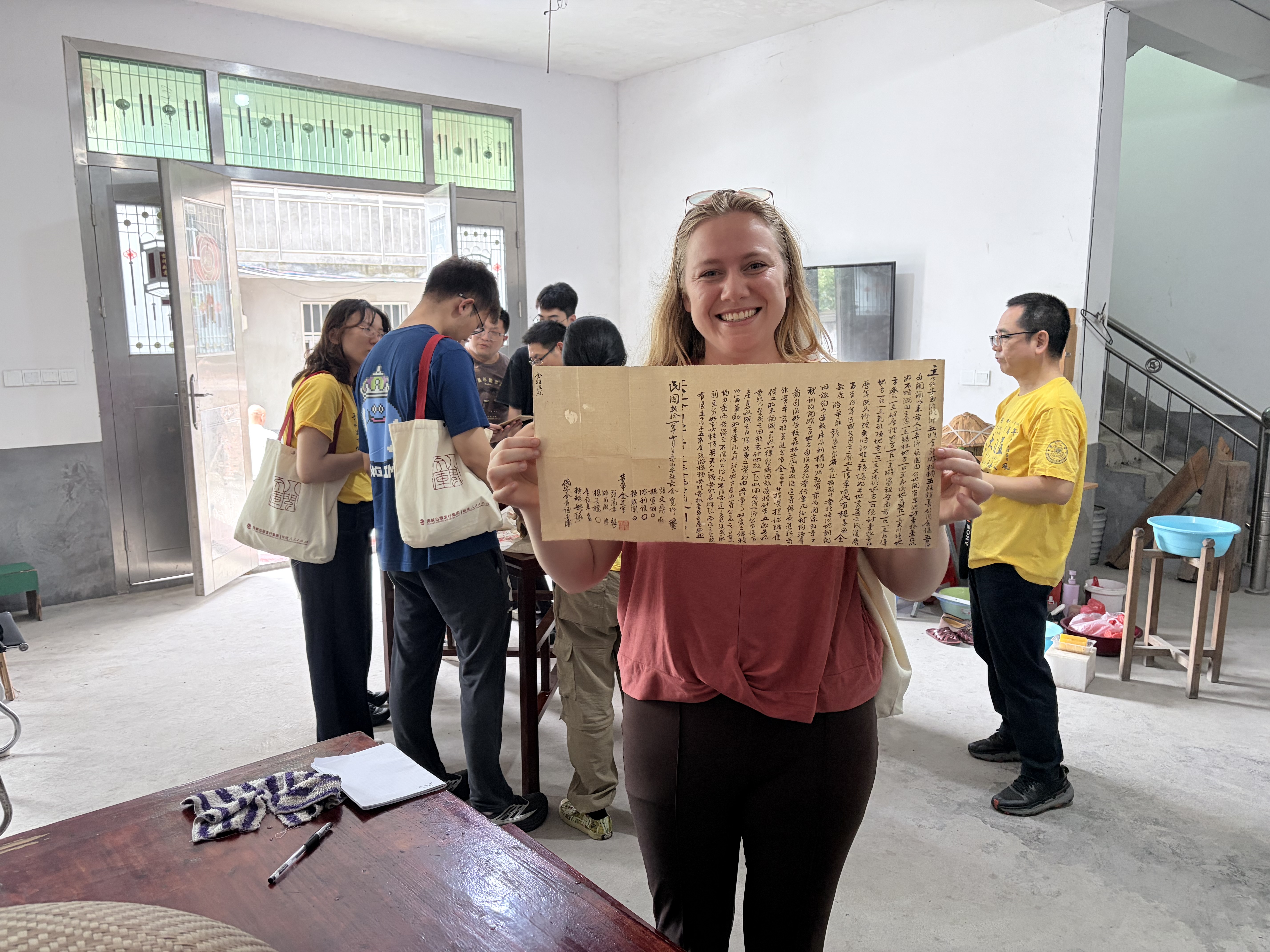
A decade ago, when Xiamen University doctoral student Sisi Dong started poring through that first cloth bundle handed to him by county officials, he realized he had stumbled upon something important. Though Chinese historians had earlier found documents and contracts in the once wealthy villages of Huizhou, in Anhui province, they thought that there were none anywhere else in China’s countryside. “It was amazing,” says Dong, now a professor at Minnan Normal University. “I couldn’t believe it!” Since then, local documents have also been discovered in other provinces across China, too. Xiamen University scholars have digitized more than 100,000 Fujian village documents, and published a selection in 100 volumes.
The documents work by Professor Szonyi and Xiamen historians has inspired numerous other research collaborations across the country, even the world. Each summer, young scholars come to Yongtai Country to join the week of fieldwork together. At this summer’s training session, Jian Qu, a professor at the University of Agriculture in Beijing, explains that he does research in the mountain villages of southwestern Guizhou province; he is working on a paper about rural concepts of ecology with Professor Szonyi’s former student, Joel Wing-Lun, now a lecturer at the University of New South Wales. “It’s heartwarming to see these new international collaborations getting started. This is exactly what Harvard should be trying to accomplish,” says Professor Szonyi.
Back in Yuhu village, on a walk with the visiting students, Party Secretary Jin stops in front of a massive, fortress-like building on a narrow dirt lane. He explains that in 1853, a time of political turmoil—when Taiping rebels and Qing army forces were roaming the countryside—the wealthy owner agreed with fellow villagers to fortify his mansion with stones and six-foot thick walls so that the community could take temporary shelter if they came under attack. As it turns out, the village survived the Taiping Rebellion. But in the 1930s, an equally chaotic time of warlords and anarchy, bandits attacked the village, and five extended families took shelter in the fortress. The village survived. And documents are here to tell the tale.
Watch a video created by a team from Xiamen University to document this research trip: