
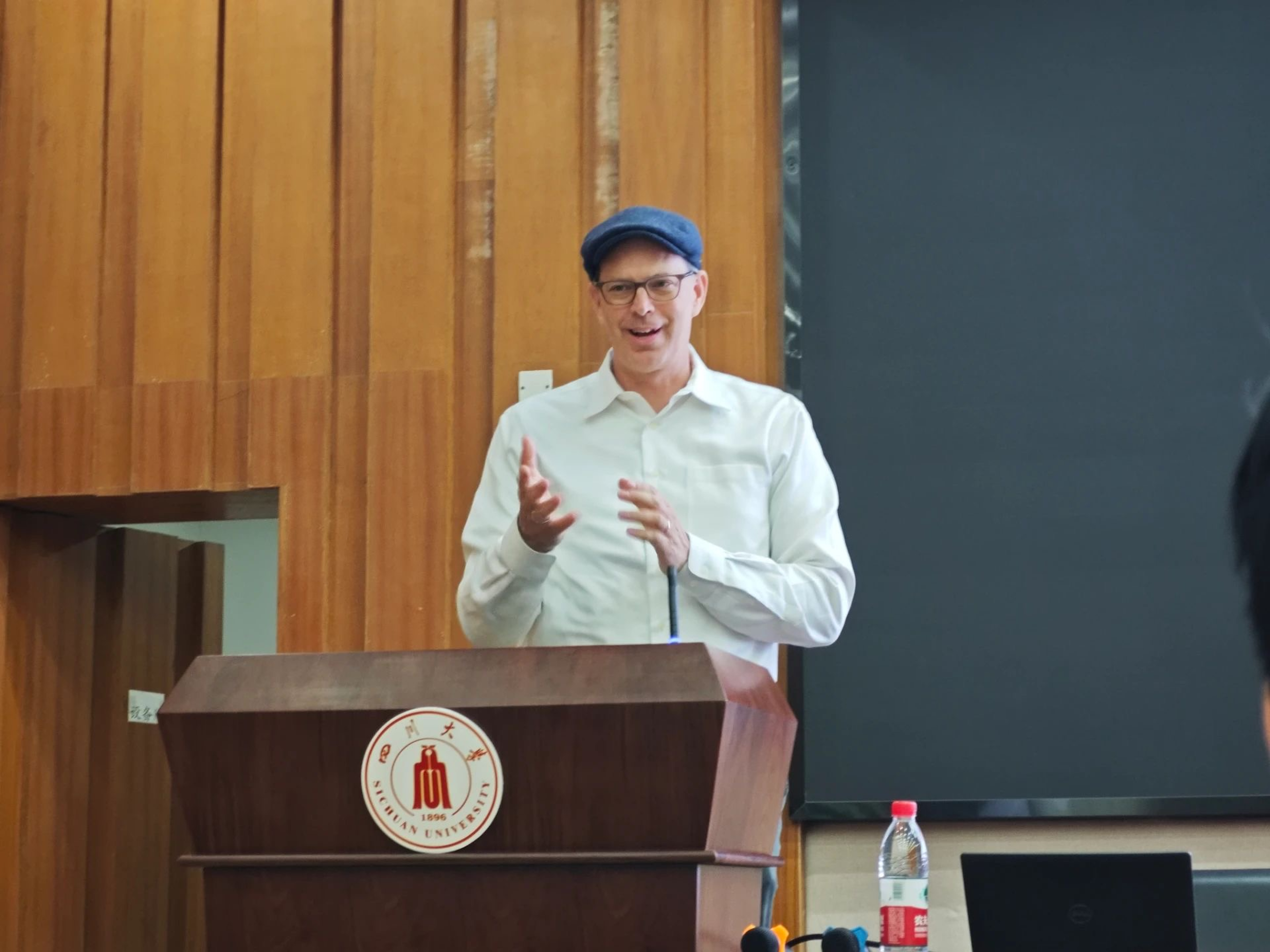

Rowan Flad lectures at the conference “Sanxingdui in Bronze Age Eurasia: Retrospect and Prospects after 90 Years” at Sichuan University in Chengdu, Sichuan. December 2024.
The work done by archaeologists reveals truths and raises more questions about the vast unexplored history of the human race. It’s big-headline stuff, but those stories are necessarily filtered through the news media, documentaries, and museum exhibitions before they reach the public imagination. All of this makes the decision of which discoveries get amplified that much more crucial, and profoundly consequential—shaping not only popular perceptions of cultural value but also the political stakes of whose past is deemed globally significant.
Four years ago, it was these concerns that motivated Rowan Flad, John E. Hudson Professor of Archaeology at Harvard University, to pen an op-ed for the Washington Post noting the lavish coverage of Egyptian discoveries compared with the silence surrounding equally spectacular finds in China. That observation sparked a collaborative study with Bridget Alex (Ph.D. ’16), Lecturer in Human Evolutionary Biology at Harvard, and Jenny Ji, a Ph.D. candidate in bioengineering at Stanford University, which has now borne fruit: a July, 2025, analysis in Science Advances of more than 1,100 peer-reviewed articles and their coverage in 15 major U.S. news outlets confirms that research on China and Taiwan is indeed consistently underrepresented. In response to the study’s findings, we asked Professor Flad to reflect on how and why his own career has become focused on this issue—namely, the uneven media attention paid to sites like Sanxingdui, the Bronze Age archaeological site in China’s Sichuan province; the broader biases that the disparity reveals; and implications for scholarship, cultural exchange, and cross-Pacific understanding.
Broadly speaking, why does it matter, academically or politically, which archaeological discoveries get publicized and which do not? What’s at stake in documenting the disparity in media attention between excavations in China and Taiwan, and those elsewhere?
Media coverage is the primary way that most people learn about archaeological discoveries. Most people don’t have access to scientific research papers on the subject, and many scholarly studies of archaeological finds focus on details or academic questions that may not seem immediately relevant or easy to digest by the general public. Accordingly, what is known about the past, and what are current foci of research on the past, are both filtered through media sources whose targets include a broader audience than other archaeologists or scholars.
If, in an extreme case, the media only reported on discoveries and research for a single world region, it might be assumed that this place was either the only area where research was being done, or that only discoveries that were made in that place—and the historical events from that region— were important for human history. In such an extreme case, this could lead to the belief that other regions are entirely unimportant, and this could have a considerable effect on contemporary social and political dynamics. Even less extreme examples of the privileging of certain histories over others can impact the general perception of cultural value—and also influence which academic fields are worthy of financial or institutional support.
Those who create public media do, of course, aim to identify those stories that their audience might be interested in—and they cannot report on every study that is published. But this is where implicit biases can easily reinforce preexisting notions of whose past and whose culture is more, or less, valuable. I think that by documenting the tendency for certain regions to get more coverage or less coverage, we can call out the existing biases in the media coverage and decide whether the rationale for such biases aligns with our beliefs.
In the United States, where we are ostensibly a multi-cultural “melting pot”—and where cultural diversity is at the core of our strength—we should strive to highlight the broad scope of human achievement and historical narratives that make up the multifaceted story of the human past. In addition, if we are not exposed to some of the interesting and complex stories about what we are learning about the pasts in places like China and Taiwan—whose influences in the modern world are so profound—the American public may have a superficial, flat, and uninformed impression of Chinese culture that can contribute to isolationism and misunderstanding.
Since COVID, there has been a dramatic decrease in the number of U.S. students studying abroad in China, and I hope that this trend reverses. To this end, I have been involved in recent efforts to restart or initiate opportunities for U.S. students to study at, and participate in, archaeological field schools in China, which are one small part of the “Study Away” educational opportunities through which young Americans can become familiar with life in other places like China and Taiwan.
As someone who is himself in the field of Chinese archeology, how has the attention gap impacted your own career? How did your own lived experience shape this study?
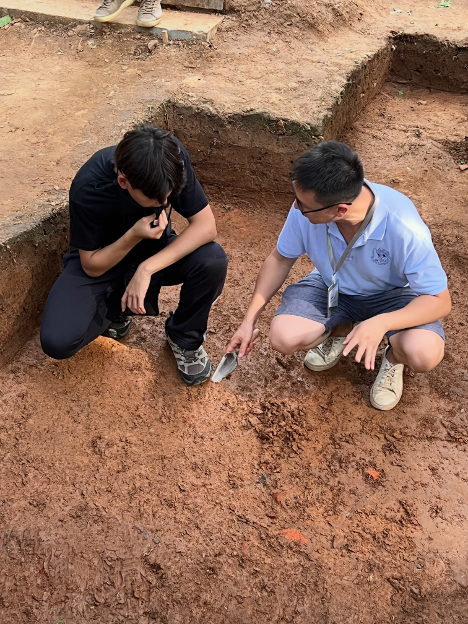
I started working on Chinese archaeology in 1996, and part of the reason I was drawn to the field was because I felt that the narratives that explored the big questions in the field of archaeology, within the Anglophone scholarly literature, insufficiently incorporated the lessons to be learned from cases in East Asia. China is home to discoveries that inform us about major transitions in human history, like the emergence of agriculture and the development of complex states, that occurred independently from similar transitions in other regions, and to fully understand the variation in human experiences related to these transitions, we need to capture this variability.
In some ways, helping to fill such gaps has been beneficial to my career, as the American academy has increasingly recognized the importance of coming to terms with this variation rather than assuming that there have been single, unified models for cultural and social evolution. But there remains a major emphasis in Western scholarly circles on certain regions over others, in part due to the inertia caused by generations of scholarship that have focused more on some regions and less on others. Due to this situation, it can be more difficult to have work focused on China become widely cited by scholars in the same discipline relative to work on other regions simply because of the size of the scholarly community.
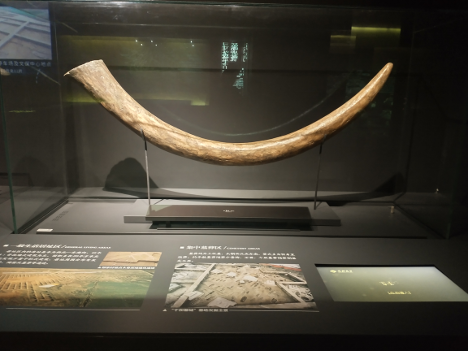
The public media situation that we explore in this paper is a facet of this larger issue, and it can likewise cut both ways; in some situations, the attention gap can create opportunities to provide new information, but in other contexts, existing biases might mean that your work gets overlooked. Conversely, in China, I have experienced considerable interest over the course of my career by both academic colleagues and a broader public with regard to my opinions as a foreign scholar working on Chinese archaeology. In recent years, I have started working on a project that investigates the relationships between humans and elephants in early China, in part inspired by the discovery of large numbers of elephant tusks at the site of Sanxingdui and other sites in Sichuan, such as the Jinsha site in Chengdu—another major Bronze Age archaeological site discovered in 2001. As I have started to talk about this, the interest among colleagues in China and students seems to be growing, and I think that this example speaks to how cross-cultural conversations about research can stimulate greater interest.
You point to the 2021 excavations at Sanxingdui, which were widely covered in Chinese media but ignored in the U.S. Why was this case so emblematic for you? Could you describe what it felt like to see a find of that magnitude go virtually unnoticed by the Euro-American press?
The case of Sanxingdui is particularly important for me and my entry point into this research, because it was in relation to this site and the discoveries made there that I was first prompted to write about and then study the phenomenon of media bias. In April 2021, a Chinese journalist who was writing about new discoveries at Sanxingdui interviewed me for my opinions about the site. At the end of the interview, she asked me why the new discoveries had not received much attention in the English-language press, despite the considerable attention in Chinese media, and my response to her was the basis for the op-ed I then wrote in the Washington Post.
After writing that op-ed, I shared it with Bridget Alex, who had studied for her Ph.D. in our department at Harvard and was then teaching science writing at CalTech. She recommended that we examine whether there is data to back up my observations. Our other co-author, Jenny Ji, was an undergraduate at CalTech at the time and joined our team as we started to collect the data. Meanwhile, I was motivated to examine how the bias that I was commenting on might relate to other scholarship on the socio-politics of archaeological practice, particularly discussions of gender bias in the field of archaeology, which had received a fair amount of attention.
This interest was fostered and facilitated by the fortuitous arrival to our teaching faculty of Dr. Jess Beck, who is now at University College, Dublin, and who had similar interests. Dr. Beck and I collaborated to teach a graduate seminar on the topic of bias in the practice of archaeology in the Spring of 2022, and this was very rewarding. In the process of discussing these issues openly and empirically, I was able to process the potential disappointment I experienced over Sanxingdui being ignored by putting it into the broader perspective of how politics and sociopolitics inevitably manifest in archaeological practice, teaching, and research, and in the broader public discourse on, and fascination with, archaeological discoveries. It is worthwhile noting that another aspect of public engagement, beyond the media, comes in the form of museums and tourist attractions, which provide first-hand experience of archaeological discoveries.
Of course, such experiences are limited to those who have the opportunity to visit such places, and in China, the recent investment in museums across the country has been very impressive, leading to a widespread engagement with archaeological remains of the relatively local past across the country. Sanxingdui is one such place: an impressive new museum has recently opened, and there is currently hope that the site, together with the nearby site of Jinsha in Chengdui, may eventually be inscribed in the UNESCO World Heritage list. Such attention will inevitably result in more global attention beyond the coverage of scholarly research in news media.
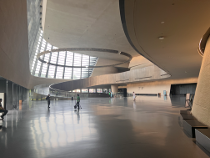
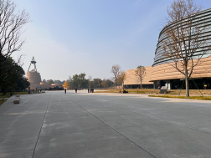
(Two figures: “Sanxingdui Museum Park” and “Sanxingdui Museum Interior”). The archaeological park (right) outside the new Sanxingdui museum in Guanghan, Sichuan, and the central lobby of the museum (left).
Your study is quite granular: you examine individual media outlets and even note that certain organizations appear to favor coverage of specific countries — The New York Times, FOX, Newsweek, Yahoo, and Forbes were significantly more likely to cover archaeology in Egypt; Scientific American gave more coverage to Turkey and Australia; MSN and Los Angeles Times favored the UK. Did you find that any U.S. media outlets stood out as doing a consistently better or more balanced job than others?
This is an excellent question, and since we did not examine this statistically, I can only give a general impressionistic response. Additionally, the question of what is “better” is probably a difficult one to assess. We might look, for example, to see how aligned the frequency of media coverage is with the frequency of publication on a particular region—which was our approach in this paper—and argue that those media sources that matched these frequencies most closely would be the least biased. That said, I personally think that it would be appropriate for North American media sources to cover research on North American Native and historical archaeology topics at a higher rate than research on other geographical regions. Likewise, at a more granular level, perhaps media sources that are somewhat regional in scope might be expected to have different geographical biases. West Coast papers, for example, might be expected to have a bit more concern for the Pacific region, or media sources in the regions of the country with large Latin American populations might be expected to cover somewhat more of the archaeology of Central and South America and the Caribbean, etc.
In fact, anecdotally, I have noticed in recent years that the Miami Herald has covered quite a number of Chinese archaeology topics that have not been covered elsewhere in English-language North American media, but I don’t know if this observation would be supported by a more rigorous statistical analysis.
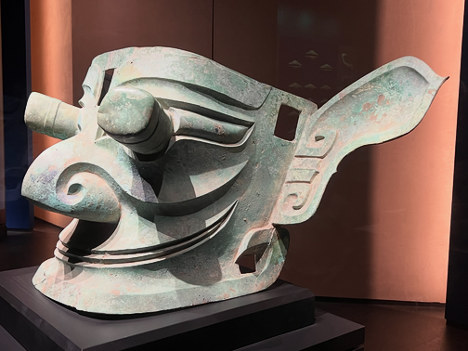
Do you think there’s a risk that global silence around sites like Sanxingdui and Shimao cedes interpretive authority to state-sponsored narratives, simply because no one else is participating in the conversation?
I do think that the effort to understand the significance of archaeological discoveries needs to be a multinational project to ensure that the processes by which such finds get incorporated into nationalist, imperialist, colonialist, and other narratives are contested, challenged, and rigorously examined. It is worth noting that, even within China, the discourse on the relationship between Sanxingdui and the grand narrative of the origins of Chinese civilization is not homogenous. There are ways in which a state-sponsored narrative that centers a particular perspective on the Chinese past might be promoted by politically motivated interpretations, but my impression of the scholarly discourse on this subject in China is that it is quite nuanced and multifaceted. The news media treatment, on the other hand, may be less nuanced. I have not looked at this question very closely but would be very interested in knowing how sites like Sanxingdui, Shimao, Liangzhu, and others are discussed in the popular press, particularly during times such as the current moment—when the state support for archaeological research has been quite strong.