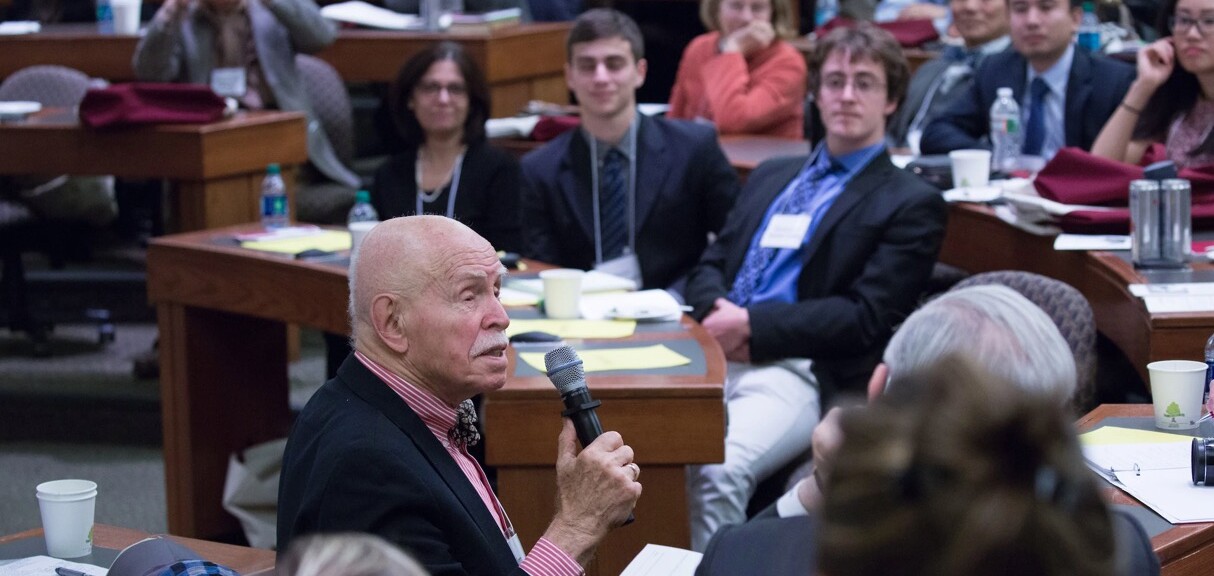

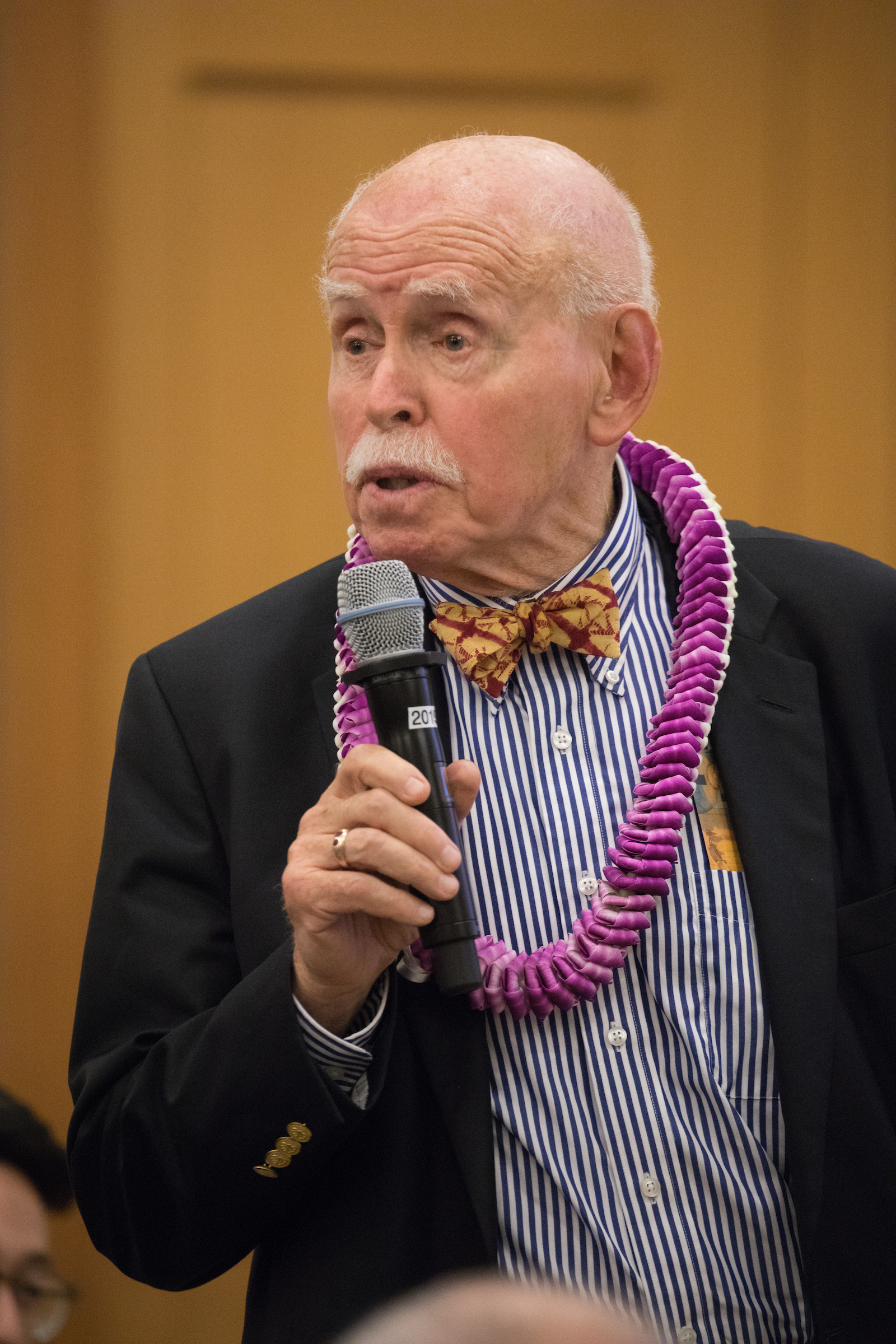
Jerome A. Cohen, a trailblazer in the study of the modern Chinese legal system who taught as a tenured member of the law faculty at Harvard University from 1964 to 1979, passed away on September 22, 2025. He was 95 years old.
Professor Cohen was a pioneer in the study of Chinese and East Asian law in the United States, where his myriad of expertise ranged from human rights and criminal law to contracts and business law. Following Supreme Court clerkships to Chief Justice Earl Warren and Justice Felix Frankfurter and a stint teaching at the University of California, Berkeley School of Law, he joined the faculty at Harvard Law School in 1964.
As the Jeremiah Smith Professor of Law at Harvard University until 1981, Professor Cohen transformed the study of contemporary Chinese law during a tumultuous political period in the People’s Republic of China. He founded the East Asian Legal Studies (EALS) program at Harvard Law, the oldest and most extensive academic program in the United States of its kind.
Professor Cohen pressed U.S. leaders to normalize relations with the People’s Republic of China and met with Premier Zhou Enlai as part of a visiting American delegation in 1972. Professor Cohen also played an instrumental role in securing the release John Downey, a Yale classmate who had been shot down over Manchuria during the Korean War and imprisoned in China on allegations of espionage, in 1973.
During his time at Harvard, Professor Cohen also taught two future leaders of Taiwan, Vice President Annette Hsiu-lien Lu LL.M. ’78 and President Ma Ying-jeou S.J.D. ’81. In 1985, after Lu was imprisoned for her role in the Kaohsiung Incident, Professor Cohen would play an important role in securing her early release. Throughout his career, Professor Cohen remained a tireless advocate for human rights throughout East Asia. He helped to save the life of then-dissident Kim Dae-Jung, who would later serve as President of the Republic of Korea and receive the Nobel Prize for Peace. He also befriended and championed several Chinese human rights lawyers, including notably Chen Guangcheng, Ding Jiaxi, and Xu Zhiyong.
In 1979, with China undertaking economic reforms and opening up to the world, Professor Cohen took a sabbatical from Harvard and moved to Beijing to practice law. He assisted numerous foreign companies, such as General Motors, with making early investments in China. In 1981, once his leave concluded, he decided to resign his position at Harvard and practice full-time in China with Paul Weiss, a New York-headquartered law firm. However, he returned to Harvard regularly throughout his career and taught a winter-term course.
In 1990, he joined the faculty at New York University, where he taught as a Professor of Law for more than three decades and founded the U.S.-Asia Law Institute. In 2018, more than 75 former students and friends came together to establish a chair professorship in honor of his and his wife, Joan L. Cohen, at Harvard Law. The American Association of Law Schools (AALS) Section on East Asian Law and Society also renamed its lifetime achievement in his honor.
On January 8, 2026, the AALS presented its Cohen Lifetime Achievement award to Fairbank Center faculty member, William P. Alford, current holder of the Jerome A. and Joan L. Cohen Professor of Law at Harvard Law School. Below, Professor Alford and other professors affiliated with the Fairbank Center reminisce about their interactions with Professor Cohen.
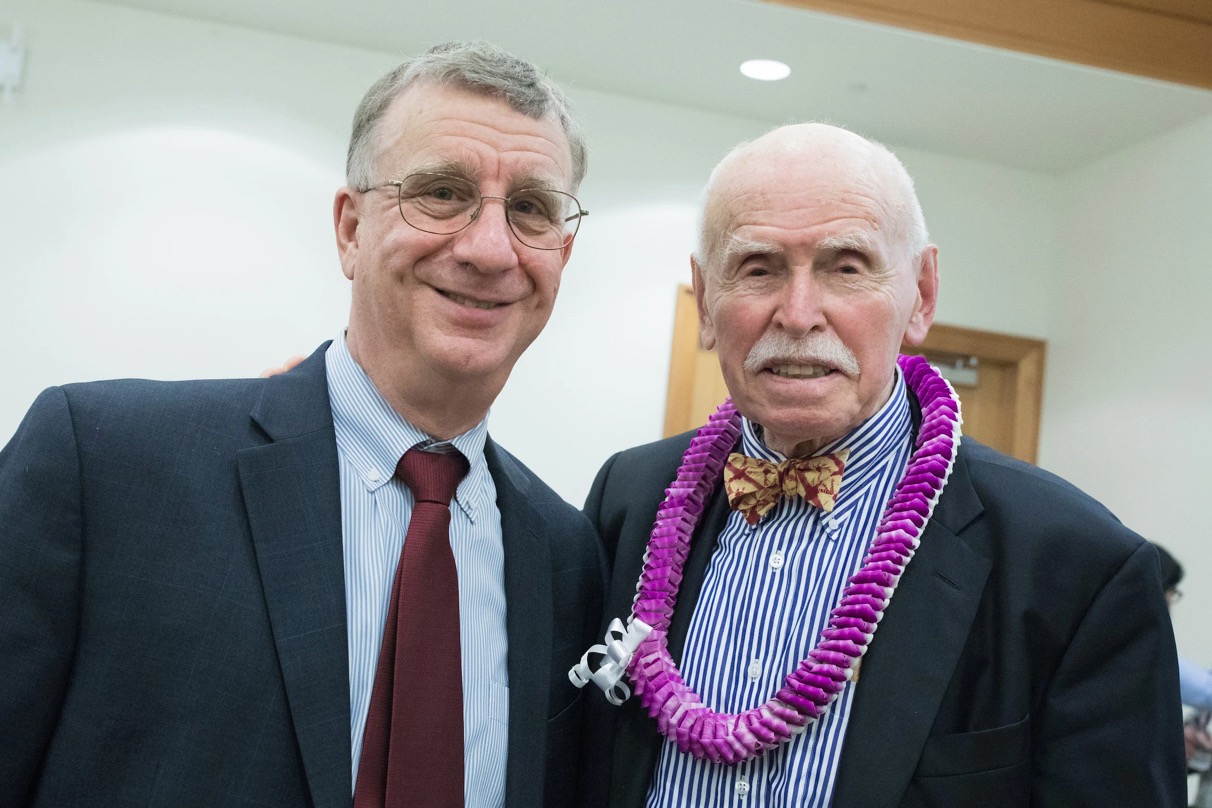

As you know, Jerry was an extraordinary figure whose impact both on the larger world and at a personal level was and remains enormous. Throughout his life, he worked assiduously both to promote understanding of East Asia and to foster human rights there (and elsewhere). Academically, he used his immense gifts to elevate the study of the law of East Asia (and especially Chinese law) in myriad ways. These included the vision to establish EALS in a manner that bridged historic differences between nations and peoples, his pioneering scholarship on everything from criminal law to international human rights to business law, and his unstinting devotion to nurturing future generations. But he was just as visionary and energized beyond academe, tirelessly undertaking human rights advocacy, and fostering broad public knowledge of East Asia, all while, for many years, being at the frontier of corporate legal practice regarding China, Vietnam and other parts of East Asia.
But Jerry was more than that to so many of us (and thousands of others). He provided a powerful example of how to live a good life. He was at once idealistic but realistic, understanding the world’s cruelties while working to address them with deftness and an appreciation for the humanity of everyone. His anecdotes were endless and his wit and sense of humor were legendary (so much so that for his 80th birthday we compiled a collection of them). And he cared so deeply for his students and so many others, taking them and their successes and hardships to heart.
I am forever grateful for the chance to have been his student and to have worked with him. Our last joint effort was a 2019 book about Taiwan and international human rights that we did with former Grand Justice Chang-fa Lo of the Republic of China (Taiwan) that received a special award from the American Society of International Law (owing, I suspect, to ASIL’s wanting to honor Jerry).”
— William P. Alford, Jerome A. and Joan L. Cohen Professor of Law; Director, East Asian Legal Studies Program; Chair, Harvard Law School Project on Disability, Harvard Law School (as excerpted from the EALS tribute posted on September 23, 2025).

‘Comrade, where were you born?’ With this thundering inquiry, Jerome Alan Cohen—call me Jerry, he told everyone—began his interviews of the many fascinating guests he brought to lunch sessions for students at NYU Law School. Jerry liked people. He liked to hear about their origins, their successes, the challenges they encountered—and overcame—along the way, and the role of luck in their lives. Jerry’s invited guests represented a wide variety of people whose lives were connected in some way to Asia, and especially to China. His guests were all his personal friends and included luminaries from the fields of business, law, international banking, finance, human rights, government, the military, academia, even a dissident North Korean artist. Jerry’s interviews always reached into what was special in every person he interrogated. It was his way of showing anxious law students the wide variety of possibilities that lay before them and of reassuring them that their lives, too, would be equally fascinating. But his interrogations were also about satisfying his own curiosity about what made each one of them tick.
Jerry just liked people. He collected and treasured them in his ever-widening network around the world whose faces always brightened at the mention of his name. He liked seeing the opportunities that could come from bringing together people who might never have met and collaborated, but for his intervention. His students attended his classes with something approaching reverence as they learned about China’s approach to law. NYU rules capped his seminars at 25 registered students, but routinely at least twice that many crammed into his classroom. Jerry enjoyed talking with his students about the origins of Chinese attitudes toward law, acknowledging its successes, and facing squarely the challenges that remained to be overcome.
Jerry didn’t just like people. He liked China. He recounted to his classes his dinner conversations with Zhou Enlai, his experiences opening China to business investment, and his tours around the country for research. But he also spoke about his role assisting many Chinese dissidents oppressed by the Party. To those who were tempted to be discouraged at the ways China’s government failed to live up to its great potential, however, he reminded them that China’s long history always swayed between opening and closing, tightening and loosening, poverty and plenty. Inevitably, he believed, China’s tomorrow would be better than today. He was as much an optimist about China as he was about people. At times this optimism was hard won. Jerry was frustrated at the treatment of China’s human rights lawyers and many others who simply sought to improve the lives of ordinary Chinese people by holding their government accountable to its promises.
Jerry’s scholarship chronicling the journey of the Chinese Communist Party toward a state governed by law may be his most lasting professional achievement. These works are extraordinary, foundational, and timeless. Not many academics can claim to have established an entire field of study. Jerry did not simply recount the developments in the Chinese legal system, he explained them. Perhaps his most extraordinary legal publication is a 1967 essay, “Chinese Attitudes Toward International Law—and Our Own,” published in the Proceedings of the American Society of International Law was a retort to the self-righteousness of the American legal academy at the time. It was Jerry’s observation that China’s approach to international law might not be so different to any other powerful country’s and should be taken seriously as such.
Jerry deserves to be remembered for his professional accomplishments and for his work helping China’s dissidents, such as Teng Biao and Chen Guangcheng among many others, for his persistent support for Jack Downey, and for his far-sighted work to encourage Henry Kissinger and Richard Nixon to shift American policy and to open a pathway to normalize relations with China. But really his crowning achievements are the very real differences he made to improve the lives of so many of us ordinary friends of his. Each of us is very fortunate that Jerry liked people.”
— Peter Dutton, Lecturer in Law, Senior Research Scholar in Law, and Senior Fellow in the Paul Tsai China Center at Yale Law School; Non-Resident Associate in Research, Fairbank Center for Chinese Studies. Professor Dutton was Professor Cohen’s teaching partner at NYU Law School from 2014-2024.
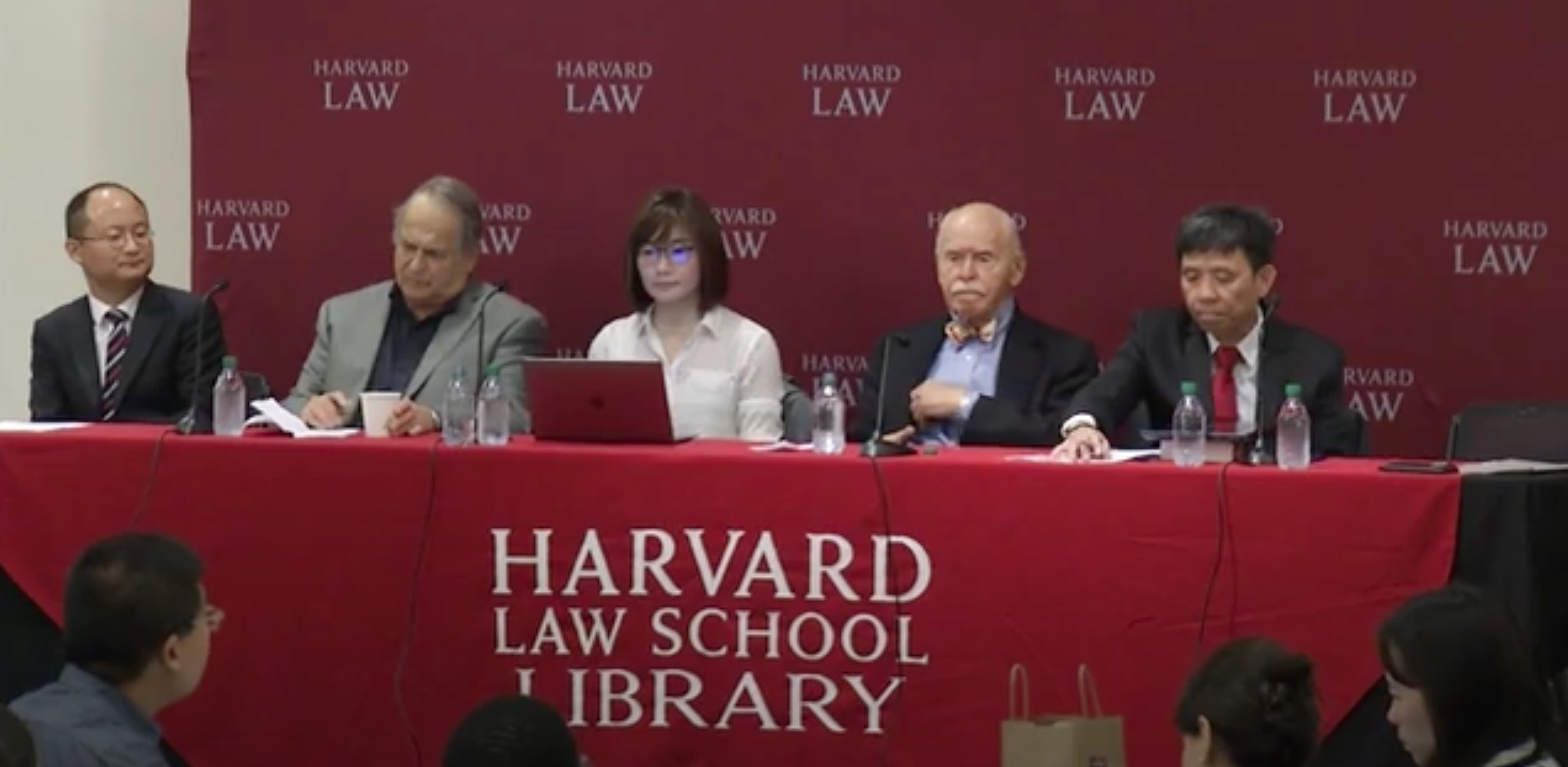

I remember one of my last visits with Professor Jerome Cohen. It was on his birthday, just a few months before his passing. My husband and I had stopped by his summer house in Truro to wish him well. As we sat in the dappled sunlight, sipping the champagne I brought, we chatted and looked out over the blue waters of Cape Cod Bay in the distance.
I had just finished reading Jerry’s new memoir Eastward, Westward: A Life in Law (Columbia University Press, 2025), which documented not only his remarkable life, but a remarkable time in Sino-U.S. relations. By all accounts, Jerry’s life was remarkable – from clerking for not one but two Supreme Court justices (Chief Justice Earl Warren and Justice Felix Frankfurter), to last minute reprieves from the Vietnam War draft, to a unique opportunity from the Rockefeller Foundation to study China. In the process, as we now all know, Jerry carved out a new discipline, the study of Chinese law, where none existed before and helped to transform Sino-U.S. relations from hostility to rapprochement and eventually to normalization.
But on that day in July, as we sat talking about his book, I asked Jerry what he wants to be most remembered for. Jerry did not mention his pioneer work in creating new academic departments or his illustrious careers at UC Berkeley, Harvard, and NYU. Instead, the first thing he pointed to was his human rights work in freeing political dissidents. Jerry was notably credited with securing the release of his Yale classmate John T. (Jack) Downey after some 21 years in Chinese prison for “espionage.” Jerry also helped to free the South Korean democratic leader Kim Dae Jung after his kidnapping by the South Korean KCIA in 1973. He next engineered the release of Philippine democratic leader Benigno “Ninoy” Aquino from prison in Manilla, the release of Annette Lu from prison while Taiwan was still under dictatorship (Annette would become vice president in the Chen Shui-bian administration from 2000-2008), and later, the blind “barefoot lawyer” Chen Guangcheng from the People’s Republic. These are lives Jerry helped and lives transformed.
The second item Jerry lingered on was Chinese legal reforms. He was deeply worried that the U.S. policy of cooperation with post-Mao China in developing its legal system would be perceived as a failure. He was concerned that helping China build its post-1978 legal system was a mistake, and that such sustained efforts would end. Yet, as he wrote so eloquently in his memoir, ‘On political grounds, I feel no guilt or regret about the years spent cooperating with the PRC during the halcyon days of the largely optimistic 1980s prior to the massacre of June 4. Nor am I doubtful about the desirability of continuing that cooperation today…’ Ever optimistic, Jerry also predicted that, ‘…over the long run, and despite the current and ongoing repression, the seeds of something different have been planted in China, that many ever more educated and sophisticated public might demand a more open, less controlled society with greater protections for personal freedom…’ Jerry has added not only to our knowledge of China, but he has made a difference in many lives and in world affairs, and for that, we are grateful.
I want to share a poem that seems so apt to Jerry’s life. A Farewell to My Friend Chen Zhangfu is a farewell letter written by Tang Dynasty Poet Li Qi to his friend Cheng Zhengfu.
李颀·《送陈章甫》
四月南风大麦黄,枣花未落桐叶长。
青山朝别暮还见,嘶马出门思旧乡。
陈侯立身何坦荡,虬须虎眉仍大颡。
腹中贮书一万卷,不肯低头在草莽。
In the fourth month, the south wind blows plains of yellow barley
Date flowers have not faded yet and lakka- eaves are long.
The green peak that we left at dawn we still can see at evening,
While our horses whinny on the road, eager to turn homeward.
…Chen, my friend, you have always been a great and good man,
With your dragon’s mustache, tiger’s eyebrows and your massive forehead.
In your bosom you have shelved away ten thousand volumes.
You have held your head high, never bowed it in the dust.”
— Margaret Woo, Professor of Law, Northeastern University School of Law and former Non-Resident Associate in Research, Fairbank Center for Chinese Studies.

I first met Jerry Cohen when I was a law student at Yale. He was coming up from New York to deliver a public lecture, and Professor Paul Gewirtz had organized a small gathering for students to meet him beforehand. Among us students, Professor Cohen was already a legend because of all that he had accomplished as a scholar and as a practitioner. But what struck me most was the immense interest that this giant in our field showed in getting to know each one of us. What was our background? Why were we interested in China and law? What did we hope to accomplish? He wanted to know more about each of us and inspire us to pursue a career where we would engage with China, to shape and be shaped by the historic transformations taking place.
A few years later, when I was a Term Member at the Council on Foreign Relations, Professor Benjamin Liebman of Columbia Law suggested that I attend a small, closed-door, invitation-only seminar on Chinese law that Jerry was organizing at CFR. I was reluctant, first, because I had not been invited, and second, because it was full of eminent giants in the field while I was just a year out of law school. But Ben convinced me that it would be fine, and so when I showed up, I went to re-introduce myself to Jerry. To my surprise, he remembered who I was and immediately put me at ease. And then during the course of discussion, after he had elaborated on his thoughts on the topic, he “cold called” me to ask what I thought. It was emblematic of Jerry’s view that every person’s views, no matter who they were, mattered, and every person had value.
Our paths next crossed at Harvard’s celebration of his 80th birthday, when he was delighted to learn of my appointment to Harvard. Over the next fifteen years, each time we met, he would inquire into not just my work, but also my family (and encourage my daughters to play soccer). Most of all, he would remind us that history is long and full of wild swings, but the most important thing is that we do what we can, despite what is happening around us, to champion what is right and those who are unjustly wronged. When I last saw Jerry over dinner at his apartment in New York City, he remained every bit as pragmatic, charismatic, and optimistic as ever. As I walked out onto Fifth Avenue, I was grateful not only for his wisdom and humanity, but also for the inspiration to make a difference in the lives of those around us.”
— Mark Wu, Henry L. Stimson Professor of Law, Harvard Law School; Director, Fairbank Center for Chinese Studies
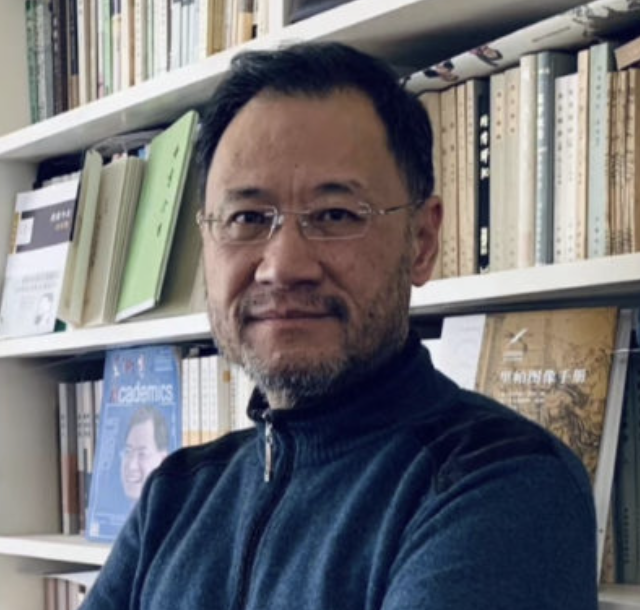
Jerome Cohen enjoyed the longevity of a truly righteous man, however, following an extended illness he has now left us. His passing truly marks the end of an era. In what seems like another age, years ago Jerry Cohen, our master, ventured to this distant land of China to contribute his talent to the opening of that door, hopeful of being able to propagate the rule of law for the sake of broader public benefit.
For Jerome Cohen, the idea of legal rights was always grounded in a respect for basic human rights. He was motivated by a spirit of decency and his efforts were crowned with initial success. Those early years contributed to a better future for countless people although, ultimately, they were unable to challenge the immobility of totalitarian habit. The failure, however, was not that of Jerry Cohen, rather it was part of the larger Chinese tragedy, one that has seen the repeated frustration of universal values. For those of us mired yet in this reality, to see him now depart adds to our profound sense of loss. In his wake, we continue to face this sorrowful state of stagnation. As a land that was at the pinnacle of the world [that is, the USA] is itself enamored of autocracy — something celebrated by tyrants worldwide — our already bereft state is further exacerbated by incredulity.
Since 2020, Professor Cohen resisted the challenges of the passage of time and remained energetically engaged in writing projects; he even found time to write about my plight on six separate occasions. He also advocated on my behalf even though (or because) he knew exactly what fate had in store for me. [Note: See What’s Next for Xu Zhangrun?] He excoriated the regime for its shameless persecution of me, more importantly he pinpointed the flawed logic behind their machinations while identifying the crux of our troubles in the context of our lived reality. His concern for the state of the law in China was consistently framed by an unflinching advocacy for the rule of law itself. For he knew that if true justice is impossible we are all reduced to a state of banditry. Fully aware of the punishment that would be meted out to me, Professor Cohen invited me to teach at the U.S.-Asia Law Institute, which he had founded at New York University. It was a heartfelt act of generosity offered to me at a time of pressing need, a helping hand extended to a likeminded colleague on the other side of the world who was submerged in iniquity. His generosity was a practical recognition of our shared humanity. This venerable Professor was not only a teacher of stature and an unwavering champion of substantive exchange between West and East, he was also an outstanding humanitarian whose real-world actions were a practical expression of his ideals. . . .
Fragile, too, are even the wisest among us. Looking into the great expanse of heaven and surveying the boundless vistas of earth, even though each advance is but an inching step forward, as I record here my mournful celebration using this most fragile medium I remain deeply grateful for the bounty of learning that Professor Jerome Cohen bequeathed to us all. A member of my spiritual family has departed. I hail his memory even as I tearfully grieve over our loss.”
— Xu Zhangrun, Non-Resident Associate in Research, Fairbank Center for Chinese Studies. (This is an excerpt of a longer eulogy, originally published on China Heritage, as translated by Geremie Barmé.)