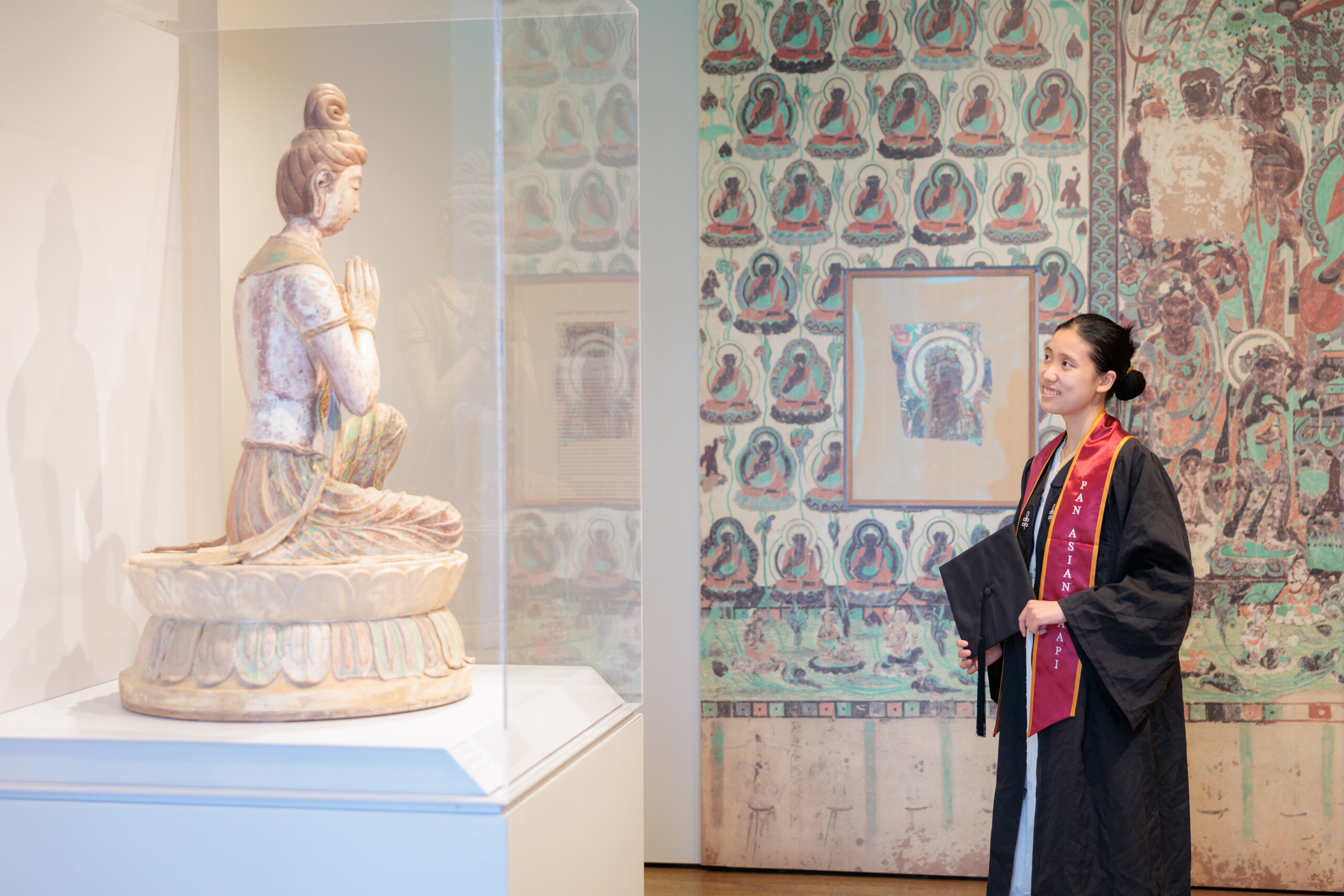

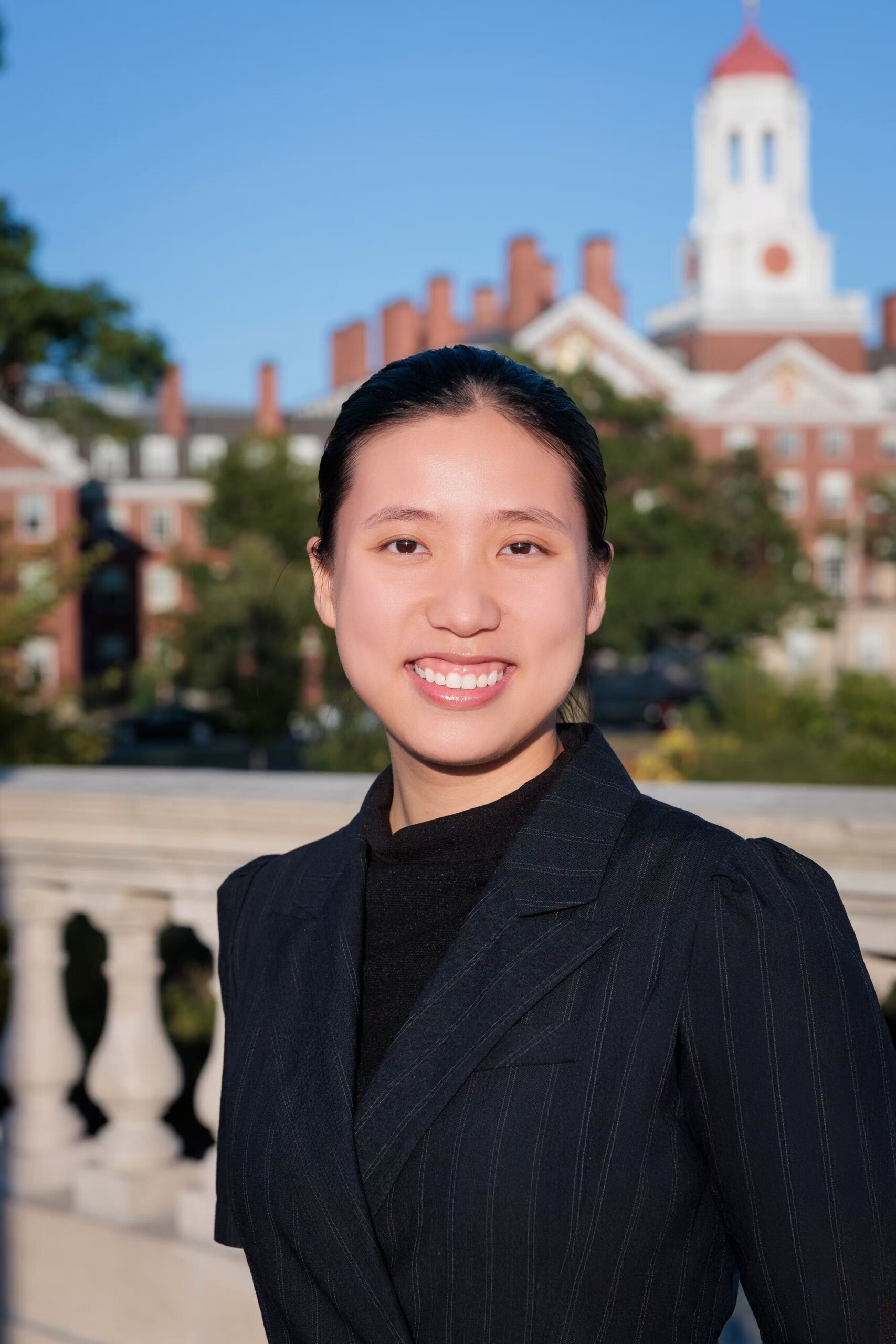
Helen He ’26 graduated last spring with a bachelor’s degree in computer science and East Asian studies and a secondary in Classics. A 2026 Rhodes Scholar, Helen will continue her studies at Oxford this fall, pursuing a master’s degree in computer science. Her innovative work brings computational tools into conversation with questions about art, cultural heritage, and the reconstruction of the past. Her senior thesis, developed through her work with Harvard CAMLab, uses 3D computer vision and motion reconstruction to reimagine medieval Chinese dance depicted in the murals of Dunhuang.
Eugene Y. Wang, Abby Aldrich Rockefeller Professor of Asian Art and founding director of Harvard CAMLab, selected Helen as a Summer Humanities and Arts Research Program (SHARP) fellow in 2024 to work on CAMLab’s Cave Dance project, which brings digital technology together with kinesthetic forms drawn from dancing figures in the Dunhuang murals. “It is this teamwork synergy that makes students like Helen flourish and realize their potential capacities,” Wang said.
Helen has also worked with museum collections to explore how computer vision and data visualization can reveal connections across cultures and time. She spoke with the Fairbank Center about technology and the humanities, the possibilities and limits of computational approaches to cultural history, and the value of pursuing questions that cross disciplinary boundaries.
You studied both computer science and East Asian studies at Harvard. How do you see those two fields intersecting historically, and how have you brought them together in your own work as a scholar?
The study of science and technology has been a longstanding topic in East Asian Studies. Among other things, East Asia was the birthplace of woodblock printing, which revolutionized the transmission of text and knowledge.
Modern computational tools have long been used to study East Asian texts and artworks and design experiences around them. These approaches share two goals: making the materials as widely accessible and engaging as possible and developing tools that can aid the study and research of these materials. In the language domain, the Chinese Text Project has made ancient Chinese texts, especially pre-Qin and Han dynasty works, searchable and accessible, while also using natural language processing to support research on these texts. Harvard’s China Biographical Database similarly makes biographical information about “approximately 657,909 individuals as of May 2026, currently mainly from the 7th through 19th centuries,” available for statistical, social network, and spatial analysis.
In the vision domain, one of my earliest memories of immersive cultural technology was the Along the River During the Qingming Festival exhibit at the 2010 Shanghai World Expo. Museums have also adopted technology creatively: the Harvard Art Museums began experimenting with computer vision services on their collections in 2016. Art conservation departments have long used various forms of technical imaging (3D scanning, multispectral imaging, etc.) to support their work.
In my own work, I have connected computer science and East Asian studies through two related goals: reconstruction and understanding. For reconstruction, I am interested in using historical materials — visual, verbal, and beyond — to reimagine lost historical scenes. One example is the Cave Dance project I worked on, where we explored how computational tools can help us reimagine historical movement and performance. For understanding, I am interested in using computer vision to discover visual connections across cultures and time in large art collections.
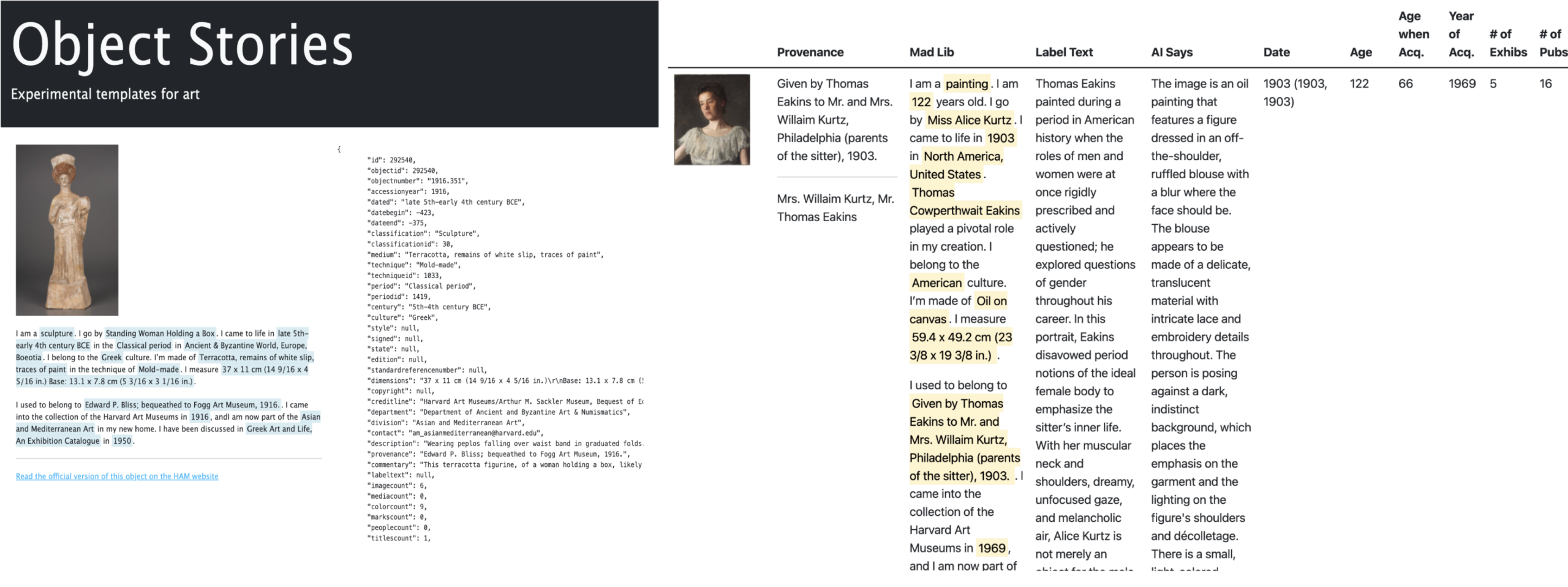
Museums often silo objects by culture, but bringing visually similar objects from different cultures together can reveal unknown historical ties, or simply spark meaningful conversations about commonalities across human civilizations. But vast museum collections (250,000 objects) hide visual connections that no one, not even a professional curator, can fully see with the human eye. This motivated me to use machines to analyze images at scale and surface insights about visual connections across cultures and time. I want online visitors to a collections website to be able to wander freely and get inspired without already knowing what to search for. This goal has inspired my work on data visualization with the collections of the Harvard Art Museums and the Palace of Versailles, and I hope to keep working with more interesting collections of art, films, theater productions, and more.
What role did Harvard CAMLab play in the development of your research and work at the College?
CAMLab was where I started my thesis project on reimagining Dunhuang dance. CAMLab’s original Cave Dance project was truly inspiring and provided such a solid foundation for my own explorations. I learned so much from Professor Eugene Wang — I was really inspired by how he and his co-director Chenchen [Lu] created CAMLab, motivated by the goal of making humanities scholarship reach a broader audience through the aid of technology and new media. They were among the first people to pioneer this kind of work.
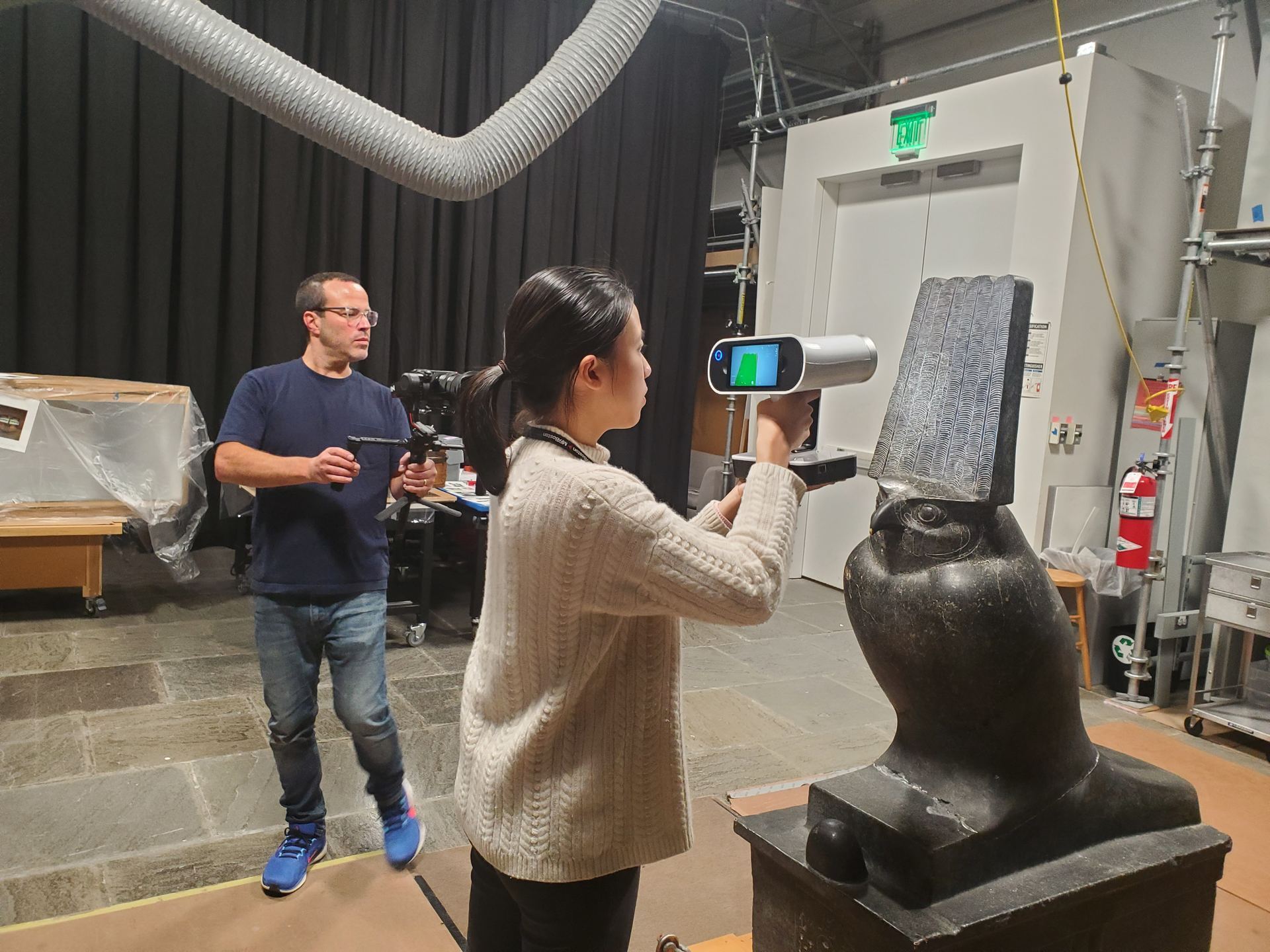
During my SHARP Fellowship with the lab in the summer after my sophomore year, CAMLab provided incredible support and freedom for me to explore the project, take it in new directions, and take ownership of it. CAMLab continued to support me in the following years and semesters as I kept working on this project after the fellowship. Professor Wang was so helpful, both from the perspective of his domain expertise in Dunhuang and dance culture in this specific project and in terms of his broader vision and goals. He was really impactful in shaping my confidence and also my dedication to this field.
Your senior thesis focused on reimagining medieval Chinese dance using 3D computer vision and motion reconstruction. How did you arrive at the project, and what has it taught you about the possibilities and limits of using technology to recover the past?
This project began with my summer SHARP Fellowship at Harvard CAMLab. The lab had already completed a version of the Cave Dance project, and after discussing my interests in Dunhuang and my experience practicing Chinese classical dance, including the Dunhuang style, growing up, Professor Eugene Wang and I both thought this project would be a great topic for us to further develop together.
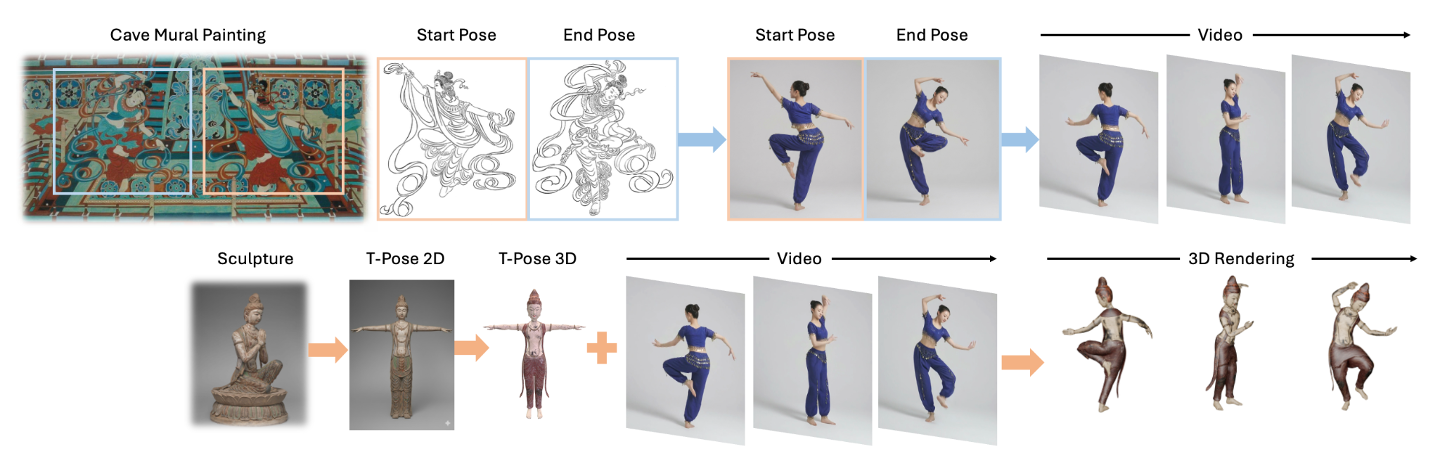
The project started from a very simple but difficult question: Dunhuang murals preserve these spectacular dance poses, but the movement connecting the poses — where dance truly lives — has been lost. I became interested in whether 3D computer vision and motion reconstruction could help us reimagine the in-between movement: given a start pose, an end pose, and historical descriptions of dance style, could we generate motion that is both physically plausible and stylistically grounded?
“In terms of methods, it is very difficult to translate all of these abstract historical materials — the language of poetry, art historical descriptions, movement style, rhythm, and religious and philosophical thought — into constraints that machines can understand.“
The key advantage of our approach was that, with video generative models that have strong priors about human motion, we could open up many more possibilities for imagining what these lost dances might have looked like. It was never about saying that we could know the exact answer — or recover the past with complete certainty. Rather, the idea was that technology could help us explore a much wider range of possibilities from the materials we do still have.
But the project also taught me how hard that actually is. Even domain experts cannot really know for certain how these dances moved, because what survives are mostly static images, historical texts, and later interpretations, so it is challenging to evaluate our results. In terms of methods, it is very difficult to translate all of these abstract historical materials — the language of poetry, art historical descriptions, movement style, rhythm, and religious and philosophical thought — into constraints that machines can understand. These are also interesting challenges for the machine learning community, because they expose models to tasks far outside their usual training distribution, testing their limits and pointing toward ways to improve them.
The Harvard Gazette described your work as “using technology to tell stories about human history.” What draws you to that idea? What kinds of histories or archives feel especially urgent to approach through the computational tools you use?
I have always had a curiosity about what the world of a time and place so different from our own would have felt like. Just as the Chinese aesthetic tradition framed “armchair travel” (臥遊, woyou) and “spiritual roaming” (神遊, shenyou) as forms of imaginative and spiritual travel that allow a person to journey beyond the limits of physical movement, learning ancient languages (Classical Chinese and Ancient Greek), reading literature, viewing museum objects, and learning traditional dance have brought me the joy of finding resonance in ancient cultures.
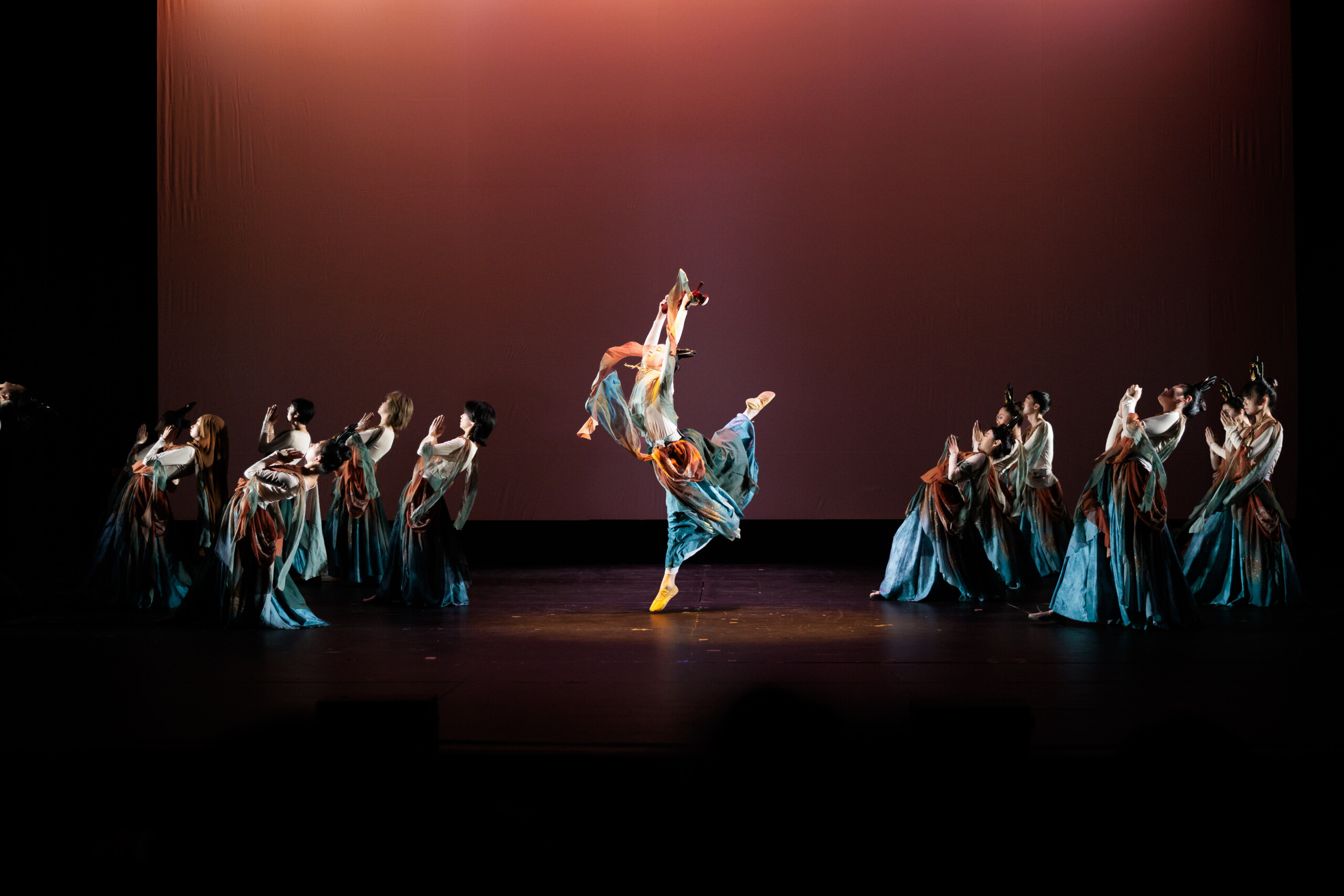
Studying both Chinese and Ancient Greek cultures with people from different parts of the world at Harvard made me realize that art is something that reaches people’s minds beyond the limitations of verbal communication, and it helps people from different cultures today build connections with each other. I wanted to make more people experience the meaningful encounters I have had with art and culture, especially as much of my generation is racing toward a digital future. I find computer science, especially computer vision, a fascinating field in itself, and applying it to understanding culture can help us do things otherwise impossible — such as discovering surprising and interesting connections across cultures and time from expansive collections of millions of objects, or visually reconstructing lost experiences, while also broadening access to cultural heritage for an audience as wide as possible beyond academia.
One kind of history that feels especially urgent to approach through computational tools is the history of marginalized cultures and underrepresented groups. These are often the things that are not discussed enough in academic discourse or public exhibitions, so we should make them more visible and heard. Through my work with museums, I saw how limited their physical resources — such as gallery space, staff, and time — can be compared to their expansive collections. These limitations restrict museums from making their collections fully accessible to the public, which can further marginalize artworks from underrepresented groups. Computational tools can help bring these materials into view and also put cultures more in comparison and conversation with one another.
Another kind of history is the kind where even domain experts do not have a single ground truth, but where we have more and more materials to work with. As more images, texts, objects, and archives become available, we need ways to synthesize all this information into a more cohesive understanding. This is where creative reconstruction can be especially helpful: not to claim that we know exactly what the past looked or felt like, but to gather the traces we do have and create a more vivid, responsible, and accessible way for people to imagine historical experiences.
You now plan to continue your studies at Oxford. What experiences from Harvard will you carry with you into this next chapter?
I will carry with me all the mentorship and friendship I have received from Harvard. I feel incredibly fortunate to have learned from mentors across computer science, East Asian studies, Classics, and the arts, especially Professors Wai-yee Li, Shigehisa Kuriyama, Thomas Kelly, Hanspeter Pfister, Yilun Du, and Naomi Weiss, each of whom shaped different parts of how I think and what I hope to pursue. I will carry the ideas, the conversations, and the perspectives that they have shared with me — the encouragement to embrace creativity across different fields, not draw boundaries between disciplines, and remain curious and open to new ideas.
I will also carry the friendship and company of friends who come from very different backgrounds from me, and who have exposed me to such a wide range of topics, both in research and in life. Beyond the academic departments, some of the most meaningful connections I have made have been with people in Currier House, Harvard’s museums, libraries, and performing arts groups. All of these communities have shaped the way I think, create, and collaborate. I will bring these experiences with me into my next chapter at Oxford.
For students interested in China who may feel pressured to choose between technical training and the humanities, what would you say about the value of working across those boundaries — or of not setting a boundary at all?
I would say that students should not set a boundary that limits themselves too early. China today is deeply invested in technology, so studying technology is also important for studying China. But technology, and humans, cannot live without culture. Technology is shaped by the society that creates it, the values people bring to it, and the creative applications people use it for.
So instead of choosing between technical training and the humanities, I think students should be driven by the specific questions they are interested in. Different disciplines simply give you different tools. You can use computation, languages, historical research, visual analysis, or whatever method helps you approach the problem more deeply. For me, the value of working across boundaries is that you are not forced to shrink your questions to fit one field; you can let the question guide you, and bring together the tools you need to answer it.