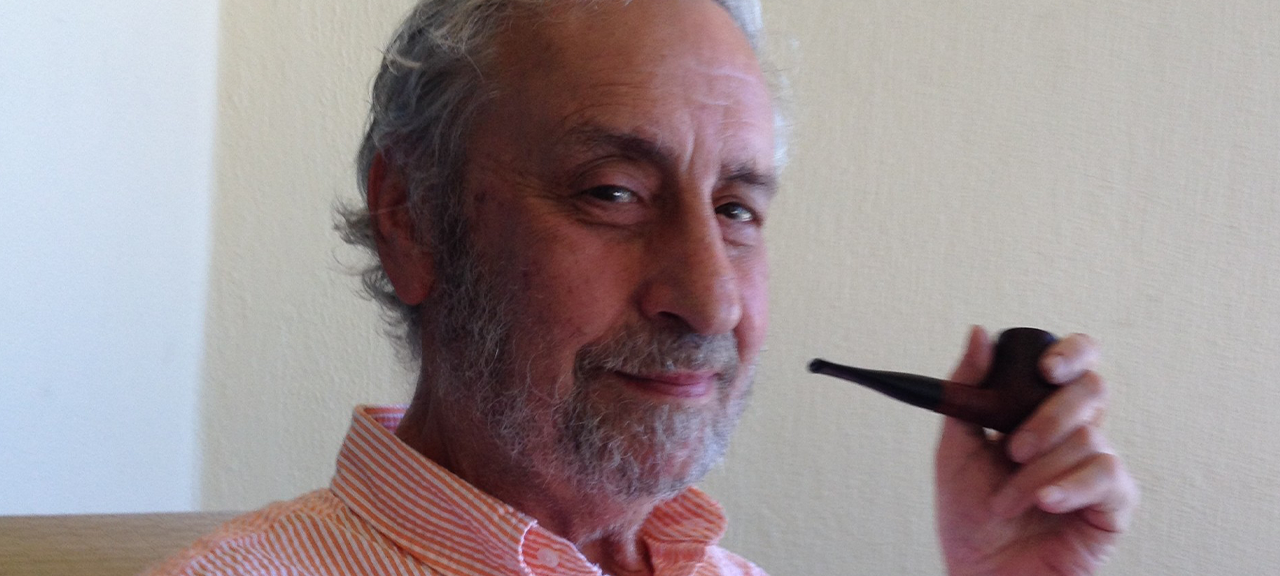

Stephen Owen, James Bryant Conant University Professor Emeritus, Harvard University, was one of the world’s most influential scholars of Chinese and comparative literature and a transformative figure in the study of Chinese poetry and poetics.
For more than four decades at Harvard, Professor Owen helped reshape the study of Chinese literature, bringing the Chinese literary tradition into sustained conversation with comparative literature and literary theory while introducing generations of readers to its extraordinary richness. A scholar of remarkable range, he wrote on a variety of genres across nearly three millennia of Chinese literary history, with particular attention to poetry and poetics of the Middle Period and literary criticism from antiquity through the Qing. His influence extended far beyond the English-speaking academy: his scholarship was widely read, translated, and discussed throughout the Chinese-speaking world, where he became an important presence in contemporary conversations about China’s own literary tradition.
Professor Owen joined the Harvard faculty in 1982, after a decade of teaching at Yale University, where he had earned his B.A. and Ph.D. He held appointments in the Department of East Asian Languages and Civilizations (EALC) and the Department of Comparative Literature. In 1997, he was named James Bryant Conant University Professor, becoming the first, and to date only, professor from the East Asian Studies community to have received Harvard’s highest faculty distinction. Over the course of his career, he authored and edited numerous books, articles, translations, and anthologies, including three monographs on Tang poetry, Traditional Chinese Poetry and Poetics, Remembrances: The Experience of the Past in Classical Chinese Literature, Readings in Chinese Literary Thought, The End of the Chinese “Middle Ages”: Essays in Mid-Tang Literary Culture, An Anthology of Chinese Literature: Beginnings to 1911, The Making of Early Chinese Classical Poetry, Just a Song: Chinese Lyrics from the Eleventh and Early Twelfth Centuries, and All Mine! Happiness, Ownership, and Naming in Eleventh-Century China. He was the editor of Volume I of The Cambridge History of Chinese Literature, and a major contributor to Qu Yuan and the Chuci: New Approaches.
Among Professor Owen’s most ambitious achievements was his complete translation of the poetry of Du Fu, often hailed as the greatest Chinese poet. Published in six volumes in 2016, the translation encompassed around 1,400 poems and inaugurated the Library of Chinese Humanities, an ongoing open-access series of facing-page translations devoted to making major works of premodern Chinese textual tradition available to readers around the world. The project exemplified a commitment that ran throughout Professor Owen’s career: to approach Chinese literature simultaneously on its own historical and aesthetic terms and as part of a shared world literary heritage.
Professor Owen’s influence extended far beyond his own publications. A devoted teacher and mentor, he served as advisor to numerous doctoral students, MA students, and undergraduates, many of whom went on to become leading scholars of Chinese literature in North America, East Asia, and Europe. He also welcomed and supported generations of visiting scholars from East Asia and played an important role in building Harvard’s broader infrastructure for the study of Asia and of comparative and world literature, including the development of the Harvard University Asia Center and its Publications Program. He was tireless in program building and administration, having chaired both EALC and Comparative Literature departments as well as piloted the Advanced Training Program at the Harvard Yenching Institute. The scholarly community that formed around his work ultimately became international in scope, linking Harvard with generations of students, colleagues, and scholars across the world.
His achievements were recognized with some of the highest honors in the humanities, including election to the American Academy of Arts and Sciences and the American Philosophical Society, a Guggenheim Fellowship, the Mellon Foundation Distinguished Achievement Award, and, in 2018, the Tang Prize in Sinology. Yet, the outpouring of remembrances following his passing has also underscored another dimension of his legacy. To generations of students, colleagues, and friends, Professor Owen was not only an extraordinary scholar but a person of unusual kindness, generosity, warmth, and humor. Those qualities were integral to his life as a teacher and mentor and to the international intellectual community he built around the study of Chinese literature.
Below, Professor Owen’s colleagues, former students, and other members of the Harvard community reflect on his life, scholarship, teaching, mentorship, and his enduring influence.
Most of the time when I read a Chinese literary work I can follow the melody, so to speak. Steve Owen could hear the grace notes. From the start, with his first book on the Tang writers Han Yu and Meng Jiao, he showed himself to be an exceptional reader; he went beyond appearances to see what the poets were worrying over. He was also a defender of the literary enterprise as a whole, not only as a vital object of scholarly attention, but also as something he was engaged in through his many translations and works of critical analysis.
The last of his many books, “All Mine!: Happiness, Ownership, and Naming in Eleventh-Century China”, was meant to speak most directly to historians, to show them that behind the social and economic change that came with the unprecedented prosperity of the time, there were also literati who pondered the emotional valence of ownership. Although only an observer in the field of classical Chinese literature, I would still dare to say that he was the most accomplished and the most influential person ever to write about Chinese poetry outside of China. Let us hope that we see more like him.

Thinking of space, time, and discipline, the distance between Stephen Owen’s scholarly work and mine is arguably as great as between any two members of the EALC department. Middle-period Chinese poetry and modern Japanese history are hardly cousins, though one graduate student did find a topic—a biography of Tian Han—that led her to work with both of us. Despite this distance, I felt very close to Steve, drawn by his quiet, wry humor and his calm and wise presence in our department. My wife Yoshie and I took such pleasure from the occasions we spent together with Steve and Xiaofei, in hindsight far too few.
I knew Steve was a giant in his field, the greatest interpreter and translator of his generation of Chinese literature ranging from early times through the early modern era. Strangely and sadly, it was only in the last weeks of his life that I happened to engage his work directly. In the spring I was asked to write a short comment on an art exhibit centered on roof tiles deposited as debris in Hiroshima’s Motoyasu River by the atomic bomb blast. Du Fu’s “Spring Prospect” (春望), with its famous opening line (国破山河在), came to mind as a beautiful evocation of the spirit of this exhibit. As I was writing my comment in English, I sought out translations of the poem.
Steve’s leaped out as the finest, especially the opening: “the state broken, its mountains and rivers remain.” The surprising but perfect choice of a single word—“broken”—brought new life to an ancient work in a different language. I so looked forward to discussing his word choice with him, but it was too late. With so many others, I will miss Steve’s combination of intellectual energy and warm personality.
If my memory does not fail me, I first met Steve in 1987, when I spent the spring semester— hidden in a carrel in the basement of the Harvard-Yenching Library—as a visiting scholar at Harvard. It took a while before I could make an appointment to see him, as he was on leave that semester. Also, if he knew about my English publications, he may have felt little urgency to see me, as those concerned late imperial vernacular drama and prose. Little did he know that in the Netherlands I was best known for my Dutch translations of classical Chinese poetry. But I was acquainted with the three major books on Tang poetry he had published by that time, and while I was impressed and fascinated by his critical reading of the poems he translated, I was at that stage primarily interested in his approach to translation. We had our meeting and discussed translation, but I cannot claim I have a clear memory of our conclusions that day, if any.
I met Steve again in the second week of September 1993, at Berkeley. I had spent the summer there with my family and would stay on for the fall semester as a Visiting Professor. Steve visited Berkeley for a lecture and a master class. That master class was of course intended not for me but for graduate students, but I attended it anyway, and during the discussion I raised the issue of the formal features of the poem he had discussed, and to what extent these could and should be reflected in a translation. Whereas Steve emphasized the role of imagery, I argued against the neglect of rhyme shifts. Neither of us will have entertained the thought that one day in the future we might end up as colleagues at Harvard, occupying offices next to each other on the second floor of 2 Divinity Avenue.
When I spent the spring semester of 1998 at Harvard, Steve was again on leave, so we only came to see more of each other starting in the fall semester of 1999 when, at the advanced age of fifty-five, I was, against my expectations, appointed Professor of Chinese Literature at Harvard, a position I would occupy until my retirement in 2013. By the time I joined Harvard, I knew Steve as the foremost Western scholar of classical Chinese poetry of his generation. Like many others, I eagerly awaited the publication of each of his new books, which appeared in a constant stream, and each time again I was pleasantly surprised by the extent and depth of his research, presented in a cogent and engaging manner. Each of his publications was a true pleasure to read.
The University had of course already acknowledged his exceptional stature by appointing him a University Professor. He received a Mellon Foundation Distinguished Achievement Award; the Tang Prize for Sinology and the Prix Stanislas Julien would eventually follow. But what struck me even more than these books, once I could observe Steve as a colleague, was the care he took in preparing his classes and his concern for his graduate students. In those aspects he set a model for me that I found hard to emulate. Admittedly, part of these activities took place beyond my view, as anti-smoking measures banished him, more and more, from his office at 2 Divinity, which eventually came to look rather disorderly to an outsider.
When I was asked to take care of some of the meetings in the survey course on Chinese literary history for our graduate students, I discovered I was to provide them, as he did, in preparation for each meeting, with a written survey of the subject to be discussed that would go into far greater detail than the presentation and discussion in class and that was, furthermore, accompanied by a detailed survey of the Chinese, Japanese, and Western scholarship. I am afraid that my handouts never displayed Steve’s magisterial command of the subject at hand. While Steve took part in the editing of the Cambridge History of Chinese Literature and contributed the chapter on Tang-dynasty literature to that work, he never published his own collected handouts as Owen’s History of Chinese Literature. I am sure that his graduate students (and all others who took the class) treasure the collected handouts, as I do.
Over the years, my wife and I became good friends with Steve and Xiaofei Tian. To this day, we cherish our memories of the many nights spent together, enjoying the food, discussing the world, and evaluating our colleagues and their works. One year, we spent the Fourth of July watching the Boston fireworks from the Cambridge side of the Charles. Unfortunately, we saw less of each other once my wife and I had returned to the Netherlands upon my retirement, especially once COVID made intercontinental travel quite unpleasant. Steve retired a few years later than I did, but continued his research as before, publishing with the same regularity. No scholar of classical Chinese poetry made a greater effort or had a greater talent for bringing classical Chinese poetry to the Anglophone world. That talent also had its practical side: he made sure that the volumes in the bilingual Library of Chinese Humanities would be freely available online.
I first encountered Stephen Owen through his monumental Anthology of Chinese Literature (1996) as an undergraduate student at Oxford University in the UK. His translations sparked my curiosity in classical Chinese literature (I particularly cherished his rendition of Yuan Hongdao’s 袁宏道 [1568–1610] vignette on spider fighting and related informal essays from the late Ming), and in this respect alone his scholarship changed my life. Although I was not his student (I am a mentee of his former mentees), his writing and scholarly example have left a profound impression on every aspect of my work.
No matter what area of Chinese literature one might choose to explore, it is impossible to escape his influence. He was perhaps the only scholar of classical Chinese literature writing in English whose greatest essays and works of literary criticism—“Place: Meditation on the Past at Chin-ling” (1990), “Traditional Chinese Poetry and Poetics: Omen of the World” (1985), “Remembrances: The Experience of the Past in Classical Chinese Literature” (1986)—read as works of literature in and of themselves.
He was also a model of intellectual generosity. I will always cherish the conversations we had about seventeenth-century drama, John Dryden (1631–1700), my favorite Chinese play, The Palace of Lasting Life (Changsheng dian 長生殿), and the great Song poet Su Shi (蘇軾, 1037–1101). I will try to honor what I took to be one of his lessons—that the study of Chinese literature is not simply a way of learning about China, but a way of understanding the enduring power and relevance of literature itself.
I talked to Steve for the first time when I came to the interview for the Society of Fellows at Harvard. It was a dimly lit room at 78 Mount Auburn Street with about twenty senior scholars, most of them scientists. I remember the sense of vague reassurance that at least one person in that room knew what I was talking about, especially when I had to quote a few lines from The Peach Blossom Fan to explain the paradox of transcending emotions. We chatted during dinner at Elliott House after the interview, and Steve dazzled with his broad knowledge, keen insights, and sense of humor. When I returned to Illinois, I sent him a paper that eventually became the first chapter of my first book. (The poems and poetic expositions I wrote about in that paper had been mulled over and debated in our dinner conversation.) Steve wrote back with encouraging comments, which were important for my plans for that project. He also wrote that he would fully understand if I decided to stay at my tenure-tracked job at the University of Illinois at Urbana-Champaign instead of joining the Society of Fellows. I left Illinois and took up the fellowship at Harvard. It was the kind of risky move that I would not advise my students (or anyone) to take, but fortunately I did not have to regret that decision. Monday dinners at the Society of Fellows for the next three years were delightful in part because I had so many memorable, inspiring, and intellectually stimulating conversations with Steve, forming memories that I will always treasure. Steve was an intellectual giant and also one of the most genuine and generous persons I have known. May his memory be a blessing.
Stephen Owen’s standing as the world’s greatest scholar of Tang poetry of our generation needs no affirmation from one such as me outside the field of Chinese literature. My relationship with Steve (as he was known to his departmental colleagues at Harvard) was rather of a more personal nature for the central role he played in the development of my teaching career at Harvard. Steve was the chair of EALC when I first joined the faculty of that department as Director of the Japanese Language Program in 1993, and from the start his collegial, no-nonsense, unassuming character, spiced with his dry humor and wit, made me feel at home as a welcomed and valued member of the department.
One of the hallmarks of the Department of EALC throughout its history has been the way practitioners of differing fields of study of East Asia have worked together in a spirit of harmony and mutual support, largely unmarred by internal dissension and rivalries. Steve embodied that spirit in the way he embraced the value of Japanese studies for the study of China and its literature. It was largely through his influence and support that I developed and have now taught for many decades a course in Reading Scholarly Japanese aimed at developing reading skills to enable students of Chinese (and Korean) studies to access the vast scholarship on China that has accumulated over the centuries in Japan. The writings of Kojiro Yoshikawa, one of Steve’s most endeared scholars of Chinese literature in Japan, continue to this day to figure centrally among the readings in that course.
While mourning the loss to our department and to the scholarly world as a whole of this giant of Chinese literary scholarship, I therefore feel a sense of personal loss as well, remembering with gratitude his role to me as both mentor and colleague, and pray for comfort and strength to those he left behind who were closest to him, above all his wife Xiaofei and son George.
Stephen Owen was one of the most inspiring scholars and teachers I have ever met. I will restrict myself to one anecdote. When I first arrived at Harvard, one of the classes I was teaching was the East Asian Studies Sophomore Tutorial, a course aimed at introducing our concentrators to the field. For our introduction to Chinese poetry, I asked students to read excerpts from Steve’s Omen of the World, an extraordinary work.
When I walked into the classroom at 1 p.m. to start the class, one of our sophomores—a student studying modern Chinese politics—came up to me with her face flushed in excitement. She said that she had started reading the excerpts the previous night right after dinner. She became so excited that she continued reading the entire book. All the more excited by this time, she then ran to the library to get several of Steve’s other books. She continued reading all night long and straight through the morning—never sleeping at all.
As she was recounting all of this, another student standing next to her—this one working on Japanese economics—said, “Oh my gosh, I did the exact same thing—I’ve been reading Professor Owen all night long.”
This was Steve. Someone who could read so insightfully, analyze so brilliantly, and write so beautifully that readers—regardless of their field—were utterly captivated. I could fill volumes with anecdotes of this sort. Instead, I will simply say that I feel so blessed to have known Steve and so blessed to have such inspiring writings to assign to the next generations of students. I miss him dearly.

When Stephen Owen passed away on May 1, 2026, I had immediate and distinct memories come rushing back. Of course, some of those included experiences of pleasure and insight from reading his monumental works on Chinese poetry and literature that took those fields in entirely new directions through the originality of this thought. Steve’s breadth was boundless, seemingly encompassing the entire Chinese literary heritage and not a small portion of that of the West. Steve displayed a penetrating erudition that was coupled with a self-effacing humbleness and humor. But what I recalled most fondly were quiet moments spent with him—outside a dinner or some other venue—chatting about just about anything. Sometimes the words were few, uttered after brooding over something for a while, but I always came away feeling energized, with a mind full of ideas and new things to read, as well as a better sense of him as a person. As the years passed on, I began to serve on more committees and editorial boards with Steve, which offered a vantage point on how he worked behind the scenes. He was generous in giving of his time and expertise and I always learned from his reflections on work in the field. Upon soliciting his views on an article, for example, Steve once wrote back a short message that to me summed up his approach to writing in general: “A successful article should, I believe, provoke questions outside the purview of the article.” Given his generosity of spirit and commitment to teaching and helping junior scholars, it is perhaps not surprising to learn that it was Steve’s idea to organize and host the Harvard-Yenching Institute’s first Harvard-based Training Program, which was on the topic of Comparative and World Literature. He not only taught in that program, but he also met with the participants regularly for wide-ranging discussions, that opened the eyes and left a deep impression on all of them (many who went on to have illustrious careers themselves).
I will end my thoughts here in the same way I ended my short tribute to him in the “Editorial Preface” to the issue of the Harvard Journal of Asiatic Studies (HJAS) that came out right after his passing: As we remember Professor Owen, it is perhaps fitting to cite the opening lines of his remarkable Remembrances: The Experience of the Past in Classical Chinese Literature: “Classical Chinese literature made a promise, early in its history, that it would be a means to perpetuate the self of the good writer. Such promises of literary immortality are, of course, not unfamiliar in the Western tradition; but through its long history the Chinese tradition increasingly stressed a grand and quixotic qualification of that promise: it would transmit not simply the name but the very ‘content’ of the self, so that the later-born might truly know the person by reading the work.” Steve will be deeply missed, but he has left a prolific and prodigious legacy that will continue to introduce readers to the wonders of Chinese literature and inspire future generations of scholars. And like the poets and authors he studied, his scholarship also holds the promise of keeping his memory alive and allowing us to know him through reading his work.
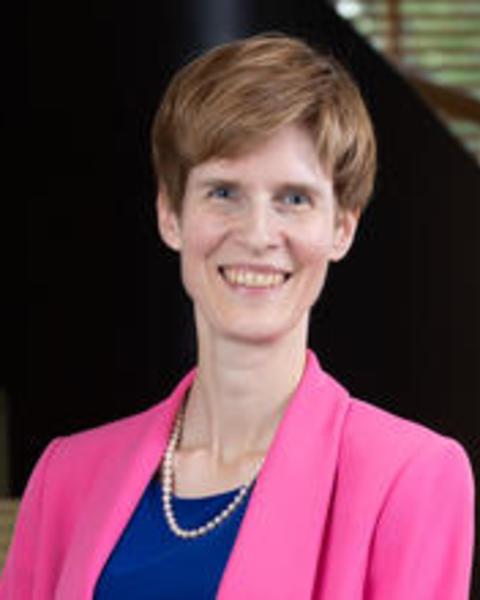
I first heard of Steve in spring 1996, when I was deciding where to attend graduate school for Japanese poetry. One of my beloved mentors at Princeton declared that, given my passion for poetry, if I chose Harvard, I should be sure to take a class either with Steve or with Helen Vendler. Given that I knew no Chinese at the time, I assumed I’d sign up for one of Helen’s courses. But after arriving on campus and learning the central role Steve had played in admitting me to the Ph.D. program, as well as appreciating better the importance of Chinese to Japanese literary studies, I decided to start learning Chinese, including classical Chinese.
Auditing Steve’s core course in classical Chinese literature led to him asking me to be a TF for that course the following year, which led to my single semester of TF work while in graduate school, as well as to two graduate seminars in classical Chinese poetry. I’ll be forever grateful to Steve for believing in me—first as an applicant to the EALC Ph.D. program; then as a TF, as a student of classical Chinese poetry, as a job candidate for a tenure-track position in the Department of Comparative Literature (for which he then served as Chair), and finally as an assistant professor aiming for early tenure, which I ultimately received.
Throughout, Steve was an invaluable mentor. He was also a tremendous inspiration; his vast, seemingly unparalleled knowledge of languages and literatures, combined with his high ethical standards and good humor, set an extraordinary standard for us all. I feel exceptionally fortunate to have known him both as a student and as a colleague.
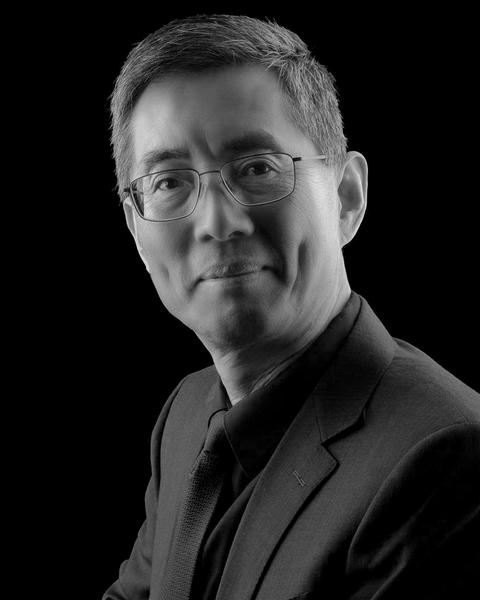
Steve was my first advisor when I began graduate study at Harvard. I switched to art history but never left Steve; nor did he ever abandon me. He remained one of my mentors for the rest of my life. Steve was as generous in spirit as any mentor could be. I still recall the days when I would sit in his office, reporting on the possible avenues my uncheckered thinking at the time might take me down. Steve would pace the room, listening and smoking his pipe—yes, these were the days when the buildings were not equipped with smoke detectors, and he couldn’t quite wean himself from his thought-inducing pipe. I don’t recall when he quit smoking. The situation often reminded me of the connection between pipe and concentrated thought in Sherlock Holmes’s “The Red-Headed League.” Faced with a difficult case, Holmes would say: “It is quite a three-pipe problem, and I beg that you won’t speak to me for fifty minutes.” Though Steve would speak to me often for more than fifty minutes. Few had the privilege—which I had—of watching Steve pace back and forth in his office. When he paced, you knew that he had become truly excited. He would burst out laughing every now and then—that infectious, smoke-inflected, slightly throat-scratched Owenian laugh that would warm any heart and live on in my mind’s eye forever.
Steve remained a vital part of my academic life and formation throughout. I entered Harvard graduate school in part on the strength of Steve’s recommendation letter. He had read the thesis I sent him on the “lyrical void” (kongling) in Tang poetry, liked it, and wrote for me. When I began my first teaching job at the University of Chicago, Steve, then a member of the search committee, was the first to email me, gently twisting my arm and beckoning me to return to Harvard. Years later, while I was a guest lecturer in Steve’s poetry class, I heard the phone ring—that heart-stopping call that all junior faculty at Harvard either existentially dreaded or pined for—which delivered the fatal tenure decision. The universe stopped, and Steve smiled and shared the news with his class. If a painter were to imagine how God or Buddha smiles, he would be better off hiring Steve as his model. That smile of his was—and still is—so magnanimous, all-encompassing, compassionate, and almost cosmic. He himself was absent from that smile. It wasn’t about him; it was about the people he cared for, nurtured, and watched over. It suddenly occurred to me that Steve had never “abandoned” me, even though I had switched fields in my early years of study at Harvard. He had always been there for me, as he had always been there for his students.
A Brandeis professor once observed that if one were to pick the three best readers of poetry across the board, Steve would be one of them. I want to add that Steve was also one of the best readers of minds—including his students’ minds. He had noted my restlessness, knew how to harness and tame it, always with that smile of his: lips closed, eyes gleaming, all-knowing. As one of his students, I now realize that, to be a genuinely good teacher, one has, first of all, to master that fine art of the smile—that Owenian smile. Then hearts would be warmed, and the universe would be in good order. Steve lives on through that never-fading smile. No, he hasn’t left; he hasn’t abandoned us. That smile of his stays, forever, for everyone who knows him.