China Humanities Seminar
Events
-
-
China Humanities Seminar featuring Huan Jin — Modularity and Vernacular Knowledge: The Career of “Tao” 套, 11th–17th Centuries
Common Room, 2 Divinity Ave. 2 Divinity Ave., Cambridge, Massachusetts, United StatesSpeaker: Huan Jin, The Hong Kong University of Science and Technology Emerging at the turn of the eleventh century out of contact with non-Han people, "tao" 套 (set/module) shows the productiveness of cross-cultural interactions. Rooted in empirical knowledge and everyday life that is not dominated by aristocrats and cultural elites, it is a category that
-
-
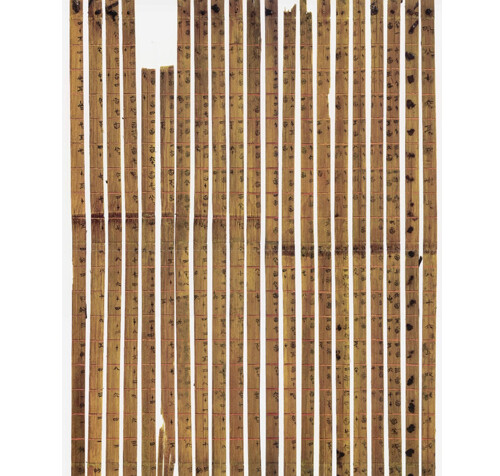
China Humanities Seminar featuring Yunxiao Xiao — Writing on Bamboo and Wood: Text Technologies in Early China
Common Room, 2 Divinity Ave. 2 Divinity Ave., Cambridge, Massachusetts, United StatesSpeaker: Yunxiao Xiao, University of Washington This talk explores how written information was organized, edited, and transmitted through the ancient media of bamboo and wood. Drawing on excavated manuscripts from the Warring States through the Han, I examine three practices of bookmaking and information management before the age of paper: 1) designing layouts, 2) editing
-
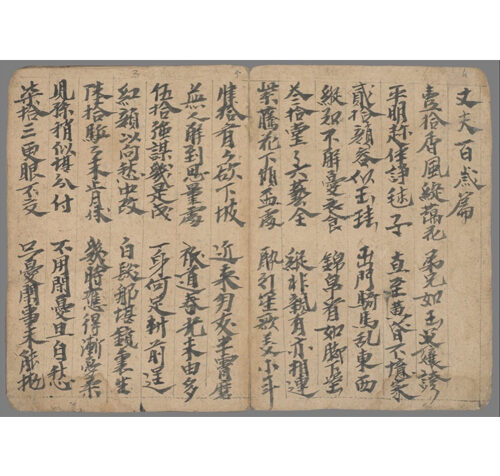
China Humanities Seminar featuring Kerstin Storm — Old Age and Aging in Medieval Chinese Poetry
CGIS South Room S354 1730 Cambridge St, Cambridge, MA, United StatesSpeaker: Kerstin Storm, University of Münster***Please note the different location for this talk in the series.***Perceptions of old age and aging in so-called traditional China are often reduced to two extremes: on the one hand, respect for the elderly, commonly associated with the Confucian cardinal virtue of filial piety, and on the other the Daoist
-
-
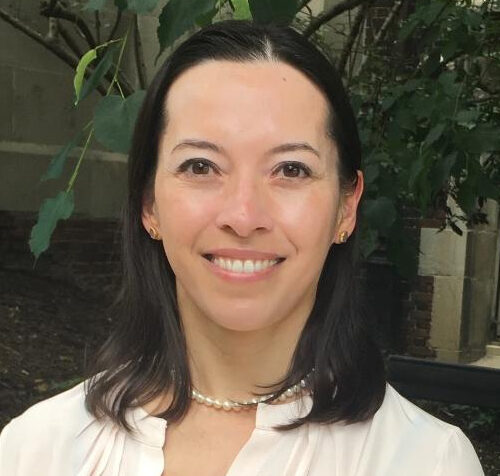
China Humanities Seminar featuring Wendy Swartz — Literary Creativity and “The Use of the Mind” in Early Medieval China
Common Room, 2 Divinity Ave. 2 Divinity Ave., Cambridge, Massachusetts, United StatesSpeaker: Wendy Swartz, Rutgers University This lecture will examine accounts of wen (writing, literary creation) by two of China’s earliest and most innovative literary theorists: “Rhapsody on Writing” by Lu Ji and The Literary Mind and the Carving of Dragons by Liu Xie. Writing on creativity and implicitly advocating for human creation was an act