Co-Sponsored Lectures
Events
-
-
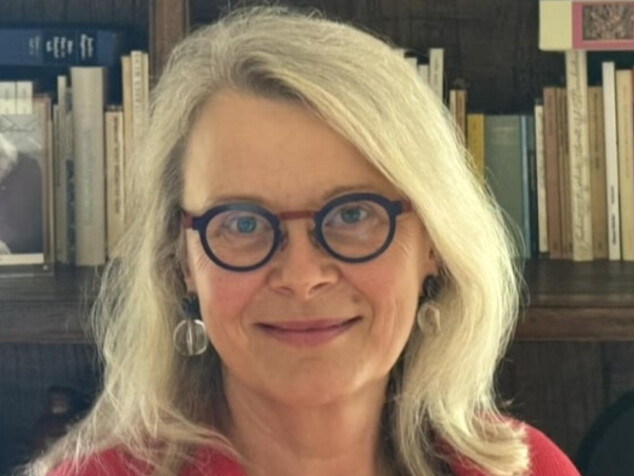
Antje Richter — Health and the Art of Living: Illness Narratives in Early Medieval Chinese Literature
CGIS South S020, Belfer Case Study Room 1730 Cambridge St., Cambridge, MA, United StatesSpeaker: Antje Richter, Associate Professor of Chinese, University of Colorado, Boulder Moderator: Xiaofei Tian, Ford Foundation Professor of East Asian Studies, Harvard University Registration appreciated for planning purposes. Health and the Art of
-
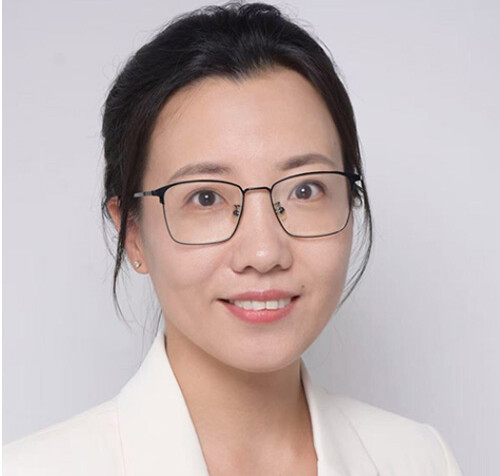
Ma Xinrong — Migration Pathway, Precariousness and Migration Control: the Case of Irregular Migrants From the Philippines and Myanmar to China
Common Room, 2 Divinity Ave. 2 Divinity Ave., Cambridge, Massachusetts, United StatesSpeaker: MA Xinrong, Associate Professor, Sun Yat-sen University; HYI Visiting Scholar, 2025-26Chair/Discussant: Meg Rithmire, James E. Robison Professor of Business Administration, Harvard Business School China, emerging as a new destination
-
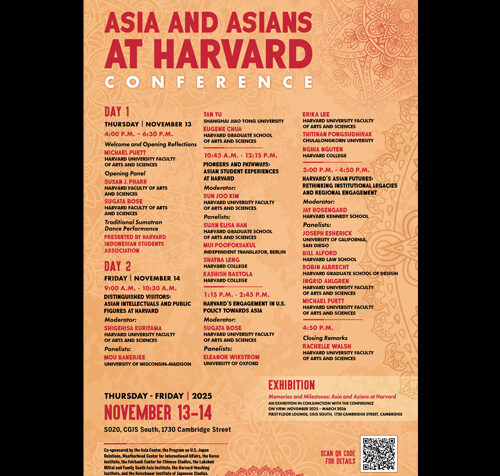
Asia and Asians at Harvard Conference
CGIS South CGIS South, 1730 Cambridge St, Cambridge, MA, United StatesHarvard’s enduring engagement with Asia has shaped scholarly inquiry, public policy, and campus life—within the University and across the region. This two-day conference convenes faculty, students, alumni, and institutional partners
-
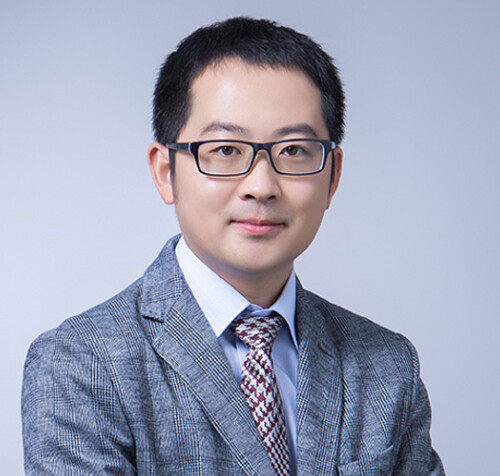
Wang Junqi — The Evolution of Iconography Associated with the Great Compassion Mantra
Common Room, 2 Divinity Ave. 2 Divinity Ave., Cambridge, Massachusetts, United StatesSpeaker: WANG Junqi, Research Fellow, Institute for the Study of Buddhism and Religious Theory; Associate Professor, School of Philosophy, Renmin University of China; HYI Visiting Scholar, 2025-26Chair/Discussant: Parimal Patil, Professor
-
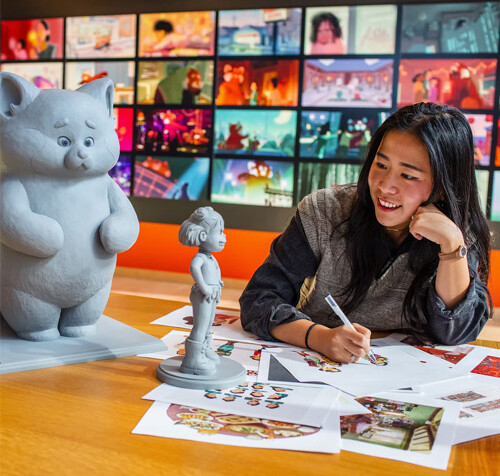
Domee Shi — Drawing from Life: Storytelling, Heritage, and Turning the Personal into the Universal
Radcliffe Knafel Center 10 Garden St., Cambridge, MA, United StatesSpeaker: Domee Shi, Academy Award–Winning Director, Writer, and Storyteller; Creative Vice President, PixarDiscussant: Ju Yon Kim, Patsy Takemoto Mink Professor of English, Harvard University Join the Academy Award–winning director, animator, and
-
-
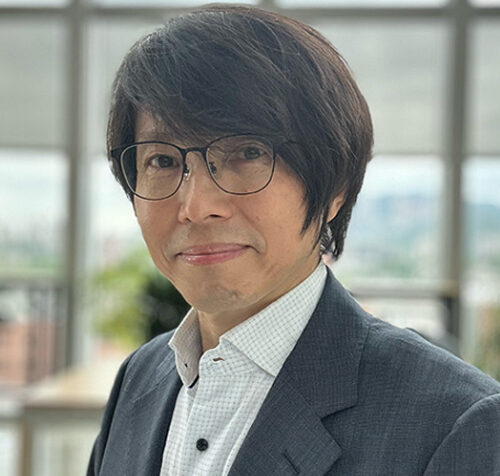
Zong-Rong Lee — Kinship, Business Elite and the Market in Contemporary Taiwan
Common Room, 2 Divinity Ave. 2 Divinity Ave., Cambridge, Massachusetts, United StatesSpeaker: Zong-Rong LEE, Research Fellow, Institute of Sociology, Academia Sinica, Taiwan; HYI Visiting Scholar, 2025-26Chair/Discussant: Frank Dobbin, Henry Ford II Professor of the Social Sciences, Harvard University In the fields
-
From Balancing to Coalition-Building: The US, Taiwan, & Asia’s Grand Reshuffling
Malkin Penthouse, Littauer Building 79 JFK St., Cambridge, MA, United StatesSpeakers:Steve Yates, Former Deputy National Security Advisor; Senior Fellow, Heritage FoundationTony Saich, Daewoo Professor of International Affairs, at the Harvard Kennedy School; Director, Rajawali Foundation Institute for AsiaEdward Cunningham, Director, Ash Center China
-
-
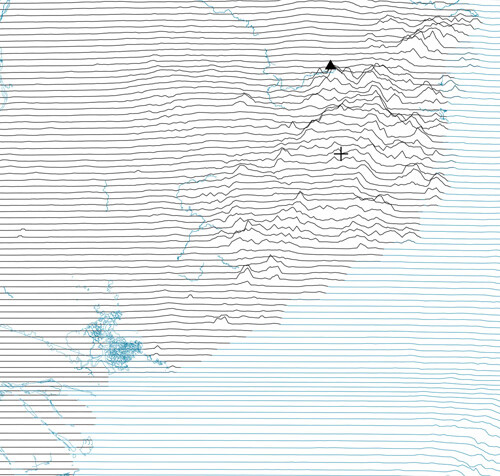
Conference — Designers of Mountains and Water: Alternative Landscapes for a Changing Climate
Piper Auditorium Gund Hall - 42 Quincy St, Cambridge, Massachusetts, United StatesThe Sinographic compound (山水), denoting “mountain and water,” is widely shared across many Asian contexts, with different regional traditions and approaches. As shanshui in China, sansui in Japan, and sansu in Korea, the term has historically
-
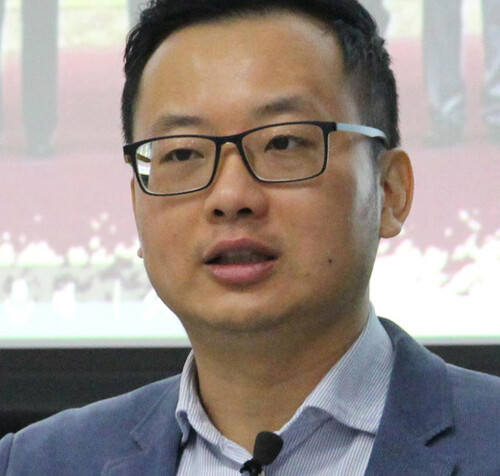
China and the Asymmetric Great Power Competition in the Middle East
CGIS Knafel K262 1737 Cambridge Street, Cambridge, MA, United StatesSpeaker: Gangzhen She, Visiting Scholar, Weatherhead Center for International Affairs; Director, Center for Overseas Security and Associate Professor Department of International Relations, Tsinghua University, China Discussant: Robert Ross, Professor of Political
-

China Energy Dialogue: Can China Remain an Advanced Technology Superpower?
T-G50 Executive Education Classroom, Taubman Building 15 Eliot St, Cambridge, Massachusetts, United StatesSpeaker: Meg Rithmire, James E. Robison Professor of Business Administration, Business, Government, and International Economy Unit, Harvard Business SchoolModerator: Henry Lee, Jassim M. Jaidah Family Director, Environment and Natural Resources
-
-
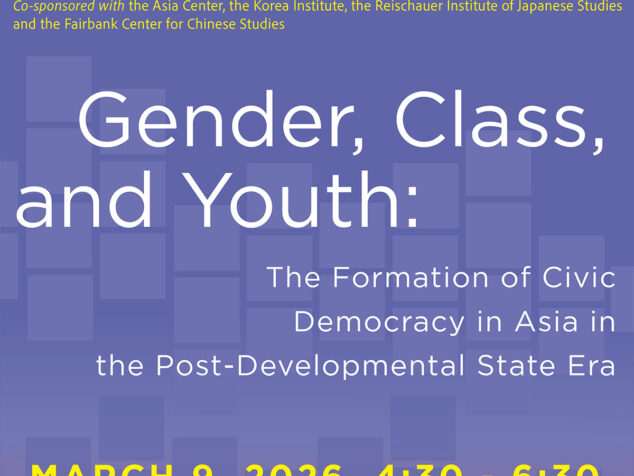
HYI Annual Roundtable — Gender, Class, and Youth: The Formation of Civic Democracy in Asia in the Post-Developmental State Era
CGIS South, Tsai Auditorium (S010) 1730 Cambridge St, Cambridge, MA, United StatesPanelists:Netiwit Chotiphatphaisal, Harvard Divinity School Fellow, Publisher, and Democracy ActivistMing-sho Ho, Professor, Department of Sociology, National Taiwan UniversityEleana Kim, Professor, Anthropology and Asian American Studies, University of California, IrvineHyun Mee
-
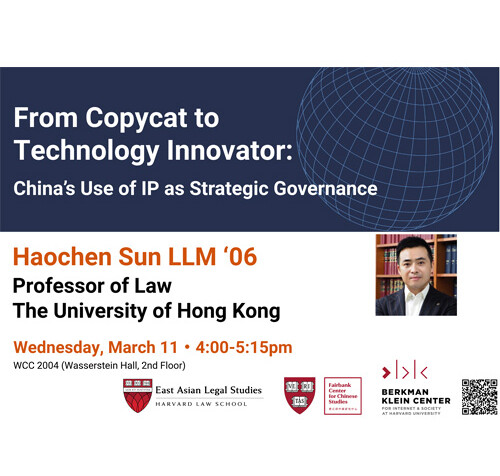
From Copycat to Technology Innovator: China’s Use of IP as Strategic Governance
WCC 2004, Wasserstein Hall 1585 Massachusetts Ave., Cambridge, Massachusetts, United StatesSpeaker: Haochen Sun, Professor of Law, The University of Hong Kong What role have state-orchestrated intellectual property policies played in China’s emergence as a major technology innovator? This talk discusses