Events of Interest
Events
-
-
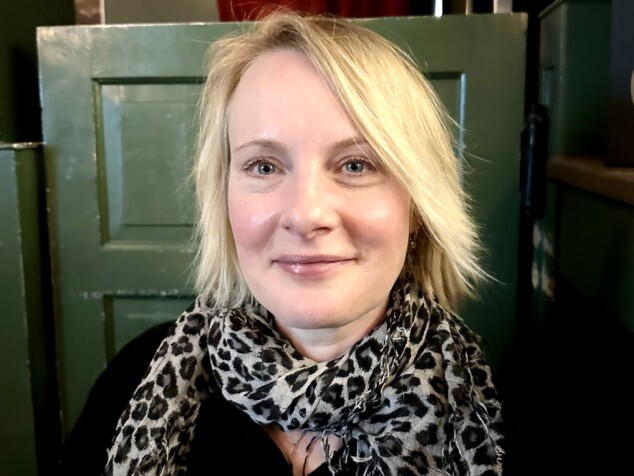
Margaret Hillenbrand – Read Your Mind: Facial Recognition Technology and Contemporary Chinese Portraiture
Presented via ZoomSpeaker: Margaret Hillenbrand, Professor of Modern Chinese Literature and Culture, University of Oxford Margaret Hillenbrand's paper probes the links between facial recognition technology and contemporary Chinese portraiture. Its point of departure is a recent paper published by two AI researchers based in China. The paper introduces a facial recognition algorithm apparently capable of predicting the status
-
Harvard CAMLab Fall Public Visits
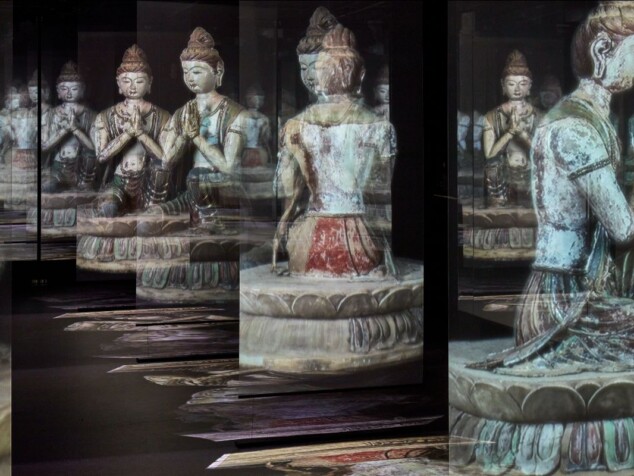
Sackler Building, Lower Level 485 Broadway, Cambridge, Massachusetts, United StatesDuring Public Visits, CAMLab welcomes our audiences to explore immersive installations that stage cultural history with digital technologies. CAMLab Cave Public Visits are guided group tours. Reservations are limited to 15 per hour, in order to preserve the experiential dimension of CAMLab’s multisensorial project installations. Tours are led by a team of Harvard Student Educators,
-
Harvard CAMLab Fall Public Visits
Sackler Building, Lower Level 485 Broadway, Cambridge, Massachusetts, United StatesDuring Public Visits, CAMLab welcomes our audiences to explore immersive installations that stage cultural history with digital technologies. CAMLab Cave Public Visits are guided group tours. Reservations are limited to 15 per hour, in order to preserve the experiential dimension of CAMLab’s multisensorial project installations. Tours are led by a team of Harvard Student Educators,
-
-
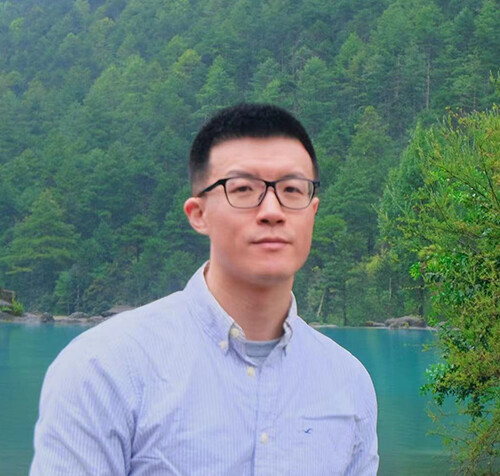
The Lifestyles in the Tang Dynasty under the Influence of Manuscript Culture
Common Room, 2 Divinity Ave. 2 Divinity Ave., Cambridge, Massachusetts, United StatesSpeaker: Zhao Shuyang, Nanjing University; HYI Visiting Scholar, 2023-24Chair/Discussant: Prof. Xiaofei Tian, Harvard University The physical form of books plays a crucial role in human’s daily life. Prior to the advent of woodblock printing in ancient China, the manuscript era prevailed, in which all books were laboriously copied by hand. This unique method of production
-
International Mitigation Finance: Carbon Mitigation, Welfare, and Optimal Recipient Design
Pierce Hall 100F 29 Oxford St., Cambridge, MA, United StatesSpeaker: Naixin Huang, Ph.D. Candidate in Economics, Tsinghua University; Harvard-China Project Fellow International mitigation finance is a primary way in global climate cooperation to limit fast-growing carbon emissions of developing countries. Using a multi-country-multi-sector quantitative trade model, we take the year 2017 as an example to estimate carbon mitigation and welfare effects from mitigation finance and
-
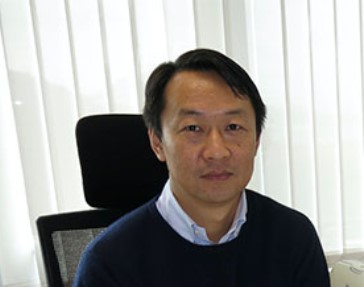
He Wenkai – Book talk: Public Interest and State Legitimation: Early Modern England, Japan, and China
Common Room, 2 Divinity Ave. 2 Divinity Ave., Cambridge, Massachusetts, United StatesSpeaker: He Wenkai, Associate Professor, Division of Social Science, Hong Kong University of Science and Technology; HYI Visiting Scholar 2016-17 In this book, Public Interest and State Legitimation: Early Modern England, Japan, and China (Cambridge: Cambridge University Press, 2023), Wenkai He examines the connections between state capacity, state legitimation and the expansion of political participation. He demonstrates
-
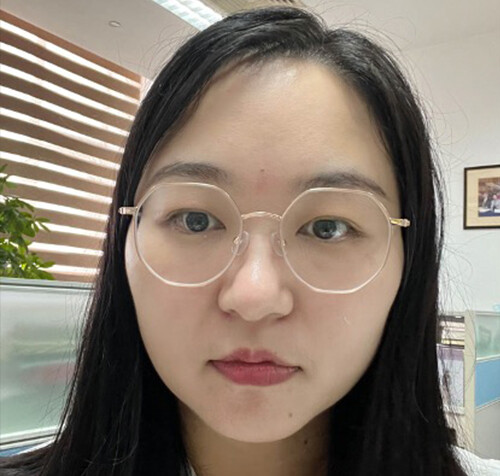
Hou Zhe – Between Ideals and Reality: The Working Class‘s Role in China’s Education Revolution
Common Room, 2 Divinity Ave. 2 Divinity Ave., Cambridge, Massachusetts, United StatesSpeaker: Hou Zhe, Assistant Professor, Institute of China Studies, Shanghai Academy of Social Sciences; HYI Visiting Scholar, 2023-24 Chair/Discussant: Elizabeth Perry, Henry Rosovsky Professor of Government, Harvard University; Director, Harvard-Yenching Institute The assertion that “the working class must lead everything” was a fundamental tenet in the ideological framework of the education revolution during Mao’s era
-
-

The China Challenge and America’s Future
JFK Jr. Forum, Harvard Kennedy School 79 John F. Kennedy St., Cambridge, MA, United StatesJoin us for a special conversation with Mike Gallagher and Raja Krishnamoorthi, the Chairman and Ranking Member of the Select Committee on the Strategic Competition between the United States and the Chinese Communist Party. This conversation will be moderated by former Assistant Secretary of Defense and Douglas Dillon Professor of Government Graham Allison, and Director of the Belfer Center
-

Jiajun Zou – Is Examination Success the Result of Geographical Luck? New Ming Provincial Examination Dataset and Its Macro Social and Historical Implications
CGIS South Room S250 1730 Cambridge Street, Cambridge, Massachusetts, United StatesSpeaker: Jiajun Zou, Ph.D. Candidate in History, Emory University Jiajun Zou introduces a fresh perspective to Ming dynasty studies with his pioneering dataset of 92,000 juren profiles. In his presentation, Zou will share his journey in assembling this comprehensive dataset, utilizing a mix of CBDB resources, computational techniques, and prompt engineering via ChatGPT. He will
-
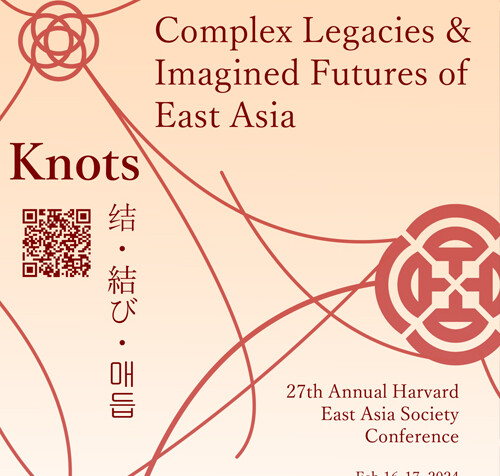
Harvard East Asia Society Conference 2024 – Knots: Complex Legacies and Imagined Futures of East Asia
CGIS South, Tsai Auditorium (S010) 1730 Cambridge St, Cambridge, MA, United StatesThe Harvard East Asia Society (HEAS) Graduate Student Conference is an annual event which provides an interdisciplinary forum for graduate students to exchange ideas and discuss current research on topics related to Asia. The conference allows young scholars to present their research to both their peers and to renowned scholars in relevant fields. All panels
-
Transport and Communication in Late Imperial China: Routes and Costs
CGIS South, Room S001 1730 Cambridge St., Cambridge, Massachusetts, United StatesSpeaker: Ruoran Cheng, Ph.D. candidate at the London School of Economics. Ruoran Cheng will introduce his work on transport routes and costs in the Ming and Qing dynasties. Using techniques from geographic information science and data from historical route books, he has proposed a more accurate and comprehensive account of transport routes. Based on this
-
-
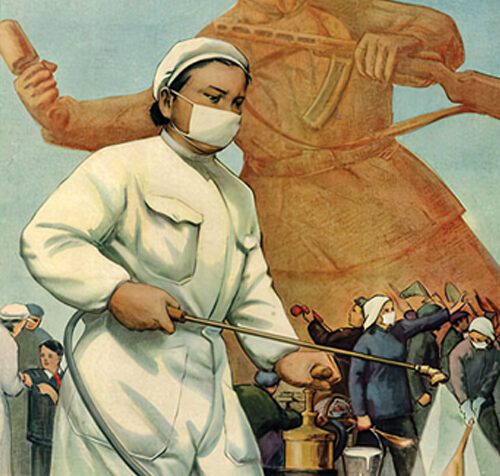
Elizabeth Perry – Public Health, National Strength and Regime Legitimacy: China’s Patriotic Health Campaign
Pardee School of Global Studies, Boston University 121 Bay State Rd, Boston, Massachusetts, United StatesSpeaker: Elizabeth J. Perry, Henry Rosovsky Professor of Government, Harvard University; Director, Harvard-Yenching Institute This talk focuses on China's longest-lived mass movement: the Patriotic Health Campaign(PHC). Introduced by Mao Zedong in 1952 during the Korean War, the PHC continues even today, having recently played a role in Xi Jinping's Zero-Covid effort. The talk will question