
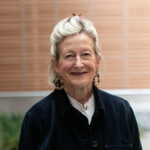
Joseph Fewmith, longtime Associate of the Fairbank Center for Chinese Studies and Professor Emeritus of International Relations and Political Science at the Frederick S. Pardee School of Global Studies at Boston University (BU), died on November 6, 2025. He was 76 years old.
Professor Fewsmith immersed himself in the study of Chinese politics and international relations, shaping the field and influencing American policymaking, through his incisive scholarship. His work offered vital insights into the evolution of Chinese governance, elite politics, and reform processes—not just as academic subjects, but as living phenomena in a world of shifting power and global consequence.
From his early years as Chief of the China Branch at the Foreign Broadcast Information Service to his arrival at Boston University in 1991, Professor Fewsmith’s research was marked by a dedication to rigorous empirical research and historical grounding. His seminal books—such as The Logic and Limits of Political Reform in China and Rethinking Chinese Politics—reflect his ability to navigate complex theoretical debates while maintaining acute attention to the concrete realities of Chinese political life. He challenged dominant narratives with nuance, trained generations of scholars and practitioners as a professor and mentor, and played a crucial role in building the East Asia program at BU into a national leader.
He was the author of seven books. His most recent work, Forging Leninism in China: Mao and the Remaking of the Chinese Communist Party, 1927–1934 (Cambridge University Press, 2022), reflects his longstanding interest in CCP elite politics and institutional development. His other major publications include Rethinking Chinese Politics (Cambridge University Press, 2021), The Logic and Limits of Political Reform in China (Cambridge University Press, 2013), and the second edition of China Since Tiananmen (Cambridge University Press, 2008). Earlier in his career, he published Elite Politics in Contemporary China (M.E. Sharpe, 2001); The Dilemmas of Reform in China: Political Conflict and Economic Debate (M.E. Sharpe, 1994); and Party, State, and Local Elites in Republican China: Merchant Organizations and Politics in Shanghai, 1890–1930 (University of Hawai‘i Press, 1985). In addition to his prolific book-writing, he was one of seven regular contributors to the China Leadership Monitor, writing quarterly analyses of Chinese political developments, from 2002 to 2014.
Beyond his written legacy, Professor Fewsmith will be remembered by his students for his warmth and his mentorship. Students at BU consistently praised not only his encyclopedic knowledge of China but also his accessible and engaging style in the classroom. He had an open-minded curiosity and a generous spirit, welcoming thoughtful dissent and encouraging inquiring minds. His passing leaves a profound gap in the China Studies academic community, but his influence lives on in the countless colleagues, students, and readers who carry forward his values of rigor, historical empathy, and international perspective. His spot on the stage at the Fairbank Center will be a hard one to fill.
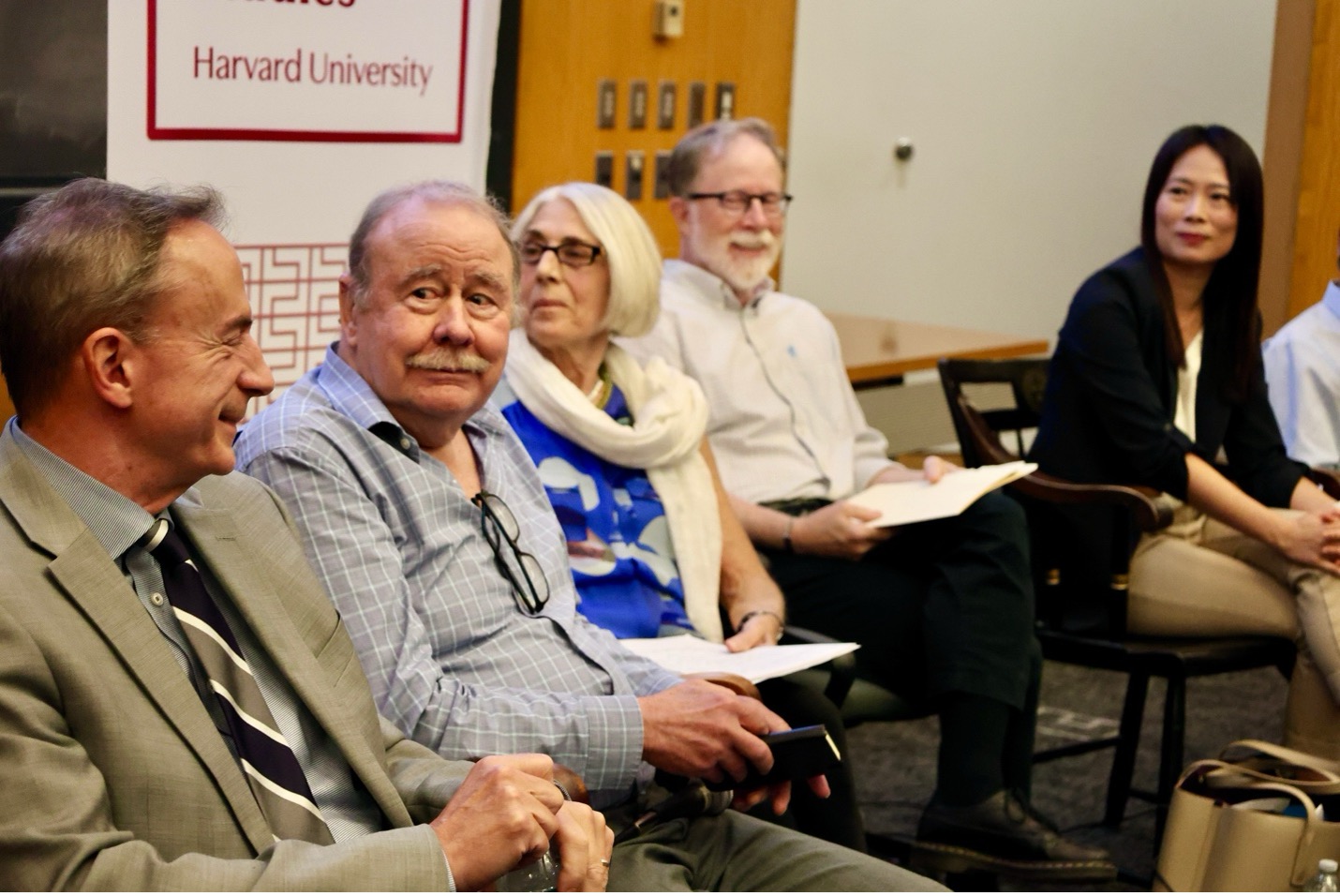
As recently as this fall, Professor Fewsmith’s wit, intellect, and strength of character were on full display at our 70thanniversary symposium discussing the question of ‘How Should We Study China?’ (pictured). Below, faculty members, friends, and colleagues share their fond memories of Joe and his work.

I am so saddened by Joe Fewsmith’s passing. It was a privilege to know him. He was so deeply learned about politics in the PRC. It seemed to me that his near-decade long stint in government service imparted a keen sense of how bureaucracies work that informed his very insightful writing about the PRC, even as he deeply appreciated the many differences.
I do wish Joe had had more time to enjoy his retirement and to continue to share his wisdom and generous spirit with his many friends.”
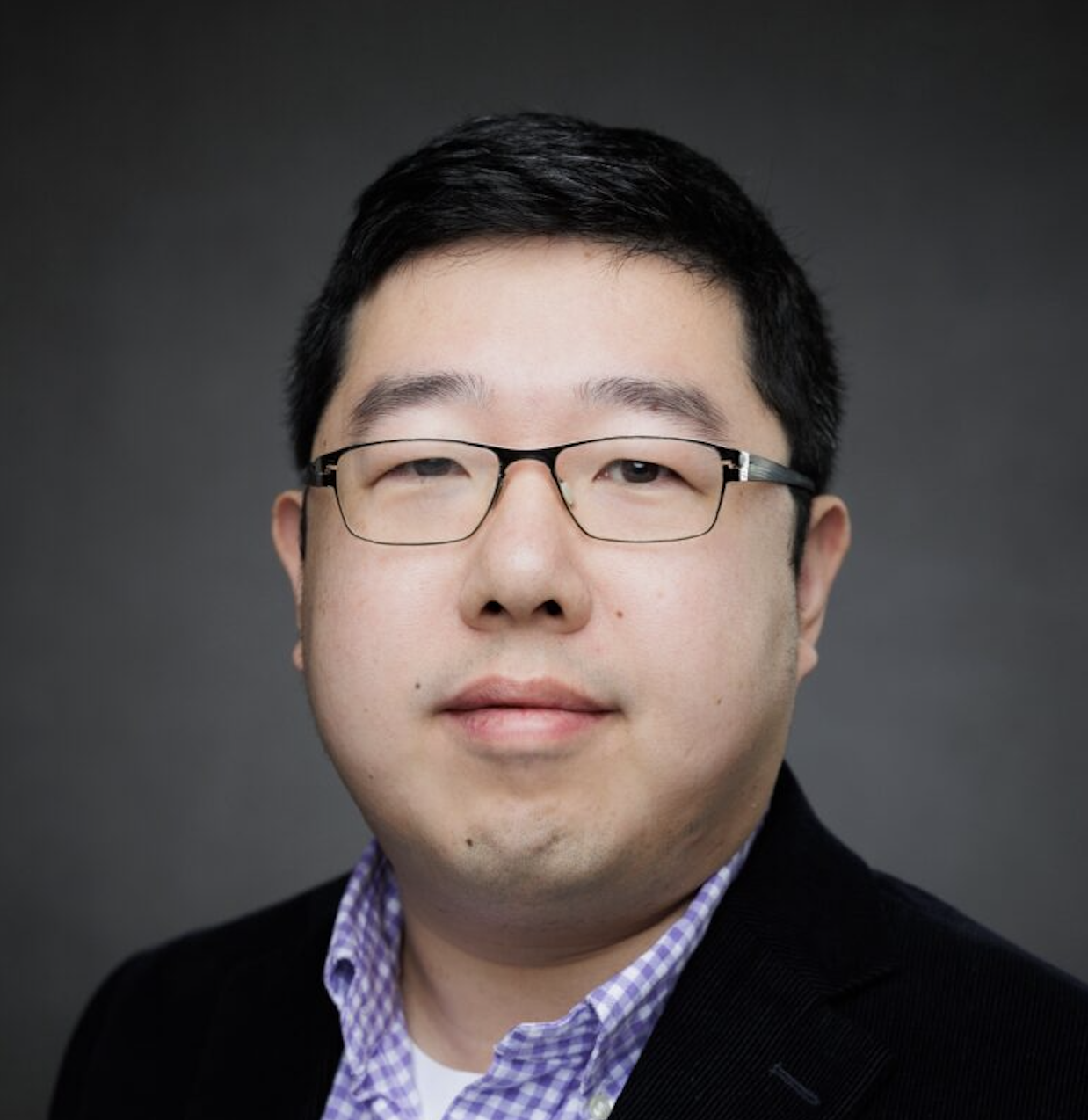
My journey with Joe began in the fall of 2011, when I first studied Chinese politics at Boston University. Over the years, I took nearly all of his courses — Taiwan Politics, Post-Mao China, Bureaucracy, and Chinese Foreign Policy— and for several consecutive years I covered his undergraduate course, China: From Revolution to Reform, when he was away.
When it came time for my comprehensive exams, Joe carefully designed the reading list for the Chinese politics field exam. He compiled a list of key works by each generation of China scholars, since John Fairbank, insisting that I not only read them closely but also understand how the China field had evolved in the United States. Sadly, this kind of intellectual lineage is becoming increasingly rare in American academia today.
During my dissertation research, one chapter examined how big business influences government social policies — a topic that sparked years of intense debate between us, sometimes to the point of red-faced arguments. Later, Joe quietly traveled to Hangzhou to conduct his own fieldwork, interviewing local officials to test whether my argument held true. Other chapters, on development zones and municipal leadership, drew on areas of his expertise, and he offered generous feedback and deep engagement with my findings.
Starting around 2016, both of us developed a strong interest in Party history. We would often talk for hours about archival sources and interpretations. One of his final books, ‘Forging Leninism in China,’ explored the organizational foundations of the CCP’s rise. I helped him, without pay, comb through large amounts of Republican-era archives and local gazetteers, which were printed in vertical classical texts. When he taught undergraduates in the fall of 2017, he eagerly incorporated these new findings — on topics like the AB Group, the February 7th Land Meeting, and the Futian Incident — and his enthusiasm filled every lecture hall.
Joe was not only a prolific scholar but also a vibrant public intellectual whose voice often appeared in the media. He once joked, “Every five years, when China holds a Party Congress, The New York Times calls me to check if I’m still alive.” The class burst into laughter; today, that line carries a deep poignancy.
Though he always appeared energetic, Joe had struggled with health issues for years. He underwent heart bypass surgery more than a decade ago. In the fall of 2023, he lost his beloved and very young daughter to cancer — a tragedy that left him heartbroken; her photo always sat on his office desk. In the summer of 2024, he endured another major hip replacement surgery. When his closest friend, Professor Steve Goldstein, passed away in February 2025, Joe felt even more alone. He had spoken of moving to Washington, D.C. after retirement to remain active in the China studies community. Tragically, he suffered a sudden stroke and passed away before that plan could be realized.
Farewell, Joe. Thank you for the knowledge, mentorship, and warmth you shared with all of us. Your spirit and scholarship will continue to live on in your students.”
I have known Joe since graduate school and was so pleased to be returning to the Boston area around 2010 to join his China Studies community at the Fairbank Center. Joe was the go-to person for elite politics in China, and I relied heavily on his research and writing for my own work. His ideas and his always personable presence are already badly missed. The Center will not be the same without Joe.”
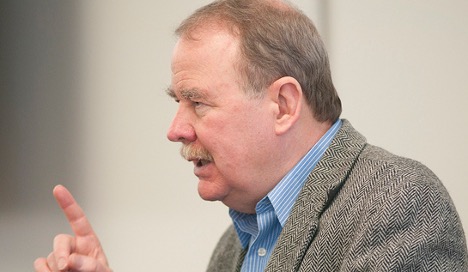

I saw Joe at a workshop in Washington a couple of weeks ago and he was, as was often the case, making a really important point based on his encyclopedic knowledge of Chinese elite politics. Over the years, Joe and I would have had conversations about the evolution of the China field, mainly as it pertained to the relationship between domestic and foreign policy. We’d often discuss the pros and cons of Pekingology versus large N text analysis. I think we agreed on the value of marrying both, though the depth of his experience working with texts and statements meant I always took his analysis of elite politics very seriously.
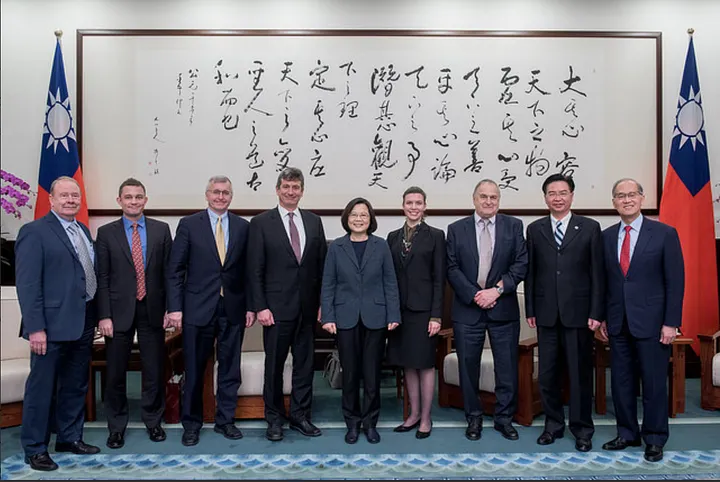
Joe was a brilliant and careful scholar, but he did not put on airs. Like others connected to the Fairbank Center, I would also marvel when Joe was in action during the annual Fairbank Center Taiwan Studies group visits to Taipei and Beijing. In our meetings, Joe was invariably polite to our KMT/DPP/CCP/PLA/MSS interlocutors, but then would ask very pointed questions about the logic, efficacy, and morality of their respective policy positions. His questions were rooted in a mastery of their own discourses. And he would do this all with a wry smile. Indeed, he would occasionally cite the obscure and not so obscure documents that these interlocutors themselves were mischaracterizing or ignoring. Over the years, the Fairbank Center’s Taipei-Beijing group has lost a number of great minds and great hearts — Alan Wachman, Alan Romberg, Steve Goldstein, and now Joe. Role models all.”
When I first felt seriously curious about China, back in 2001, I walked into a bookstore across from King’s College in Cambridge, UK and picked a book for entertainment on a long train trip. It was Joe Fewsmith’s China Since Tiananmen, which was certainly tough to read as a first academic book on China. But the wealth of information and nuanced analysis amazed me. Since then, I was convinced that outsiders could learn a lot about even the most internal political dynamics in China. Joe’s book was the proof.
For a long time, ‘China Since Tiananmen’ remained my only acquisition of a China-related book. But it helped me read the news from China with a historical perspective and familiarize myself with the cast of political characters in Beijing. Only a decade later, returning to academia for a Ph.D. program at Harvard, did I discover the broader community of scholars in Chinese elite studies at the Fairbank Center, also an intellectual home to Joe. It was a transformative experience for me to listen to deep conversations and intense yet always friendly debates between Joe, Roderick MacFarquhar, Liz Perry, and many leading scholars from around the world coming through the Fairbank Center. I could witness up-close how Joe formed his ideas about current developments, always watching out for new evidence, and sometimes encountering surprising facts that required revisions to his thinking. Observing these debates was a highlight of working as a Ph.D. student in Cambridge. I have learned so much from Joe, especially asking small questions to arrive at big, historically-grounded answers about elite politics and the nature of factions.
Particularly memorable were the occasions when I saw Joe in the field in China, in Jinan, and especially in Taipei. After each day filled with exhausting conversations about contemporary issues, with academics and officials, he would whisk me away to a quiet corner of a hotel lobby, to review our experiences of the day. Being an expert of the KMT and its history, he toyed with historical comparisons and pointed out longer-term trends, regardless of the evening advancing. His extremely detailed historical knowledge and analytical clarity were captivating, and we needed the organizer of the trip to declare a curfew, so that we would get enough rest for the next day. I was in awe of Joe’s intellectual energy.
Our shared interest in CCP history made many more good conversations, including on the far-reaching implication of Victor Shih’s ‘Coalitions of the Weak.’ It was a privilege to read chapter drafts of ‘Forging Leninism in China’ and discuss them over lunch. When I walked by the same bookstore in Cambridge, U.K. — where, two decades before, I had bought Joe’s Tiananmen book — I felt moved that this time I did not need to walk in to get ‘Forging Leninism,’ because Joe had given me a signed copy.
Knowing that Joe had many more burning questions about China and its political history, I did not think this would be his last book. I will dearly miss his presence at the Fairbank Center, and keep his books in reach.”
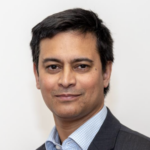
A cliché, but Joe was a scholar and a gentleman. I read his books as a graduate student and was struck by his seriousness and his charm when we finally met — and continued to do so in the U.S. and China. We had planned to talk more since we were in the same city. I am so sorry to know I won’t be able to draw more on his wisdom, and immensely glad to have had the chance to know and learn from him.”
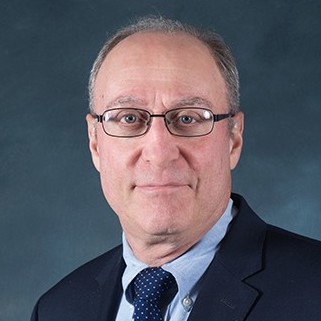
I first read Joe Fewsmith’s writings in the mid 1980s, when I was writing my dissertation on Chinese foreign policy and the 1979 China-Vietnam war. At that time, Joe’s writings on post-Mao succession politics were critical to my understanding of the domestic context of Chinese foreign policy. 10 years later, Joe and I met after Joe joined the faculty at Boston University and I joined the faculty at Boston College. It did not take long before I valued Joe as much for his warmth and friendship as for his scholarship.
Joe was an important member of the Boston-area community of China specialists. In our research seminars, and in meetings with scholars and officials from the United States and East Asia, Joe’s contributions reflected his deep knowledge of Chinese politics, adding substance to our discussions on such topics as Chinese security policy, mainland-Taiwan relations and U.S.-China relations. He could be counted on to offer his perspectives with both humility and authority, earning the attention and appreciation of. I was always reassured when I learned that Joe would be attending a meeting, confident that we would have a good discussion.
Members of the Fairbank Center’s Taiwan Studies Workshop often traveled together to the mainland and Taiwan. Our camaraderie owed much to Joes’s presence (as well as to our wisdom to ask Joe to select the dinner wine). In our meetings, Joe commanded the respect and attention of our colleagues on both sides of the Strait for his scholarship and insights on day-to-day politics in both Beijing and Taipei. His many friends and admirers reached well beyond the United States.
In my own research, Joe’s writings were invaluable. As a 外行 on Chinese elite politics, I depended on Joe’s writings to help me understand the impact of China’s domestic politics and its political economy on its foreign policy. To this day, whenever I need to know something about a key event in Chinese political history or the political implications of trends in the Chinese economy and society, I turn first to Joe’s books. Inevitably, Joe’s careful research and thoughtful and judicious analysis are most important in my research.
Joe and I met frequently for lunch. We were always on the lookout for the latest Chinese restaurant with the most “authentic” dishes, whether it be a Sichuan restaurant or a dim sum restaurant, and whether it be in Brighton or in Quincy. In our discussions of all things China, Joe combined his commitment to a vigorous give-and-take of different perspectives with his generosity and soft-spoken personality, fostering both understanding and friendship.”
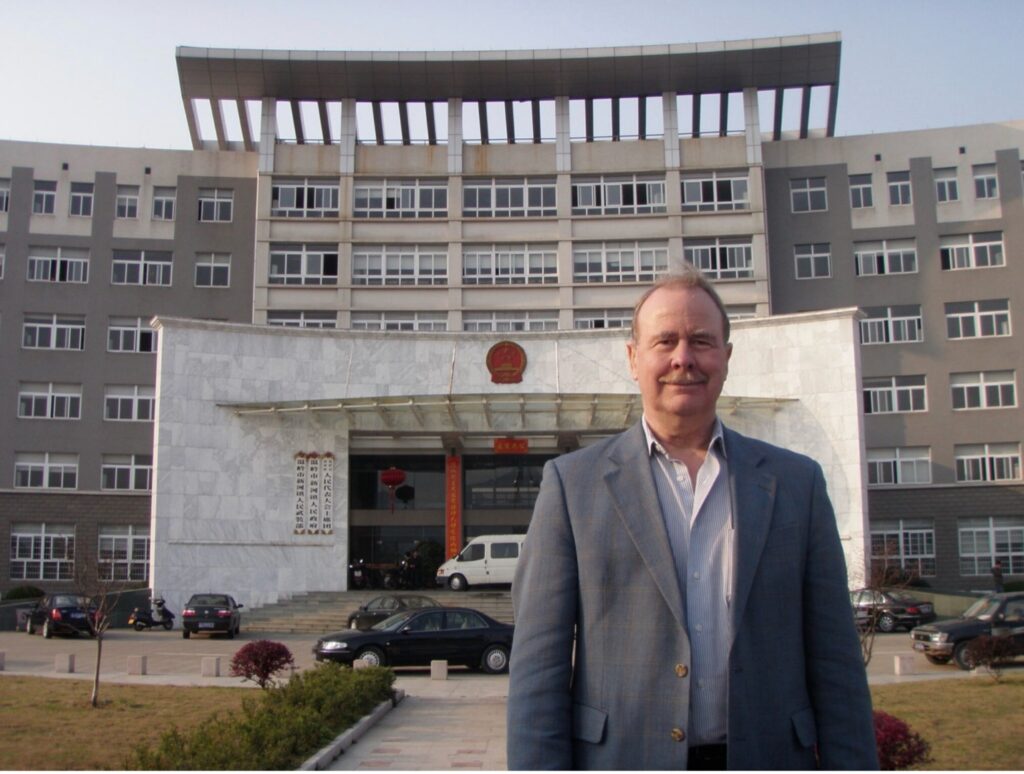
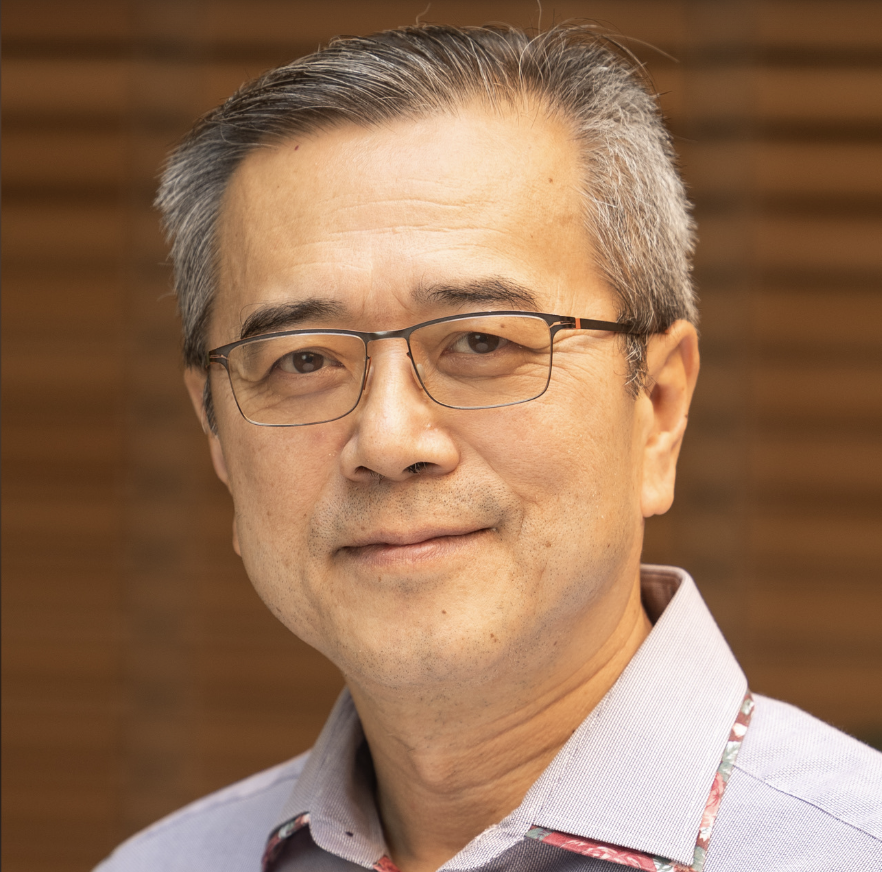
The Sage Has Departed, Yet Echoes Remain in the Empty Valley.
This year marks the 10th anniversary of the University Forum. Professor Joseph Fewsmith began supporting the University Forum when it was only in its second year. Over the past eight years, he served as a discussant for five University Forum lectures, including:
1. China’s 1988 Price Reform Decision under Money Illusion and Its Consequences by Professor Fan Shitao
2. The Internal Dynamics in Sino–U.S.–China Confrontations by Professor Liu Yawei
3. Weak Leader Politics and China’s Transition in the Late 1970s by Professor Han Gang
4. De-Utopianism, Re-Utopianism, and Contemporary Chinese Political Thought by Professor Ren Jiantao
5. Analyzing Governance in China by Professor Yan Jirong
Professor Fewsmith was clearly an active participant in, and a staunch supporter of, the University Forum. In his honor, on June 11 of this year, we hosted a retirement dinner for him at the registered address of the University Forum—1709 Cambridge Street, Cambridge, Massachusetts. This occasion was a testament to Professor Fewsmith’s trust in our work.
On September 17 of this year, at the dinner celebrating the 70th anniversary of the Harvard Fairbank Center, Professor Fewsmith sat to my left. He whispered to me, ‘An American ‘Cultural Revolution’ is coming.’ He also mentioned that although he used to be very busy, now that he was retired, he hoped we would have more opportunities for deep conversations. Since he lived quite far away, he suggested that we meet at the train station downtown. I replied, ‘Of course! You pick the meeting spot, and I’ll pick a nearby restaurant. We can chat over a meal.‘
He squeezed my hand firmly and said, ‘Good!‘
I never expected that he would not be able to keep that appointment. I am still reeling from the shock. He was so full of life. I keep feeling that he will ask to meet me again—only, at that time, the meeting place might be a bit too far away.
I have very deep regrets and sadness.
To commemorate Professor Fewsmith, the University Forum, in collaboration with the Carter Center, held an online memorial service at 8:00 p.m. EST on November 29. Over a hundred scholars gathered virtually, with more than 30 delivering remarks, deeply mourning Professor Fewsmith during the two-and-a-half-hour service. I spoke at the meeting in my capacity as the founder and lifelong volunteer of the University Forum.
Last year, the Fairbank Center for Chinese Studies lost a Center Associate; this year, two more passed away. As one of the remaining four, I realize the heavy burden on my shoulders. I will take more initiative to shoulder the necessary work and strive to fill the void they have left behind. I believe this is the best tribute to Professor Fewsmith.”
“Joe’s encyclopedic knowledge of Chinese politics, Party history, and foreign policy have shaped the work of many academics, including me. Over the years, I learned of countless developments and events that escaped my attention, but not Joe’s, that played a key role in informing my view of what is happening inside the Chinese Party-state. Across a wide breadth of subjects, Joe’s ability to keep track of the finest details and then synthesize them into sharply formulated key points consistently impressed so many of us at the Fairbank Center.
But it was Joe’s thoughtfulness as a teacher and his desire to have the spotlight shine on others that left its deepest impression on me. Over the last few years, more than a few of our postdoctoral fellows have mentioned how touched they were that a senior scholar of Joe’s renown would choose to spend as much time as he did to engage with their work. In convening their seminar series on Chinese foreign policy, Joe and Bob Ross intentionally chose to focus on the work of emergent scholars, in order to ensure that their work received greater attention from the Harvard community. When Joe finished ‘Forging Leninism,’ I tried to persuade him to deliver a talk at the Fairbank Center. In that post-COVID moment, he argued instead that our collective energy would be better spent finding ways to bolster the resources for younger scholars to conduct the in-depth work that he had the pleasure of doing throughout his lifetime. He was very convincing, whether in a seminar setting or simply one-on-one. I only wish I could have had even more time to learn from his example and wisdom.