
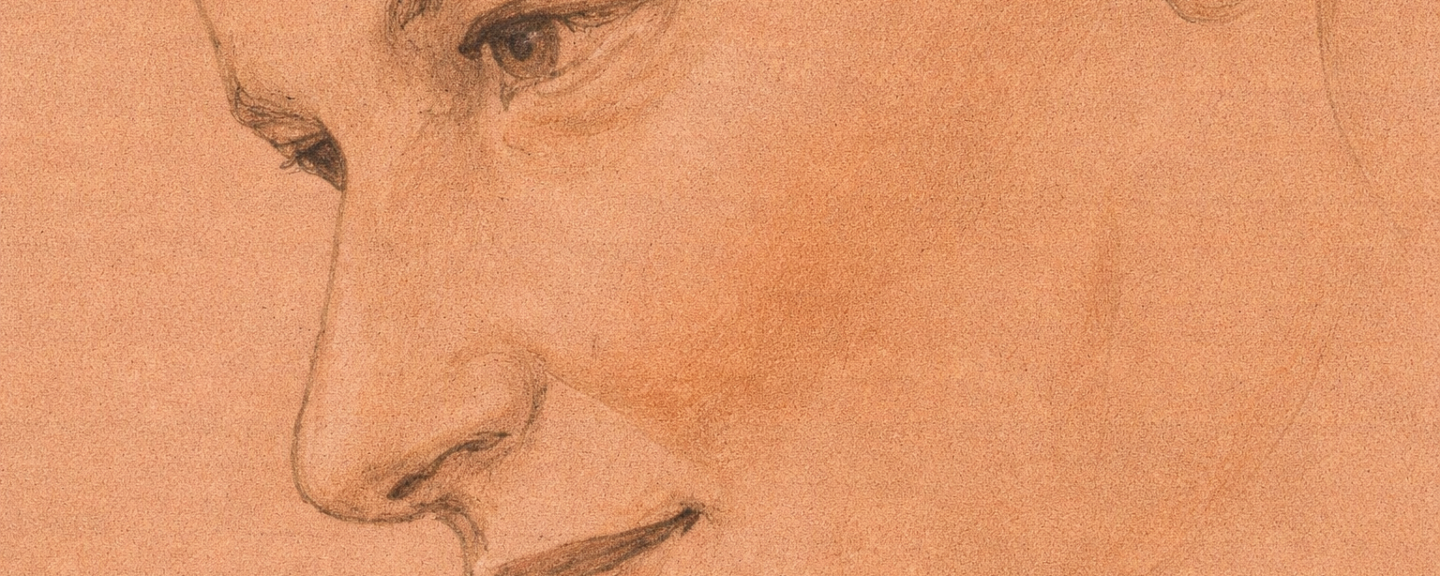

Wilma Cannon Fairbank was already an accomplished artist when she accompanied her fiancé, John King Fairbank, to Beijing in 1935. During the couple’s years in China, its was Wilma’s work as a painter—and the friendships forged with Chinese intellectuals—which opened a distinctive window onto the society around them. Drawing on her training with the Mexican muralist Diego Rivera, Wilma painted scenes of everyday life, from babies in split pants to water carriers and peasants at work in the fields. An astute observer of Chinese society, Wilma paired her paintings with vivid written descriptions that brim with humor and compassion, illuminating family life, labor, poverty, and even the politics of the day.
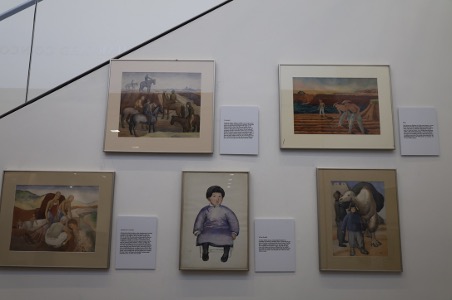
Wilma Fairbank’s paintings were on display this fall in the CGIS South Building’s course level (pictured below) as part of the Fairbank Center’s 70th anniversary exhibition, Once Upon a Time in Peking… A Very Special Friendship, which tells the Fairbank Center’s origin story through the lens of the lifelong friendship between John and Wilma and the cosmopolitan Chinese couple Liang Sicheng and Lin Huiyin, whom they met in Beijing in the 1930s.
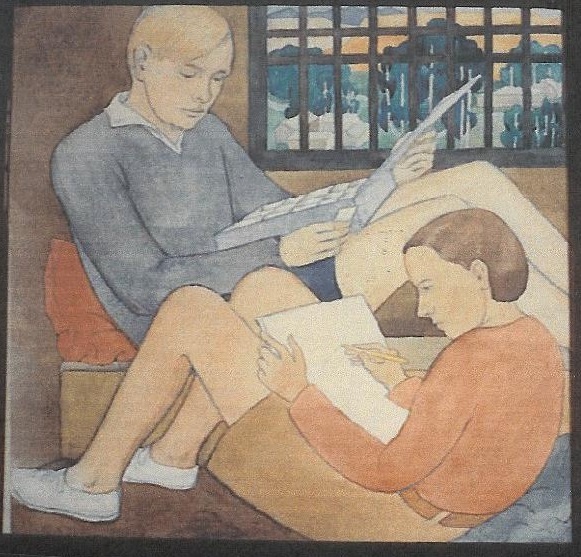
At Work
“Our work is serious and important to us but it is also our play. We are doing what we most long to do. Here is a sketch which tries to express this visually. The scene is summertime in Shansi Province. It lies just west of Peking’s Hopei Province but separated by a mountain wall. Our grilled window opens on the lush green of a valley and the loess cliffs beyond. We are dressed for comfort and for play. My husband concentrates on his flash-cards. Each has a single Chinese character or phrase written on one side and its pronunciation and meaning indicated on the reverse. As he memorizes, he shifts them from compartment to compartment. Watching, I assume the cards he files go into “Got it,” or “Try again,” or “Better review” or perhaps even “Hopeless.” For my part, I am busy drawing some vivid memory fixed in my mind’s eye from yesterday.”
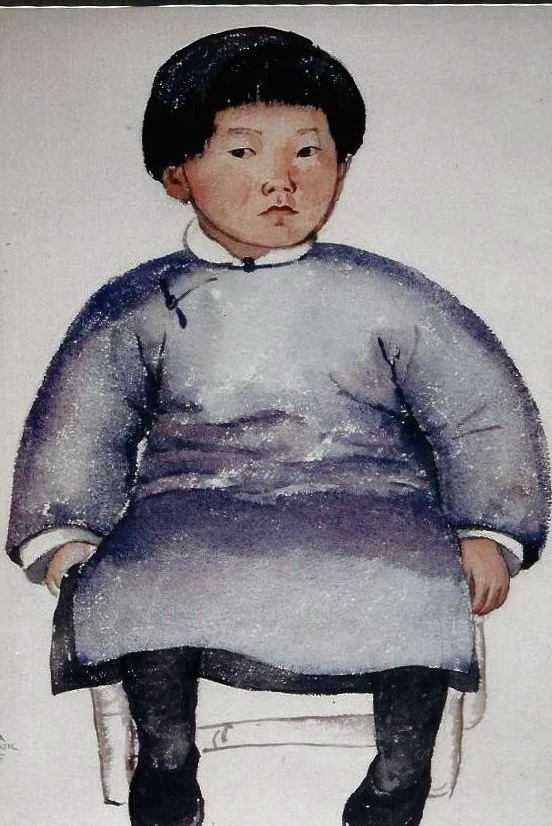
Winter Bundle
“In winter children become cotton-padded bundles. No knowledge of anatomy is needed to draw or paint them. If you can draw a face, two hands and feet, the rest is easy. This little girl is a neighbor’s child. Sitting on her low stool, she poses for me patiently but her glance is wary. My pale skin, big nose, and strange round eyes so different from her mother’s must make her wonder how she got into this fix and how much longer she must endure. Not long, little one. After your face, the rest is easy.”
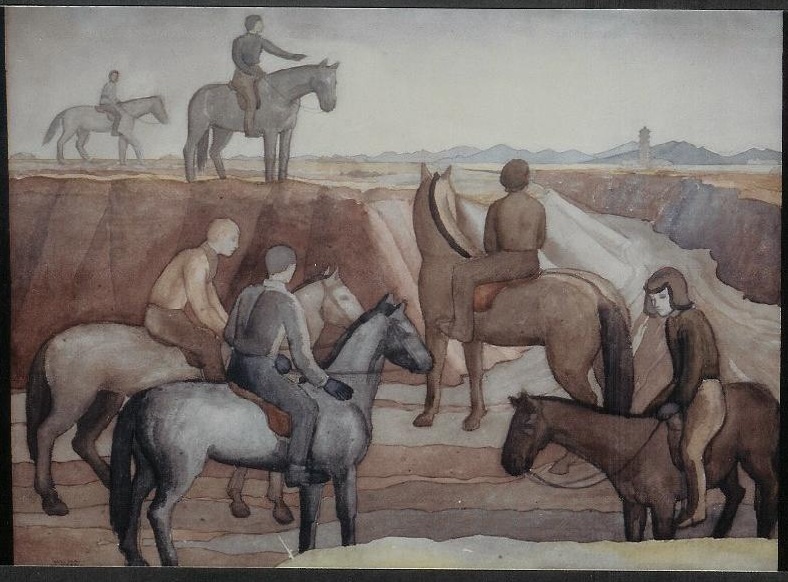
Horseback
“Horseback riding in Peking is confined to two groups—warlord cavalry for mobility and Westerners for pleasure. The Mongol ponies we ride are bred and haphazardly broken on the steppe outside the Great Wall. They are smallish, chunky and quick, their mouths incredibly hard. They open up a new world to us. Riding from the city gates in the four directions, we explore the open countryside. Sunken roads, worn deeply through the years by crude carts and scoured by the wind, lead us to scattered villages, temples and pagodas visible from afar in the treeless plain. Outside the north wall we gallop along the grassy vestiges of the Yuan city wall of Marco Polo’s time. I come home from each ride with new scenes filling my eyes and mind and often paint them from memory, as here.”
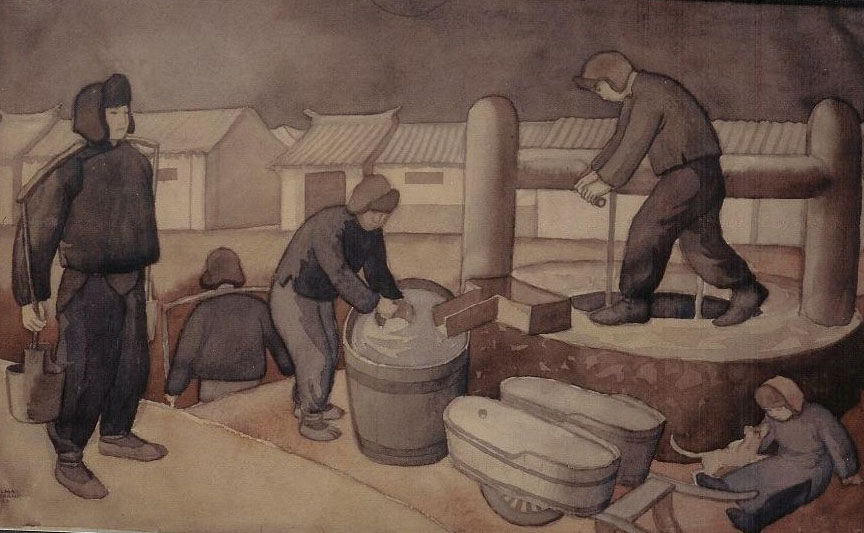
Public Well
“Under a wintry sky, bundled in their padded clothes against the chill, the people of the neighborhood come for water from the public well. They balance a wooden bucket at either end of their carrying poles. Pedlars come also, to deliver water to households able to pay. A wheelbarrow is their chosen vehicle. Unlike our wheelbarrow with its small front wheel to share the burden with the user, theirs has a large wheel centered between two casks to bear the entire load on its axis. This ingenious invention still leaves unsolved the age-old barrow-problem, how to avoid tipping sideways. A leather strap stretching from handle to handle across the pedlar’s nape is a help, but accidents do happen. The creaking of these barrows is central to the cacophony of the Peking streets.”
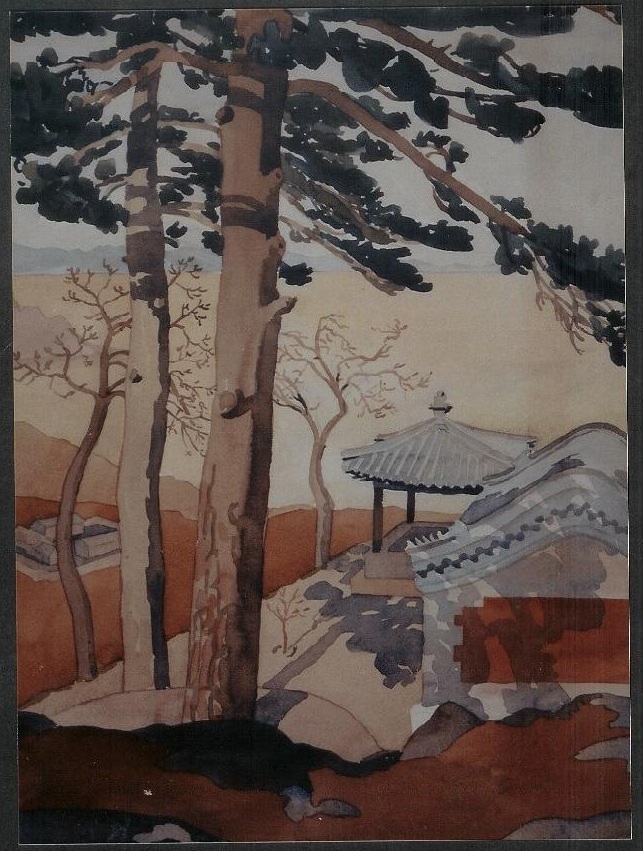
Near and Far
“It is early spring in the Western Hills. The sun is higher and lasts longer. The air is free of dust storms today and crystal clear. In the far distance are the northern mountains where the Great Wall cuts off Jehol from the plain. The wide plain itself is furrowed or fallow fields and scattered villages but in this season everything is tawny earth color. Up here on the steep hillside under the pines a terrace juts out. The pavilion on its verge commands the entire sweep of view. Nearby is a corner of the temple complex. The red of its wall and the gray of its tiled roof are just the Peking colors. No other red will do. As for the towering pines, trees are a rarity on the hills as well as the plain. These are treasures protected by the temple.”
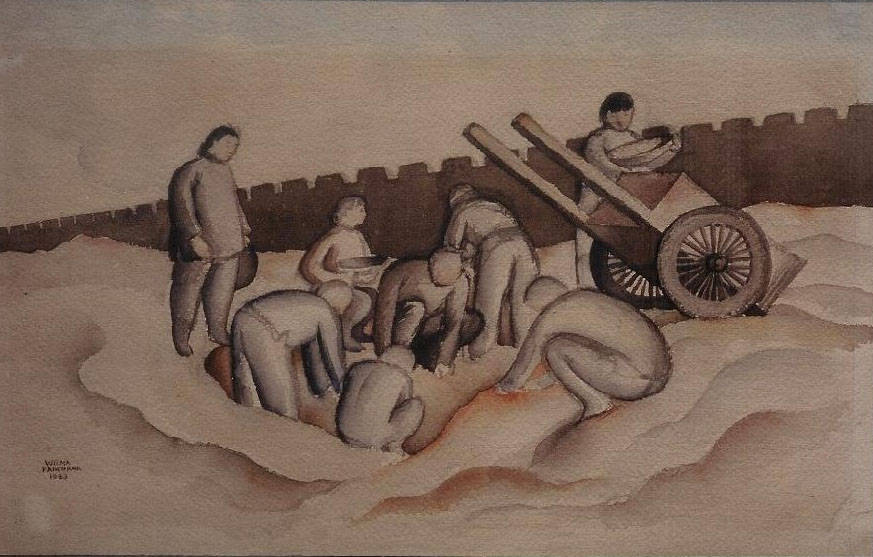
Rag Pickers
“Against the city wall is heaped up the neighborhood trash. The “town dump” we would call it; but what a difference! This poor and thrifty society has no old tires, bed-springs, refrigerators, or broken machinery to throw away. Still, a family living close to starvation can here pick up chipped bowls, damaged hand-tools, even scraps of metal or cloth to carry off in their handcart and sell to others not quite so poor. With help from all the children scratching about and dumping their findings in the cart, the family soon has enough to wheel away and sort. Treasures not needed at home are spread on a cloth beside a busy street. With luck, passers-by stop to haggle and by nightfall some of the throwaways have been turned into cash.”
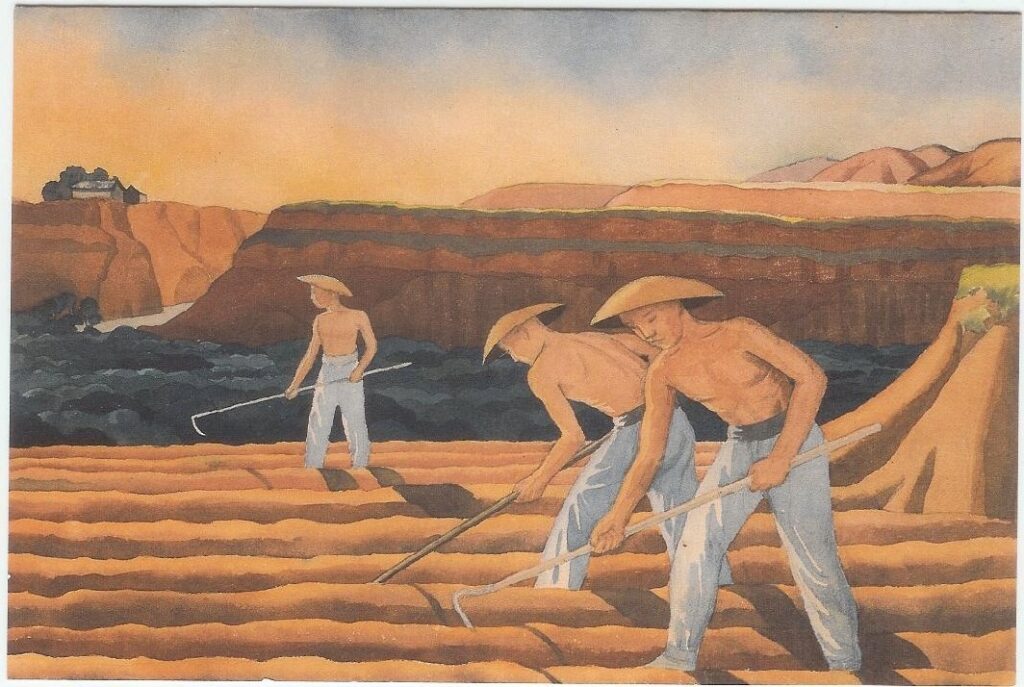
Tillers
“These farmers are tilling the soil of their native Shansi. It is loess soil laid down through eons by dust blown in from the Gobi Desert. People say it is hundreds of feet deep. What a contrast to the rocky soil of my native New England! This is neither sandy nor loamy but viscous. I try to imagine piecrust graham-cracker crumbs hundreds of feet deep. It is this very adherence of the loess that has enabled peasants to carve and occupy thousands of cave-dwellings in the loess cliffs of Shansi and its neighboring provinces. We see them everywhere here. The freestanding structure on the cliff opposite is an exception. It is the local Buddhist temple.”
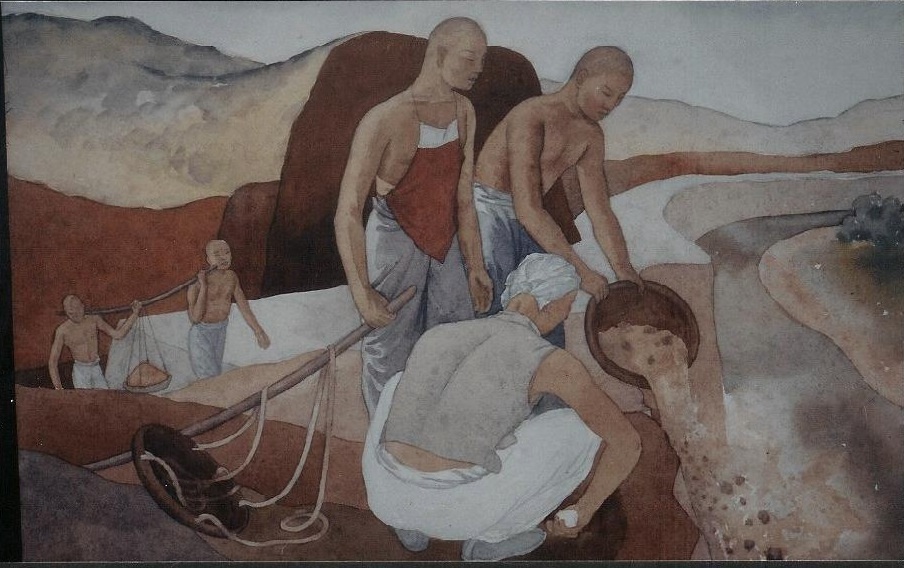
Marshall Yen’s Scheme
“Laboriously, basket by basket on their shoulder-poles, hundreds of soldiers from warlord Marshal Yen Hsi-shan’s army are tearing up a dirt highway. We are startled to happen upon them as we follow the road southward along the Fen River on an expedition with Chinese friends. “What in the world…?” A spokesman explains. It is a scheme of the Shansi warlord to defend his mountain-girt province against invasion from the south by General Chiang Kai-shek. A railway roadbed will replace the dirt highway and narrow-gauge rails will be laid on it. Then neither Chiang’s troop trains nor his trucks will have access along this lone north-south artery. Thwarting Chiang in some unpredictable future is, we reflect, all very well, but can it be done without bulldozers? Considering the many men, many shovels, many shoulder-poles and many baskets not to mention the many meals it will require, the Marshal’s scheme seems preposterous. But, in China, who can tell?”
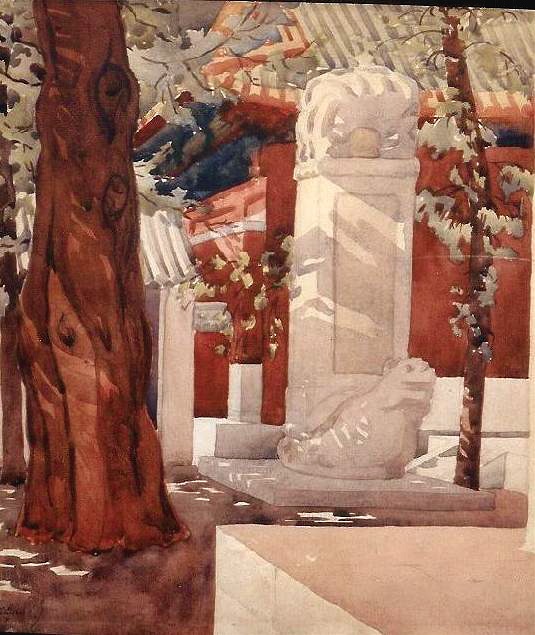
Tortoise Stele
“This shady courtyard of Wo-fo Ssu, the Temple of the Sleeping Buddha, is the essence of tranquility but I choose to paint here because of its turbulence—it is a riot of color. The brown trunks and green leaves of nature in the foreground struggle to assert themselves against the red walls and glazed green and yellow roof-tiles of the temple hall. The marble stele has the role of mediator between them. Like onlookers crowded on the sidelines of such a fracas, the sunbeams intrude wherever they can.”