Society | 社會
English (英文) | Chinese (中文)
China under Xi Jinping faces mounting social challenges as a long period of rapid development gives way to slower growth, youth unemployment, and widening inequality.
An aging population raises questions about the future labor force and the younger generation’s ability to care for their elders. Uncertainty about the future contributes to pervasive anxiety. Many young people are “lying flat,” opting out of cut-throat competition in a world increasingly driven by technology, even as others are searching for meaning beyond material success. This page curates lectures, interviews, and briefings to frame how Chinese society is changing—and why it matters.
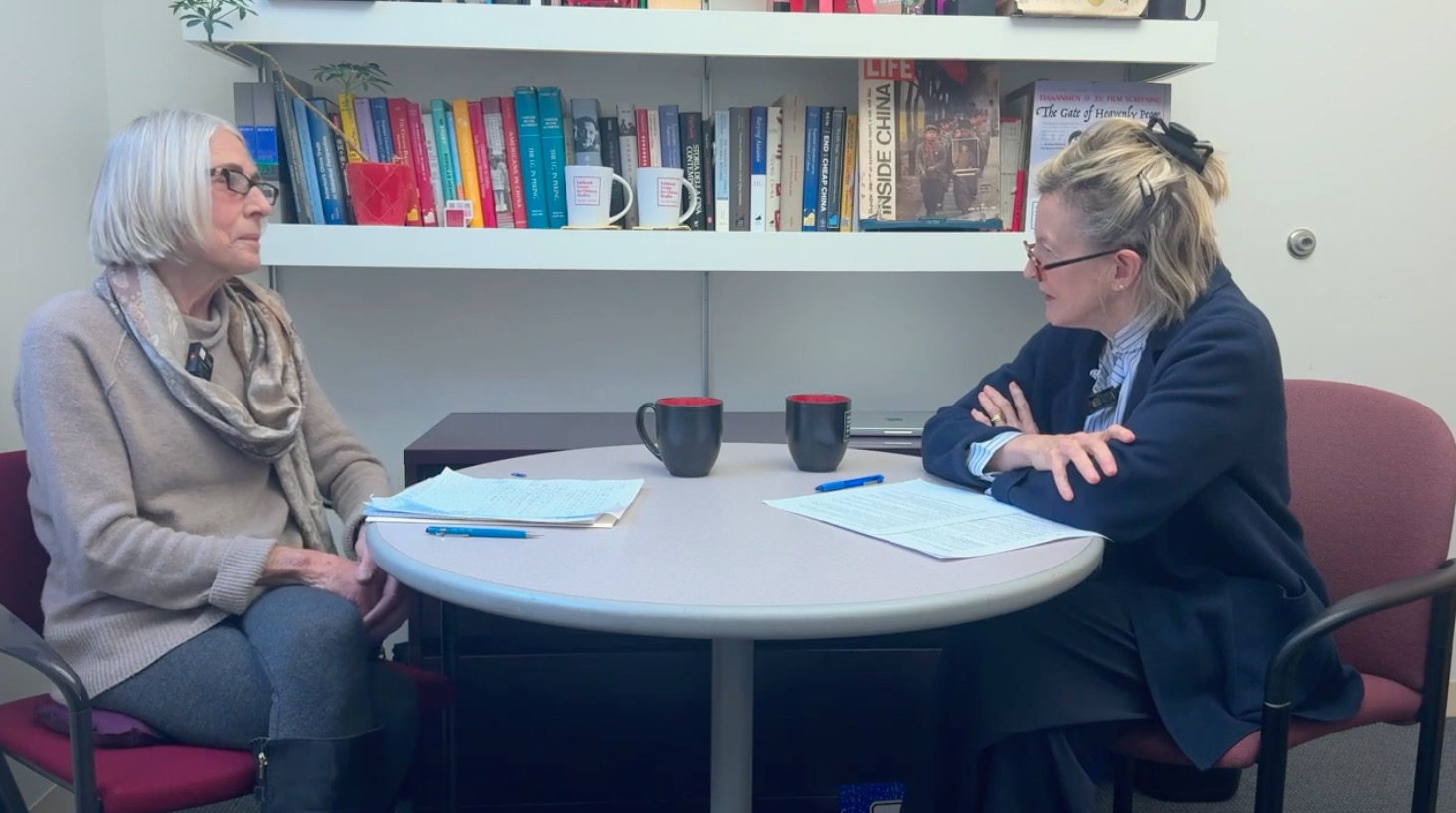
Interview | Professor Ya-Wen Lei
Ya-Wen Lei, Professor of Sociology, Harvard University
Highlights from the Critical Issues Confronting China Lecture Series
Framing the Issue
Lectures
Reclaiming Historical Memory and the Struggle for China’s Future
Critical Issues Confronting China Lecture, Spring 2026
Ian Johnson, Author, Founder, China Unofficial Archives
Christian Social Activism in Contemporary China
Critical Issues Confronting China Lecture, Spring 2026
Xi Lian, David C. Steinmetz Distinguished Professor of World Christianity, Duke University Divinity School; Visiting Scholar, Harvard Divinity School
Getting Ahead in Today’s China: From Optimism to Pessimism
Critical Issues Confronting China Lecture, Spring 2025
Martin K. Whyte, John Zwaanstra Professor of International Studies and Sociology, Emeritus, Harvard University
Scott Rozelle, Helen C. Farnsworth Professor of International Agricultural Policy and Senior Fellow at the Stanford Institute for Economic Policy Research, Stanford University
Garbage Time of History? Chinese Archives in the Era of Xi Jinping
Critical Issues Confronting China Lecture, Fall 2025
Yi Lu, Assistant Professor of History, Dartmouth College
Can China Live Without Religion?
Critical Issues Confronting China Lecture, Spring 2025
Jianbo Huang, Professor of Anthropology, East China Normal University
The End of the Miracle: How a Shrinking Population Impacts China’s Future
Critical Issues Confronting China Lecture, Spring 2025
Feng Wang, Professor of Sociology, University of California, Irvine
More from Us




Our Experts
Susan Greenhalgh
Department of Anthropology, Harvard University
Janet Gyatso
Harvard Divinity School
Arthur Kleinman
Department of Anthropology, Harvard University
Ya-Wen Lei
Department of Sociology, Harvard University
Michael A. Szonyi
Departments of East Asian Languages & Civilizations and History, Harvard University
Martin K. Whyte
Department of Sociology, Harvard University
Xiang Zhou
Department of Sociology, Harvard University
More to Think About
“Myth of the Social Volcano: Perceptions of Inequality and Distributive Injustice in Contemporary China,” by Martin King Whyte, Stanford University Press (2010)
Why We Should All Read It: This seminal book challenges the conventional wisdom that China’s rising income inequality is fueling a “social volcano” of inevitable unrest. Based on the first systematic nationwide survey of ordinary citizens’ attitudes toward inequality, Whyte finds that the Chinese public is surprisingly accepting of wealth disparities, often viewing them as the result of merit and ability rather than structural injustice. It is a foundational text for understanding the sources of social stability in China and the complex relationship between economic stratification and political legitimacy.
“Income Inequality in Today’s China,” by Yu Xie and Xiang Zhou, Proceedings of the National Academy of Sciences(2014)
Why We Should All Read It: This paper provides definitive empirical evidence that China’s income inequality has surpassed that of the United States to become one of the highest in the world. The authors identify the structural drivers of this gap—specifically regional disparities and the rural-urban divide—rather than simple market forces. It is essential reading for understanding the magnitude of China’s distributive challenges and the specific policy mechanisms required to address them.
“Delivering Solidarity: Platform Architecture and Collective Action in China’s Platform Economy,” by Ya-Wen Lei, American Sociological Review (2021)
Why We Should All Read It: This article offers a cutting-edge analysis of how algorithmic management in the gig economy paradoxically creates new opportunities for labor organizing. Lei examines how food delivery platforms’ “platform architecture” unintentionally facilitates collective action by generating common grievances and digital networks among workers. It provides a sophisticated framework for understanding how technology interacts with labor resistance in an authoritarian context, challenging the view that digital surveillance only empowers the state.
“The Contentious Public Sphere: Law, Media, and Authoritarian Rule in China,” by Ya-Wen Lei, Princeton University Press (2018)
Why We Should All Read It: This book traces the emergence of a vibrant, albeit contested, public sphere in China driven by the convergence of the internet, marketized media, and rising legal consciousness. Lei argues that despite state censorship, these forces have created unintended spaces for public debate and legal mobilization that the Party-state must constantly negotiate. It is a crucial resource for understanding the dynamics of public opinion and the limits of authoritarian control in the information age.
“The Dual Demands: Gender Equity and Fertility Intentions After the One-Child Policy,” by Yun Zhou, Journal of Contemporary China (2018)
Why We Should All Read It: This article explains why the relaxation of the One-Child Policy has failed to produce a sustained baby boom. Zhou argues that highly educated urban women face “dual demands” to succeed in the workplace and provide intensive mothering, all without adequate state support. It highlights how the gendered costs of reproduction have become a primary barrier to fertility, offering a critical sociological perspective on China’s looming demographic crisis.
“Just One Child: Science and Policy in Deng’s China,” by Susan Greenhalgh, University of California Press (2008)
Why We Should All Read It: This definitive history reveals the origins of the One-Child Policy, showing how a small group of missile scientists used cybernetics and mathematical modeling to convince the leadership to adopt draconian population controls. Greenhalgh presents a powerful cautionary tale about “scientism” and technocratic decision-making, demonstrating how the exclusion of social scientists and public debate led to one of the most consequential policy errors in modern history.
“Planned Births, Unplanned Persons: ‘Population’ in the Making of Chinese Modernity,” by Susan Greenhalgh, American Ethnologist (2003)
Why We Should All Read It: This theoretical piece analyzes how the concept of “population” was constructed not just as a biological fact, but as a political object to be governed in post-Mao China. Greenhalgh argues that the state’s focus on raising the “quality” (suzhi) of the population became central to its modernization project. It is a key text for understanding the biopolitics of the Chinese state and how demographic data is used to justify social engineering.
“Freeing the Press: How Field Environment Explains Critical News Reporting in China,” by Ya-Wen Lei, American Journal of Sociology (2016)
Why We Should All Read It: This article uses field theory to explain why certain Chinese media outlets produce critical investigative reporting despite a restrictive political environment. Lei shows that market competition and professional journalistic norms in specific regions can align to push the boundaries of permissible speech. It provides a nuanced explanation for the variation in media control, moving beyond the simple binary of state repression versus free expression.