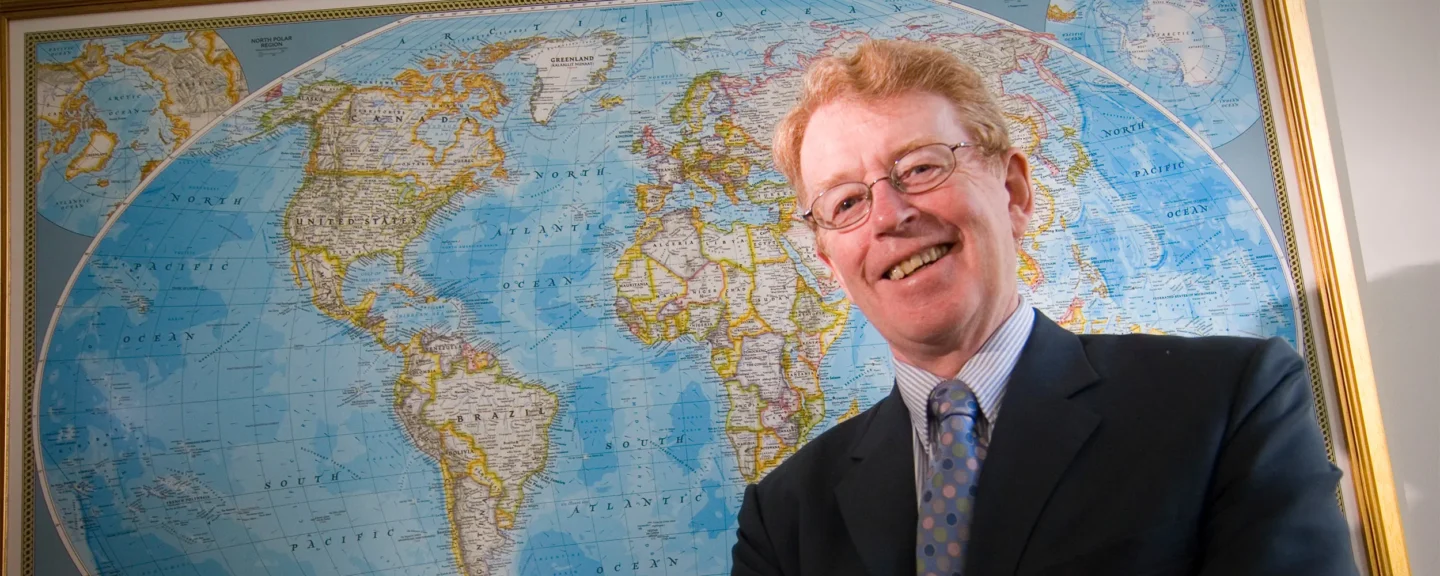
Michael McElroy, a pioneering atmospheric scientist who taught at Harvard from 1970 until his retirement and who played a central role in shaping the University’s engagement with China on questions of energy, climate, and sustainable development, passed away on January 8, 2026. He was 86 years old.
Professor McElroy was one of the most influential environmental scientists of his generation. A member of the Harvard faculty for more than five decades, he served as the Gilbert Butler Professor of Environmental Studies and held appointments in the School of Engineering and Applied Sciences and the Department of Earth and Planetary Sciences. Over the course of his career, his research ranged widely across atmospheric chemistry, planetary science, climate change, energy systems, and environmental policy, helping to establish modern understanding of the chemical processes that shape Earth’s atmosphere and of the links between energy use, air pollution, and global climate.
At Harvard, Professor McElroy was not only a distinguished scientist but also a major institution-builder. He served as the first chair of the Department of Earth and Planetary Sciences, was a founding figure in the University’s Environmental Science and Public Policy program, and later became the founding director of the Harvard University Center for the Environment. Through these roles, he helped define environmental studies at Harvard as an interdisciplinary enterprise that joined basic science to public policy and global affairs.
For the Fairbank Center community, Professor McElroy’s importance was especially profound through the Harvard-China Project on Energy, Economy and Environment, which he founded in 1993. At a time when China’s environmental transformation was becoming inseparable from global questions of climate, energy, and public health, he helped build one of Harvard’s most important, long-term collaborative platforms for research and exchange with Chinese scholars, institutions, and policymakers. Through the Harvard-China Project, Professor McElroy fostered sustained work on air quality, climate change, energy systems, and economic development, while also mentoring generations of leading researchers in China and abroad.
Professor McElroy was also deeply engaged in environmental policy beyond the University. From 1997 to 2006, and again from 2017 to 2022, he served as a member of the China Council for International Cooperation on Environment and Development, an advisory body created to provide recommendations to senior Chinese leaders on the intertwined challenges of environmental protection and sustainable growth. His work helped bring China’s energy and environmental transition into closer conversation with global scientific and policy debates, and it made the Fairbank Center an important venue for those discussions.
Below, our affiliated faculty members reflect on Professor McElroy’s life, scholarship, mentorship, and enduring impact on the study of China, the environment, and the global future.

It has been an enduring privilege for me and for my wife, Dr. Yuanyuan Shen, to have worked with and learned from Mike McElroy. He was someone who seamlessly blended towering intellect, capacious intellectual interests, and a sweet, gentle, genuine humility. Mike stands out as having worked more effectively with colleagues in China than any other non-sinologist I know—attributable to the curiosity, sincerity, and respect for others and for learning that were central to who he was. The world truly is better for his many contributions to environmental science and policy, to international relations, to higher education, and to exemplifying how to live a good life.

I didn’t know Mike well. But I interacted with him and his crack China environment team a fair amount in the 1990s while doing research for a chapter on China and global environmental governance for his edited book on Energizing China: Reconciling Environmental Protection and Economic Growth (Harvard University Press, 1998). He was a problem solver, and I was impressed by the scholarly and policy relationships that he developed with Chinese environmental scientists and policymakers. I learned a lot from his calm, friendly, smart, constructive but eyes-wide-open efforts to urge the Chinese side to follow the science and prioritize climate change in both domestic policies and global governance policies.
Mike McElroy was an extraordinary colleague: a great scientist who had a mission to improve the global environment, and, at least since the 1990s, with a focus on China. He pioneered our first ongoing scientific collaboration with Tsinghua, on energy and environment. (It was not his fault that, in the first 15 years of our project, the air in China became demonstrably worse!) It may be no accident that it was the former president of Tsinghua, Chen Jining, who was a strong supporter of our efforts, who later, as Minister of Environmental Protection and then Mayor of Beijing, oversaw dramatic improvement in air quality. Mike and his longtime co-pilot, Chris Nielsen, made the SEAS China Project on Energy and the Environment one of the pioneering efforts in Harvard’s engagement with China.
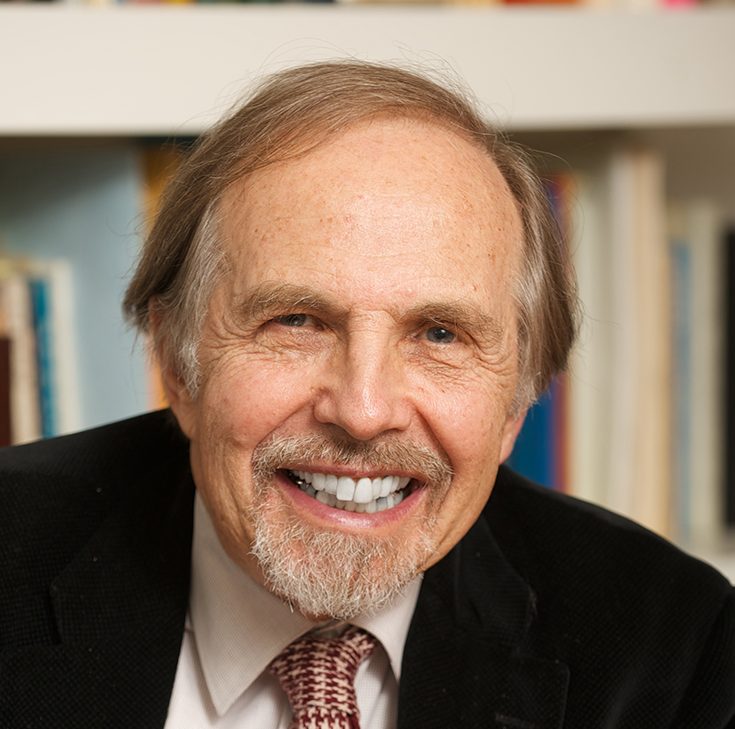
Michael McElroy was a great environmentalist. I first met him in the 1980s because our daughters were both students at Milton Academy. What impressed me most about Mike was the long-term vision he had for research in China and his great success in sustaining research during periods of great volatility in China and in U.S.-China relations. It was a strong model for my own efforts at long-term field research and collaboration. For that matter, I am grateful—and will not soon forget—Mike’s impressive interpersonal style and communicative impact, which encouraged trust and loyalty among collaborators because all benefitted from the work.
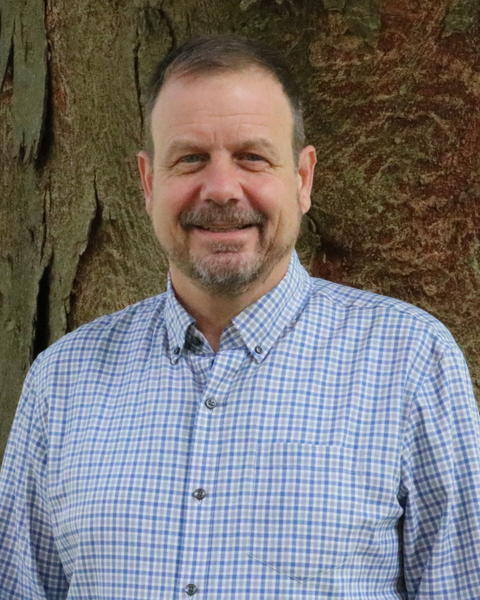
Mike McElroy was a huge figure in environmental sciences, with ground-breaking research that spanned planetary, atmospheric, and energy sciences. He was also a builder of Harvard’s relevant institutions, from the Department of Earth and Planetary Sciences to the Harvard University Center for Environment. Founding the Harvard-China Project on Energy, Economy and Environment was perhaps the most ambitious in interdisciplinary terms, as he sought to bridge from Harvard’s broad community of environmental scholars to its sprawling community of China scholars, whom he knew less well. He and others from the environment side were challenged and enlightened by contributions of Bill Alford, Dwight Perkins, Peter Bol, Rob Weller, and Iain Johnston to the program’s exploratory first phase. As it gradually shifted emphasis to joint U.S.-China research and exchange on the underlying scientific challenges—in China, the U.S., and beyond—generous advice on and support for this collaborative mission from several of these colleagues, as well as from Mark Elliott, Bill Kirby, Ezra Vogel, Tony Saich, and Mark Wu, remained an invaluable constant.
At the end of his life, Mike—ever curious, energetic, and undaunted—was starting a book project with a colleague, Yang Hong, on how climate changes may have impacted China’s history. To spark thinking for his part of the venture, he was re-reading the second edition of China: A New World History at the time of his passing. Mike never stopped seeking knowledge from scholars in fields far from his own, and it is fitting that John King Fairbank and Merle Goldman were among the last.
I first got to know Mike McElroy when I did a research paper with Dale Jorgenson and Mun Sing Ho during the first phase of the China component of the Harvard project on the environment that Mike led. Subsequently, when I had time, I would sometimes attend the seminar on Chinese environmental issues that he and Chris Nielsen led and would also attend other related events, such as when Al Gore spent time with the program.
In, I believe, the late 1980s, I accompanied Mike and Chris on their initial visit to China to discuss the program with Chinese officials, notably Song Jian, the head of the State Science and Technology Commission. Mike asked me to accompany him largely because I, by then, had considerable experience meeting with Chinese officials. As it turned out Mike did not really need my help. The Chinese quickly realized that Mike was a great scientist with wide ranging knowledge of environmental issues. I also believe they responded well to his modest and straightforward personality. Whatever the reason, Mike, from that point on, worked closely on environmental issues in a variety of capacities with Chinese scientists and officials. Mike was a model of how a person could work on major concrete issues with the Chinese government and scientists, whatever was going on with U.S.-China relations. I have no doubt that he had a significant positive impact on China’s increasingly serious effort to invest in improvement of their environment. I will miss him personally, and the world will miss his important contribution to our planet.

Soon after I joined the Harvard faculty as an assistant professor, Mike and Chris Nielsen reached out and welcomed me into their circle. Through the seminar sessions and other discussions that I attended at the Harvard-China Project, I gained detailed knowledge about how leading Chinese strategically sought to tackle the immense environmental and energy challenges facing their country. As it had been several years since I worked on those issues at the World Bank, these sessions proved extremely informative. With hindsight, I also realize that they played an important role in shaping my views for my later work, with Jim Salzman, on the rise of green industrial policy. Mike was an exemplar of someone who believed in fact-driven engagement and working collaboratively to help solve common problems, even amid rising U.S.-China tensions. I will miss his generosity toward younger colleagues and his sharp eye in identifying and highlighting longer-term trends that the rest of us might overlook.